

Institute of Forest Biodiversity (IFB)
The Institute of Forest Biodiversity, Hyderabad focuses on forest genetics, conservation, and Eastern Ghats ecology under ICFRE, aiding policy and research.
The Institute of Forest Biodiversity, Hyderabad focuses on forest genetics, conservation, and Eastern Ghats ecology under ICFRE, aiding policy and research.

IWST Bengaluru, under ICFRE, is a key forestry research institute focusing on wood science, technology, and sandalwood research

The Wholesale Price Index (WPI) tracks bulk price changes in goods, helping assess wholesale inflation and supply-demand trends in India’s economy.

Core inflation tracks long-term price trends by excluding volatile food and fuel costs. It helps central banks assess demand pressures and set effective monetary policy.
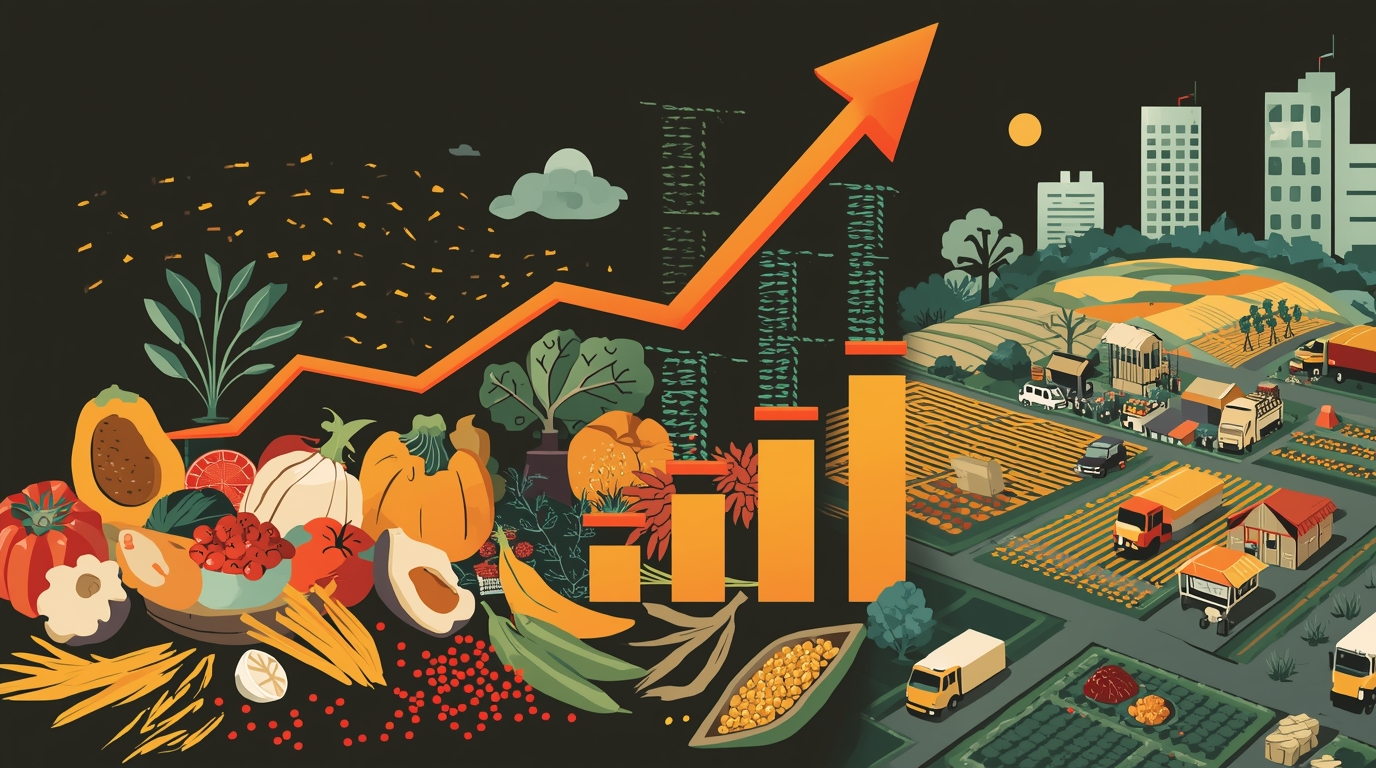
Food inflation in India remains volatile despite easing headline inflation, driven by weather shocks, supply disruptions, and rising costs of key food items.
India’s CPI inflation for FY 2024-25 remained moderate, driven by easing core inflation but pressured by food prices, keeping inflation within RBI’s target band.

PM GatiShakti is a digital, GIS-based infrastructure master plan aimed at reducing logistics costs through synchronized, multimodal connectivity.

Ayushman Bharat aims to achieve Universal Health Coverage through Ayushman Arogya Mandirs and PM-JAY, providing ₹5 lakh health cover and nationwide primary care.
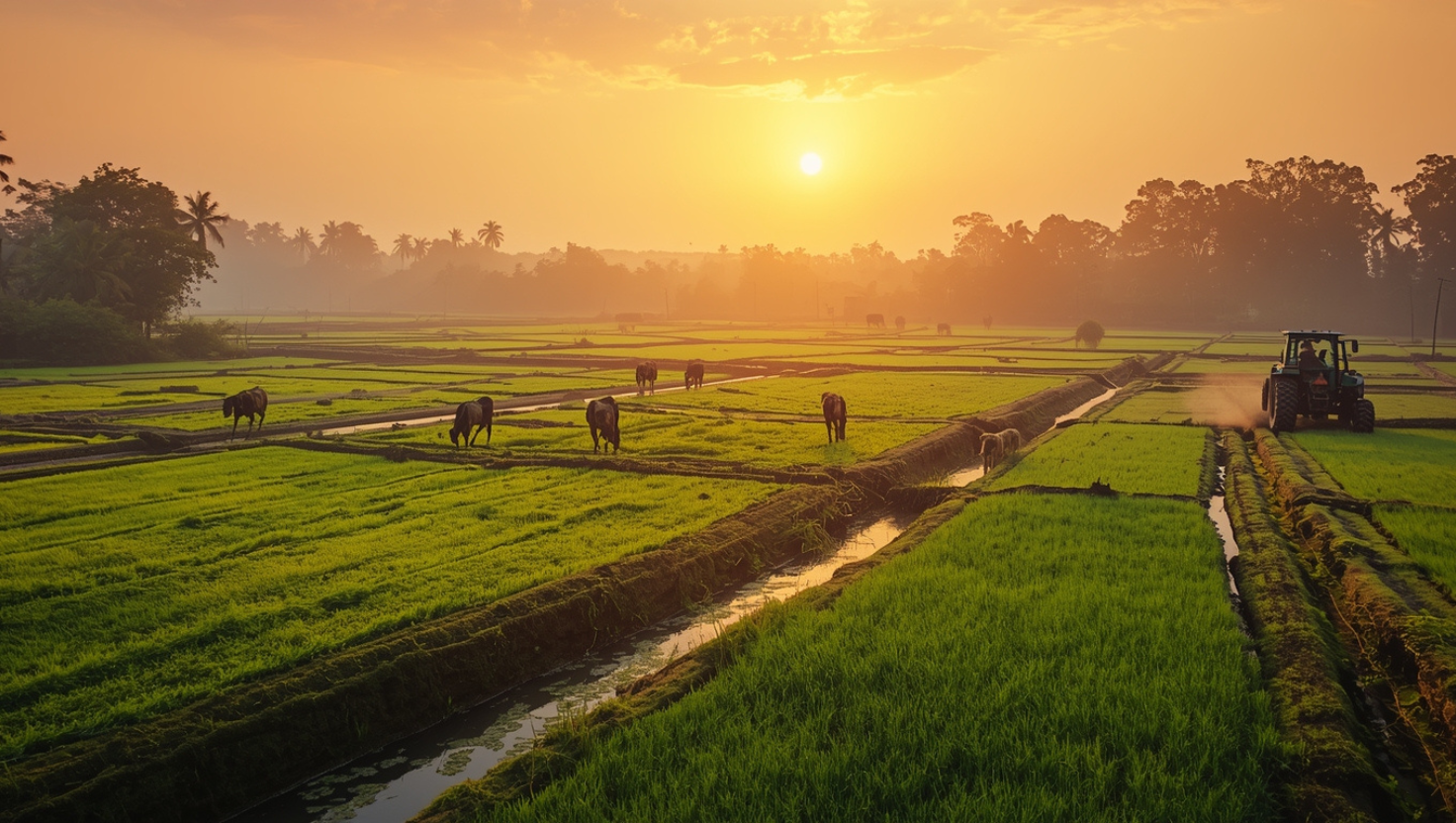
PM-KISAN provides ₹6,000 yearly income support to eligible small farmers through DBT, aiming to ease farm costs and strengthen rural livelihoods.

The 85th Amendment (2001) grants SC/ST employees reservation in promotions with consequential seniority, applied retrospectively from 1995.

BRICS 2026: Explore the 18th BRICS Summit in New Delhi,

6th All India Official Language Conference 2026 in Navi Mumbai:

Discover how Bay of Bengal low-pressure systems shape India’s monsoon,

Explore the constitutional evolution of India from East India Company

Yojana June 2026 explores India’s journey towards a Naxal-free Bharat,
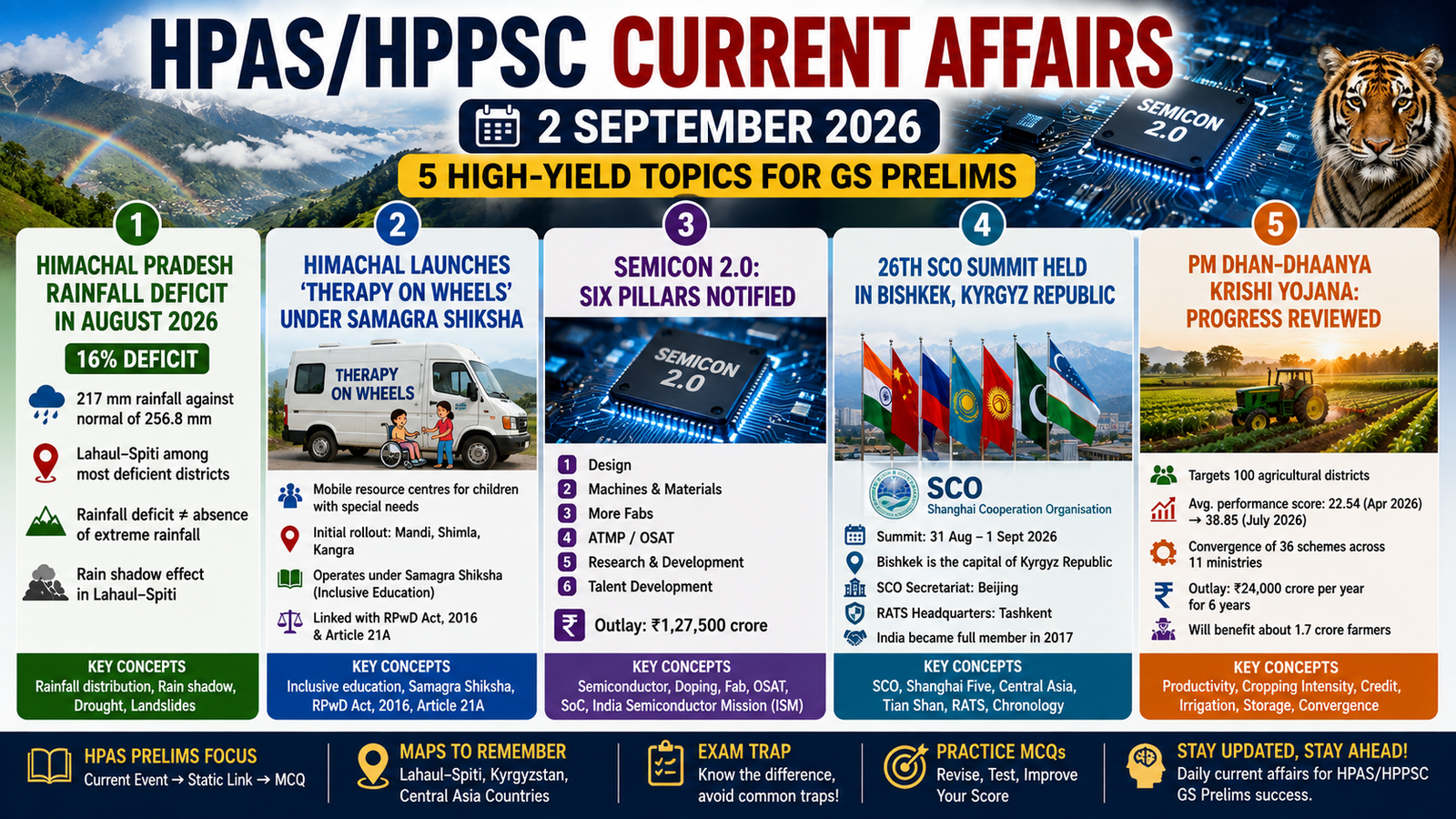
HPAS/HPPSC Current Affairs 2 September 2026: Himachal rainfall deficit, Therapy