
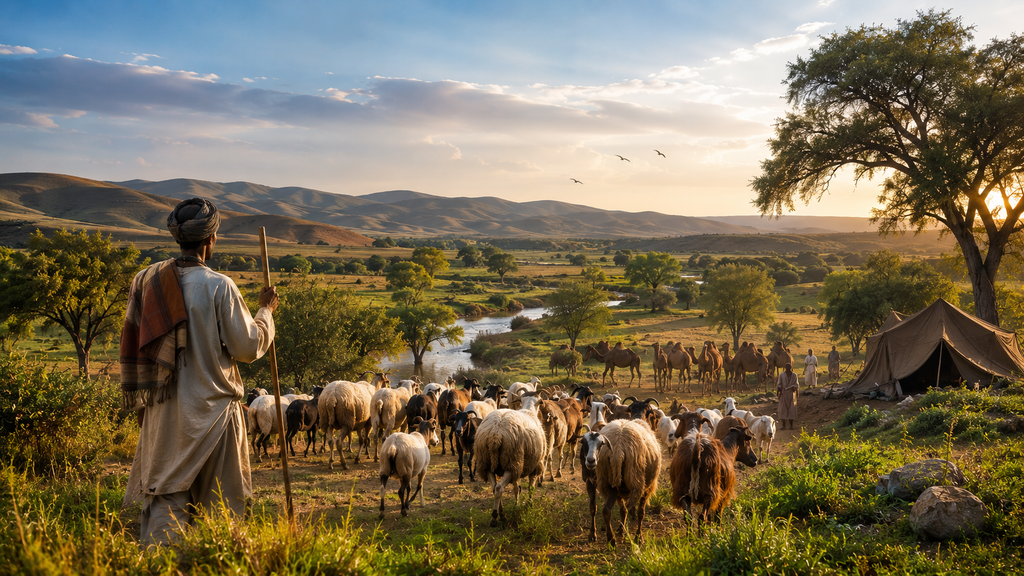
UNCCD COP17: India Pushes Community-Led Restoration of Rangelands
Why in News?
At the 17th Conference of the Parties (COP17) to the United Nations Convention to Combat Desertification (UNCCD) in Ulaanbaatar, Mongolia, India called for a community-led approach to restoring rangelands, placing pastoralists and local communities at the centre of land restoration.
Speaking at the Ministerial Dialogue on “Restoration of Rangelands and the Well-being of Pastoralist Communities” on 26 August 2026, Union Environment Minister Bhupender Yadav emphasised that successful restoration should treat pastoralists as custodians of ecosystems rather than merely beneficiaries. India highlighted an approach combining scientific planning, traditional knowledge, secure tenure, sustainable grazing, watershed development, fodder management and livelihood support.
The issue has gained additional importance because 2026 is the International Year of Rangelands and Pastoralists, while COP17 is specifically focused on restoring degraded land and strengthening drought resilience.
What are Rangelands?
Rangelands are extensive natural or semi-natural landscapes primarily used for grazing livestock. They include:
- Grasslands
- Savannas
- Shrublands
- Deserts
- Drylands
- Pastures
- Certain open woodland and mixed ecosystems
Rangelands are not simply “grazing lands”. They perform important ecological, economic and social functions.
According to the UNCCD, rangelands cover more than half of the Earth’s land surface and support more than 500 million people who depend directly on pastoralism. They also provide important ecosystem services such as soil and water conservation, biodiversity protection and climate resilience.
Why are Rangelands Important?
| Dimension | Importance |
|---|---|
| Livelihoods | Support pastoralists and livestock-dependent communities |
| Food security | Contribute to livestock-based food production |
| Biodiversity | Provide habitat for numerous plant and animal species |
| Soil conservation | Vegetation prevents erosion and improves soil health |
| Water security | Vegetation improves infiltration and watershed functioning |
| Climate mitigation | Grasslands can store significant amounts of carbon in soils |
| Climate adaptation | Sustainable pastoralism can improve resilience to drought |
| Cultural value | Pastoral landscapes sustain traditional knowledge and cultural practices |
Thus, rangeland restoration is simultaneously an environmental, economic and social policy issue.
What is UNCCD?
The United Nations Convention to Combat Desertification (UNCCD) is a legally binding international environmental agreement dealing primarily with desertification, land degradation and drought, particularly in dryland regions.
It is one of the three major Rio Conventions, alongside:
- UN Framework Convention on Climate Change (UNFCCC)
- Convention on Biological Diversity (CBD)
- UN Convention to Combat Desertification (UNCCD)
The UNCCD seeks to promote sustainable land management, combat desertification and achieve Land Degradation Neutrality (LDN).
What is UNCCD COP17?
COP17 is the 17th session of the Conference of the Parties to the UNCCD.
It is being held in Ulaanbaatar, Mongolia, from 17–28 August 2026. The conference is being conducted under the theme:
“Restoring Land. Restoring Hope.”
COP17 brings together governments, scientists, civil society, Indigenous Peoples, pastoralists, smallholder farmers and other stakeholders to address interconnected challenges involving land degradation, drought, rangelands, water and food systems.
The choice of Mongolia is particularly significant because nearly 77% of Mongolia’s territory is reported by UNCCD as degraded, making land restoration and sustainable pastoralism highly relevant to the host country.
Why Rangelands are a Major Global Concern
Rangelands are among the world’s most extensive ecosystems, but they have historically received less policy and financial attention than forests and croplands.
The UNCCD notes that up to half of the world’s rangelands are considered degraded, with pressures arising from:
- Unsustainable grazing practices
- Land conversion
- Agricultural expansion
- Urbanisation
- Fragmentation
- Climate change
- Drought
- Loss of pastoral mobility
- Inappropriate land-use policies
Degradation of rangelands can create a vicious cycle:
Land degradation → declining vegetation → reduced livestock productivity → falling pastoral incomes → greater livelihood vulnerability → increased pressure on land
Therefore, restoration cannot succeed merely through ecological interventions. It must also address the economic and institutional conditions of pastoral communities.
India’s Key Intervention at COP17
India’s central message was that communities must be placed at the heart of rangeland restoration.
The Indian approach rests on several interconnected principles.
1. Pastoralists as Custodians
India argued that pastoralists should not be viewed merely as beneficiaries of conservation programmes.
Instead, they possess:
- Traditional ecological knowledge
- Experience in livestock management
- Knowledge of seasonal grazing patterns
- Understanding of local vegetation and water resources
- Community-based conservation practices
This makes their participation essential for long-term restoration.
India therefore advocated a shift from:
“Government restores land for communities”
to:
“Government + communities restore and manage land together.”
The Union Environment Minister specifically stressed that successful restoration begins with pastoralists as custodians.
2. Combining Traditional Knowledge with Modern Science
India proposed combining traditional knowledge systems with modern scientific tools.
Scientific methods can provide:
- Satellite-based land degradation mapping
- Vegetation monitoring
- Soil assessment
- Watershed analysis
- Restoration planning
- Drought monitoring
At the same time, local communities can contribute knowledge about:
- Grazing routes
- Seasonal pasture availability
- Indigenous grass species
- Water sources
- Traditional conservation practices
- Livestock movement
India highlighted the role of Satellite-based Desertification and Land Degradation Atlases in mapping landscapes and supporting scientific restoration planning.
3. Secure Tenure and Community Rights
One of the most important institutional dimensions of restoration is land tenure security.
If communities do not have secure and recognised rights over land and forest resources, they have weaker incentives to invest in long-term ecological restoration.
India highlighted the importance of:
- Recognition of grazing rights
- Community Forest Resource Rights
- Participatory governance
- Community-based resource management
The broader UNCCD approach also emphasises inclusive governance and improved tenure security as important conditions for sustainable rangeland management.
Why does tenure matter?
Consider a pastoral community that depends on a particular grazing landscape.
If the community has secure rights:
Secure tenure → long-term incentive → sustainable grazing → land stewardship → ecological restoration
But where rights are uncertain:
Insecure tenure → short-term extraction → weak investment → degradation
Therefore, land restoration and land rights cannot always be treated as separate policy questions.
India’s Community Conservation Model: Orans
India highlighted Orans of Rajasthan as an example of traditional community-based conservation.
Orans are sacred groves and community-protected landscapes traditionally conserved by local communities because of their religious, cultural and ecological significance.
According to the Ministry of Environment, Forest and Climate Change, around 25,000 community-protected sacred groves covering approximately 0.6 million hectares across India exemplify community stewardship. These landscapes can also provide habitat for important species, including the Great Indian Bustard.
The Oran model demonstrates that conservation does not necessarily require complete exclusion of local communities.
Instead:
Cultural values + community institutions + ecological protection = community conservation
This is particularly relevant for rangelands where pastoral livelihoods and biodiversity conservation often overlap.
India’s Rangeland Landscape
India’s rangelands occur across highly diverse ecological zones.
They include:
- Himalayan pastures
- Central Indian savannas
- Thar Desert
- Kachchh region
- Grasslands of western and central India
- Southern shola landscapes
India has approximately 10 million hectares of permanent pastures and grazing lands, according to the Environment Ministry’s intervention at COP17.
These landscapes support livestock production while simultaneously contributing to soil conservation, water infiltration, biodiversity and carbon storage.
Rangelands and Carbon Sequestration
Grasslands are sometimes overlooked in climate discussions because attention often focuses on forests.
However, deep-rooted grasses can store carbon in soils.
Their extensive root systems:
- Increase soil organic matter
- Improve soil structure
- Enhance water infiltration
- Reduce erosion
- Contribute to soil carbon storage
India highlighted the role of deep-rooted grasses in soil carbon storage, water infiltration and groundwater recharge.
This gives rangeland restoration a triple benefit:
Land restoration + climate action + water security
Rangeland Restoration and Livelihoods
A major strength of India’s proposed approach is that restoration is not viewed as an isolated environmental project.
Instead, it integrates:
Landscape Management
Restoring degraded landscapes and maintaining ecological connectivity.
Watershed Development
Improving water availability and reducing soil erosion.
Sustainable Grazing
Preventing overgrazing while maintaining pastoral livelihoods.
Fodder Development
Improving availability of livestock fodder and reducing pressure on natural vegetation.
Livelihood Support
Ensuring that ecological restoration does not undermine household incomes.
India described this integrated approach as combining landscape management and livelihood support with community participation at its core.
Rangelands, Biodiversity and the Great Indian Bustard
Rangelands are important habitats for several threatened species.
In India, open natural ecosystems support species such as the:
- Great Indian Bustard
- Blackbuck
- Chinkara
- Indian wolf
- Several grassland birds and reptiles
This creates an important policy challenge.
Conservation policies sometimes mistakenly treat open ecosystems as degraded forests or “wastelands” that should simply be converted into plantations.
However, grasslands and savannas are distinct ecosystems with their own biodiversity.
Therefore, restoration should not automatically mean planting more trees.
In many rangeland ecosystems, the correct restoration strategy may involve:
native grasses + sustainable grazing + water management + controlled disturbance + community stewardship
rather than indiscriminate afforestation.
Rangelands and the Cheetah Reintroduction
India also connected rangeland restoration with its efforts to restore open and grassland ecosystems.
The country has undertaken the reintroduction of cheetahs, while considering the expansion of suitable habitats including Banni grasslands in Gujarat.
The broader lesson is that successful species conservation requires protection and restoration of the ecosystems on which species depend, rather than focusing only on individual animals.
International Year of Rangelands and Pastoralists, 2026
The importance of COP17 is amplified by the United Nations designation of 2026 as the International Year of Rangelands and Pastoralists (IYRP).
The initiative seeks to:
- Increase awareness about rangelands
- Recognise pastoralists’ contribution
- Encourage responsible investment
- Improve policies for rangeland management
- Promote sustainable pastoralism
UNCCD describes 2026 as a pivotal opportunity to bring rangelands and their communities into mainstream environmental and development policy.
This makes COP17 particularly significant because rangelands, pastoralists and land restoration are being addressed together at the global level.
UNCCD’s Rangelands Flagship Initiative
Another important development is the Rangelands Flagship Initiative, a global multi-partner initiative associated with UNCCD.
Its objective is to increase investment in:
- Conservation
- Sustainable management
- Restoration of rangelands
- Land Degradation Neutrality
The initiative focuses on three broad dimensions:
- Knowledge
- Investment
- Institutions
It is being launched in the context of COP17 and the International Year of Rangelands and Pastoralists.
This is important because one of the biggest barriers to rangeland restoration is not necessarily lack of ecological knowledge, but lack of finance and institutional support.
What Did India Demand at COP17?
India called for greater international support for developing countries undertaking rangeland restoration.
Its key demands include:
1. Dedicated Financing
Rangeland restoration requires accessible and predictable financial resources.
2. Technology Access
Developing countries need access to satellite monitoring, ecological assessment and restoration technologies.
3. Knowledge Sharing
Traditional knowledge should be combined with scientific knowledge.
4. Secure Community Rights
Pastoralists and local communities should have meaningful rights and participation.
5. South-South Cooperation
India offered to share its experiences and solutions with other developing countries.
The Indian delegation specifically called for dedicated and accessible financing for rangeland restoration and greater cooperation in finance, technology and knowledge.
Why Community-Led Restoration is Important
A purely top-down restoration programme can fail because ecological systems are continuously used by local populations.
Community participation can improve restoration through:
Local knowledge
↓
Better understanding of ecosystems
↓
Participatory planning
↓
Community ownership
↓
Long-term monitoring
↓
Greater restoration durability
Thus, communities are not simply stakeholders to be consulted after a project is designed. They can become co-managers and custodians of restored landscapes.
Challenges Before India
Despite the potential of community-led rangeland restoration, several challenges remain.
1. Land-Use Conversion
Rangelands face pressure from:
- Agriculture
- Infrastructure
- Mining
- Urbanisation
- Renewable-energy projects
- Industrial development
Unplanned conversion can fragment pastoral landscapes.
2. Insecure Land Rights
Unclear ownership and overlapping claims can create conflict between communities, government agencies and other land users.
3. Climate Change
Increasing:
- Drought frequency
- Heat stress
- Water scarcity
- Extreme rainfall
- Vegetation changes
can reduce the resilience of pastoral systems.
4. Fragmentation of Pastoral Mobility
Pastoralism often depends on seasonal movement.
Roads, fences, settlements and land-use changes can interrupt traditional migration routes and reduce access to grazing and water.
5. Lack of Finance
Rangelands often attract less conservation finance than forests and wetlands despite their enormous geographical extent.
UNCCD has therefore emphasised the need to mobilise greater public and private investment.
Way Forward
1. Recognise Rangelands as Valuable Ecosystems
Rangelands should not be classified as “wastelands” merely because they lack dense tree cover.
2. Strengthen Community Rights
Secure grazing and community resource rights can create incentives for long-term stewardship.
3. Promote Sustainable Grazing
The objective should not be to eliminate grazing but to maintain ecologically sustainable grazing regimes.
4. Integrate Science and Traditional Knowledge
Satellite monitoring, GIS and ecological research should complement—not replace—local knowledge.
5. Develop Rangeland Restoration Finance
Dedicated financial instruments should support:
- Pastoral communities
- Grassland restoration
- Watershed management
- Fodder development
- Climate adaptation
6. Protect Pastoral Mobility
Policies should recognise that mobility is an important component of sustainable pastoralism.
7. Avoid One-Size-Fits-All Restoration
The restoration strategy for the Thar Desert cannot simply be replicated in the Himalayan pastures, Banni grasslands or Central Indian savannas.
Restoration must be ecosystem-specific and community-specific.
Conclusion
India’s intervention at UNCCD COP17 represents an important shift in the way rangeland restoration is conceptualised. Instead of treating restoration as merely an ecological exercise, India has emphasised the connection between land, livelihoods, pastoral communities, biodiversity, water security and climate resilience.
The central principle is straightforward:
Rangelands cannot be sustainably restored without restoring the relationship between communities and the landscapes on which they depend.
For India, the combination of scientific mapping, secure community rights, sustainable grazing, watershed development, livelihood support and traditional conservation systems can provide a practical model for achieving Land Degradation Neutrality while protecting pastoral livelihoods.
At the global level, COP17’s focus on rangelands is significant because these ecosystems cover more than half of the Earth’s land surface and support hundreds of millions of people. Their restoration is therefore not a peripheral environmental issue—it is directly connected to food security, biodiversity, climate resilience, rural development and sustainable livelihoods.
UPSC/HPAS Takeaway
Keywords to remember:
UNCCD COP17 | Ulaanbaatar, Mongolia | Rangelands | Pastoralism | Land Degradation Neutrality | Community-led Restoration | Sustainable Grazing | Secure Tenure | Orans | Great Indian Bustard | IYRP 2026 | Rangelands Flagship Initiative | South-South Cooperation
Prelims: Focus on UNCCD, COP17 location, rangelands, IYRP 2026, Land Degradation Neutrality and Orans.
Mains: The topic can be linked with desertification, land degradation, climate change, biodiversity conservation, pastoral livelihoods, community participation and sustainable development.
Core argument: Effective ecological restoration requires treating local and pastoral communities as custodians and co-managers rather than merely beneficiaries.