Mount Arafat and the Hajj Pilgrimage: Geography, Significance and Climate Challenges
Why is it in News?
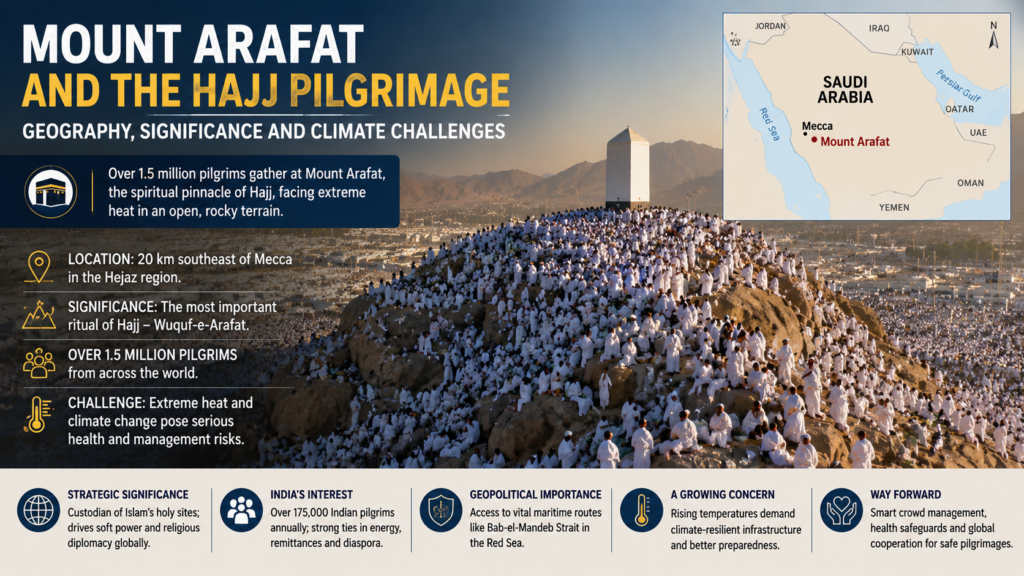
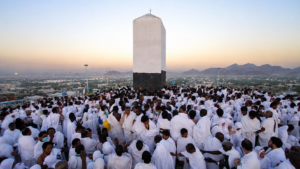
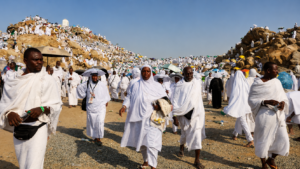
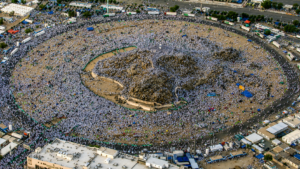
More than 1.5 million pilgrims recently gathered at Mount Arafat in Saudi Arabia during the annual Hajj pilgrimage, one of the largest religious gatherings in the world. The congregation at Arafat marks the most important day of Hajj and is considered the spiritual climax of the pilgrimage.
This year’s event has drawn global attention not only because of its religious significance but also due to the challenges posed by extreme heat conditions in the Arabian Desert. The gathering highlights the growing interaction between ancient religious traditions and modern concerns such as climate change, disaster management, and public health.
For UPSC aspirants, this topic is important under Geography, International Relations, West Asia, Climate Change, Disaster Management, and Religious Pilgrimages.
What is Mount Arafat?
Mount Arafat, also known as the Hill of Mercy (Jabal al-Rahmah), is a granite hill located about 20 kilometers southeast of Mecca in western Saudi Arabia.
It is one of the holiest sites in Islam and plays a central role in the annual Hajj pilgrimage.
For Muslims, standing in prayer and reflection at Arafat, known as Wuquf-e-Arafat, is considered the most important ritual of Hajj.
Geographical Location of Mount Arafat
Location
- Southeast of Mecca
- Hejaz Region
- Western Saudi Arabia
- Arabian Peninsula
The site lies within a broad rocky plain surrounded by desert landscapes.
Geographical Profile of Saudi Arabia
Saudi Arabia is the largest country in West Asia and occupies most of the Arabian Peninsula.
Borders
Saudi Arabia shares land borders with:
- Jordan
- Iraq
- Kuwait
- Qatar
- United Arab Emirates (UAE)
- Oman
- Yemen
It is bordered by:
- Red Sea (West)
- Persian Gulf (East)
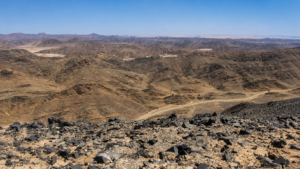
Important Physical Features of Saudi Arabia
Hejaz Mountains
A mountain range running parallel to the Red Sea coast.
The holy cities of:
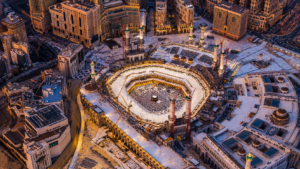
- Mecca
- Medina
are located within this region.
Arabian Desert
The country is largely covered by arid desert landscapes.
It is one of the largest desert regions in the world.
Rub’ al Khali (Empty Quarter)
One of the world’s largest continuous sand deserts.
It occupies much of southern Saudi Arabia.
Wadis
Saudi Arabia has no permanent rivers.
Instead, seasonal river channels called:
Wadis
carry water during occasional rainfall events.
What is Hajj?
Hajj is the annual Islamic pilgrimage to Mecca and is one of the Five Pillars of Islam.
Every physically and financially capable Muslim is expected to perform Hajj at least once in their lifetime.
The pilgrimage takes place during the Islamic month of:
Dhu al-Hijjah
and attracts millions of pilgrims from around the world.
Importance of Mount Arafat During Hajj
The second day of Hajj is known as:
Day of Arafat
Pilgrims gather at Mount Arafat and spend the day:
- Praying
- Seeking forgiveness
- Reflecting spiritually
This ritual is regarded as the most significant component of Hajj.
A well-known Islamic tradition states:
“Hajj is Arafat”
highlighting its central importance.
Religious Significance of Mount Arafat
According to Islamic belief:
- Prophet Muhammad delivered his Farewell Sermon at Arafat.
- The site symbolizes repentance, equality, and devotion.
- Pilgrims seek spiritual purification and divine mercy.
The gathering represents unity among Muslims regardless of nationality, ethnicity, or social status.
Why is Mount Arafat Strategically Important?
Saudi Arabia derives immense cultural and diplomatic influence from hosting Islam’s holiest sites.
The annual Hajj pilgrimage strengthens the country’s:
Religious Leadership
within the Muslim world.
Soft Power
through religious diplomacy and international engagement.
Global Visibility
as millions of pilgrims visit every year.
Climate Challenges During Hajj
One of the major concerns highlighted this year is:
Extreme Heat
The Hajj pilgrimage often occurs under harsh desert conditions.
Temperatures can exceed:
45°C
during summer months.
Why is Heat a Growing Concern?
Climate scientists warn that:
- Global temperatures are rising.
- Heatwaves are becoming more frequent.
- Desert regions are warming rapidly.
This creates serious risks for large gatherings in open environments.
Health Risks Associated with Extreme Heat
Millions of pilgrims spend long hours outdoors.
Potential risks include:
Heat Stroke
A potentially life-threatening condition caused by overheating.
Heat Exhaustion
Symptoms include:
- Fatigue
- Dizziness
- Dehydration
Dehydration
High temperatures increase water loss from the body.
Crowd Management Challenges
Large gatherings require careful emergency planning.
Climate Change and Religious Pilgrimages
The Hajj is increasingly becoming an example of how climate change affects cultural and religious practices.
Governments and organizers are exploring measures such as:
- Cooling infrastructure
- Mist systems
- Medical camps
- Heat warning systems
- Improved emergency response mechanisms
India’s Interest in Saudi Arabia
India has strong strategic, economic, and cultural ties with Saudi Arabia.
Hajj Pilgrims from India
India has one of the world’s largest Muslim populations.
Every year, over:
175,000 Indian Pilgrims
travel to Saudi Arabia for Hajj through arrangements coordinated by the Government of India.
Indian Diaspora
Millions of Indians live and work in Saudi Arabia.
They contribute significantly through:
- Skilled employment
- Professional services
- Business activities
Energy Security
Saudi Arabia is one of India’s most important energy partners.
India imports substantial quantities of:
- Crude oil
- Petroleum products
from the Kingdom.
Remittances
Indian workers in Saudi Arabia send billions of dollars annually to India in the form of remittances.
These funds support families and contribute to India’s economy.
Strategic Importance of Saudi Arabia
Saudi Arabia occupies a crucial position in global trade and geopolitics.
Red Sea Access
The country overlooks major maritime trade routes.
West Asian Stability
Regional developments directly affect global energy markets.
Religious Diplomacy
Saudi Arabia’s role as custodian of Islam’s holiest sites gives it significant influence across the Muslim world.
Major Maritime Significance
The broader region includes important maritime choke points such as:
Bab-el-Mandeb Strait
connecting:
- Red Sea
- Gulf of Aden
This route is critical for:
- Global shipping
- Energy transportation
- International trade
Challenges in Managing Hajj
Authorities face several challenges:
- Crowd control
- Health emergencies
- Heat management
- Transportation logistics
- Security arrangements
Saudi Arabia continuously upgrades infrastructure to ensure the safety of pilgrims.
Way Forward
As climate risks increase, future Hajj management will require:
Climate-Resilient Infrastructure
Developing shaded and cooled public spaces.
Advanced Health Systems
Strengthening medical preparedness.
Smart Crowd Management
Using digital technologies for monitoring and guidance.
International Cooperation
Coordinating with participating countries to ensure pilgrim safety.
Balancing religious traditions with climate adaptation will be crucial for the future of large-scale pilgrimages.
UPSC Prelims Focus
Important Facts
| Feature | Details |
|---|---|
| Location | Near Mecca, Saudi Arabia |
| Region | Hejaz |
| Importance | Most important Hajj ritual |
| Holy Site | Mount Arafat (Jabal al-Rahmah) |
| Major Desert | Rub’ al Khali |
| Seasonal Rivers | Wadis |
Previous Year Question (UPSC Prelims 2014)
Which one of the following pairs of countries of South-West Asia does not open out to the Mediterranean Sea?
(a) Syria and Jordan
(b) Lebanon and Syria
(c) Jordan and Iraq
(d) Lebanon and Iraq
Correct Answer: (c) Jordan and Iraq
Exam Keywords
- Mount Arafat
- Hajj Pilgrimage
- Saudi Arabia
- Hejaz Region
- Rub’ al Khali
- Wadis
- Arabian Desert
- Climate Change
- Heatwaves
- Religious Pilgrimage
- Bab-el-Mandeb Strait
- West Asia
- Soft Power Diplomacy
- Energy Security
UPSC Syllabus Reference
GS Paper I & II – World Geography, Religious and Cultural Developments, West Asia, International Relations, Climate Change, and Disaster Management.