Kullu – Woolen Textile Industry
Syllabus: HP GK (UPSC, HPPSC Prelims)
The Kullu woollen textile industry of Himachal Pradesh is renowned for its handloom heritage, most notably the vibrant Kullu shawls. It is dominated by small cottage units where skilled artisans work with locally sourced high-quality wool to produce distinctive patterns and traditional garments. Despite pressure from cheaper machine-made imitations, the sector remains a vital livelihood source and an anchor of local craftsmanship.
Traditional products and techniques
- Kullu shawls: Iconic handloom pieces known for bold motifs and rich colours.
- Pattu: Woollen fabric worn by women as a stole.
- Dohru: A sari-like woollen garment for women.
- Chaddar: A traditional shawl for men.
- Patti: Coarse wool tweed used for coats, jackets, and trousers.
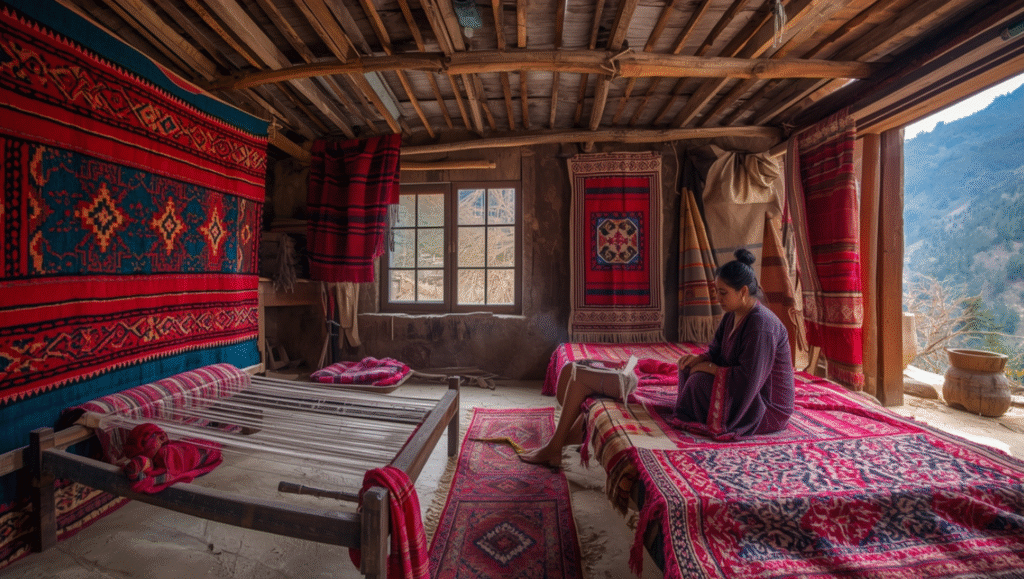
- Handloom weaving: Often produced on pit looms, with certain items woven in two halves and joined through detailed hand-stitching.
Key characteristics
- Scale: Predominantly small-scale, household or cottage-based units.
- Raw material: Locally sourced wool from sheep and goats.
- Economic role: A major source of income for artisan families.
- Cultural value: Sustains long-standing weaving traditions.
Challenges and support
- Challenges: Competition from machine-made substitutes and limited market access.
- Support measures: Government schemes offering financial aid, training, and marketing assistance to strengthen the handloom sector.