Himachal Pradesh Targets 500 MW Solar Power Capacity: Latest Update on Hydropower, Green Hydrogen and Renewable Energy Projects (2026)
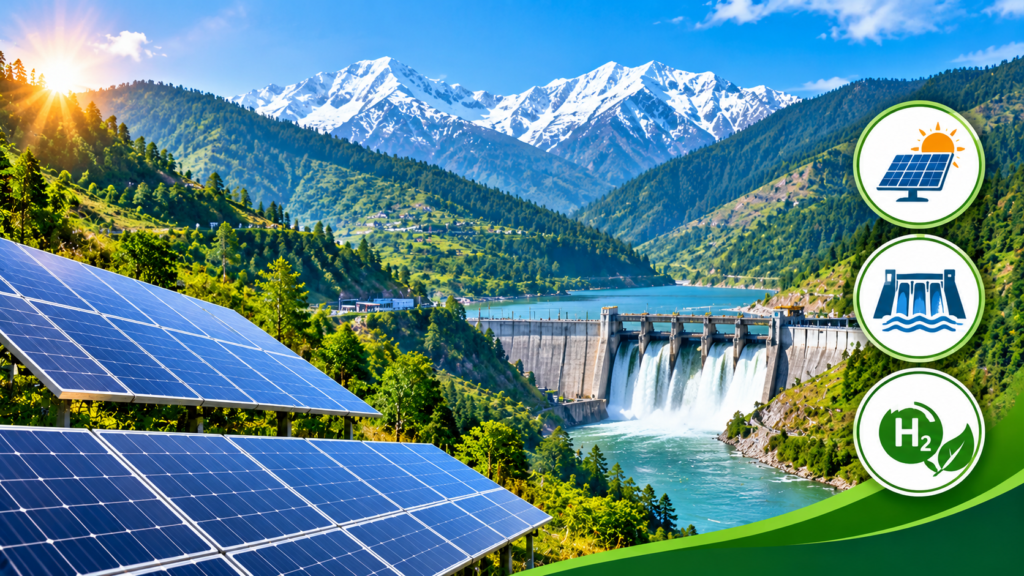
Himachal Pradesh is accelerating its transition towards clean energy with a 500 MW solar power target, major hydropower projects, green hydrogen development and new energy-storage initiatives.
Introduction
Himachal Pradesh is strengthening its position as one of India’s important renewable energy-producing states. With abundant hydropower potential, favourable locations for solar energy and growing investment in emerging technologies, the state is working towards diversifying its energy sector.
In a significant update reported on 23 November 2026, Himachal Pradesh Power Corporation Limited (HPPCL) reported electricity generation of approximately 3,459.99 million units (MUs) and revenue of ₹1,387.49 crore from its operational projects over the four years since December 2022.
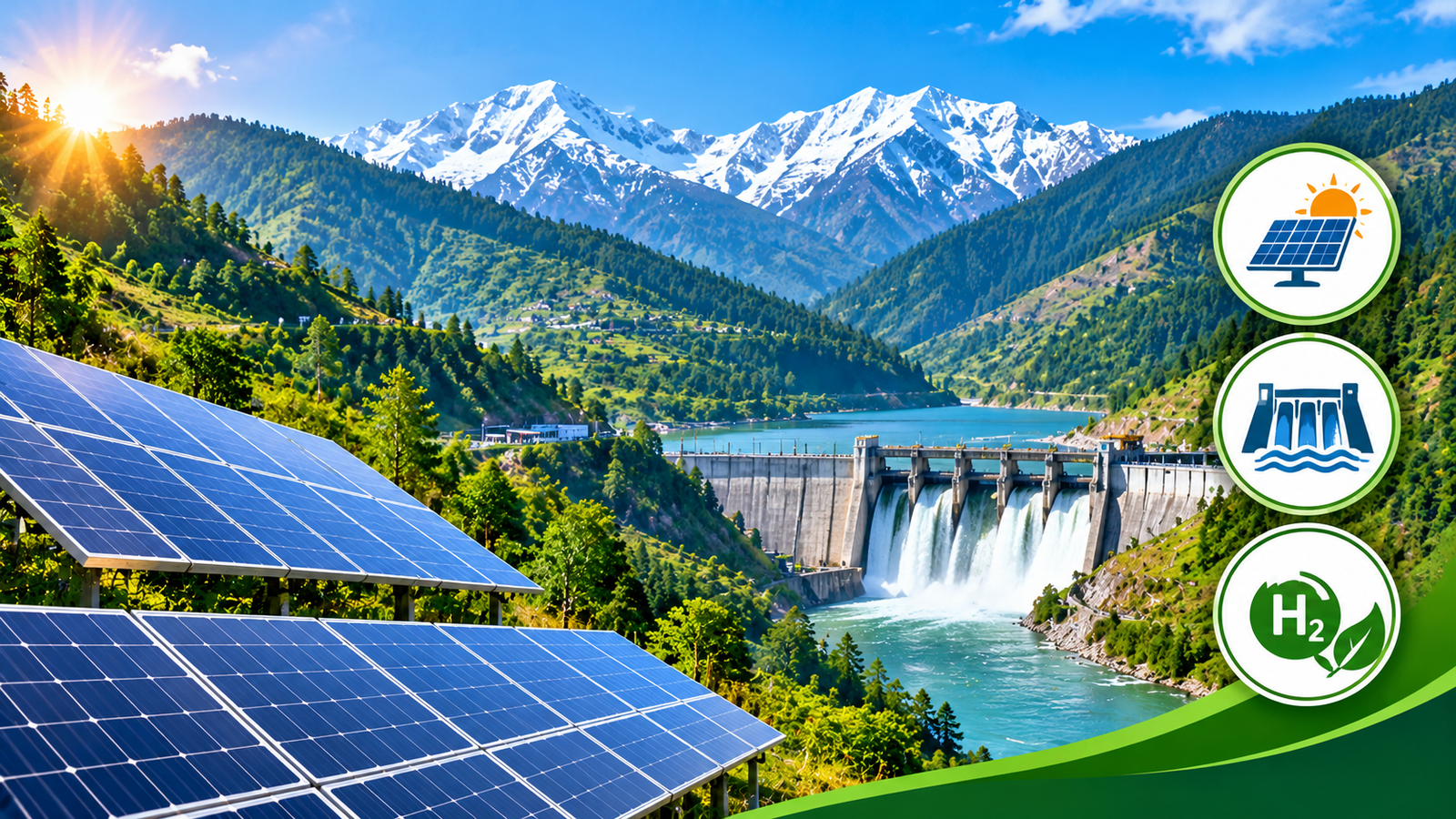
Alongside its hydropower operations, the state is pursuing a 500 MW solar power capacity target, advancing the 450 MW Shongtong-Karcham Hydroelectric Project and developing green hydrogen and compressed biogas facilities.
These developments represent an important step towards strengthening Himachal Pradesh’s energy security and building a diversified renewable energy ecosystem.
1. Himachal Pradesh’s 500 MW Solar Power Target
The state government has assigned HPPCL a target of installing 500 MW of solar power capacity as part of its renewable energy development programme.
Solar energy is becoming increasingly important for Himachal Pradesh because it can complement hydropower generation, diversify electricity sources and help address seasonal variations in electricity availability.
Latest Status of Solar Projects
According to the latest reported project status:
- Three solar projects with a combined capacity of approximately 29.6 MW are under execution.
- Four additional projects with a combined capacity of 34 MW are at the tendering stage.
- Tenders for two more projects with a combined capacity of 15 MW are expected to be issued.
- A proposed 200 MW solar power project at Damtal in Kangra district is also part of the state’s solar development plans.
Some important solar projects include:
| Solar Project | District | Capacity |
|---|---|---|
| Gondpur Bulla | Una | 12 MW |
| Lamlehari Uparli | Una | 11 MW |
| Bara Basot | Una | 6.6 MW |
| Pekhubela | Una | 32 MW |
| Damtal Solar Project | Kangra | 200 MW proposed |
The 32 MW Pekhubela Solar Power Project in Una is among the important commissioned solar projects of the state.
Why Is Solar Energy Important for Himachal Pradesh?
Although Himachal Pradesh has considerable hydropower potential, electricity generation from hydropower can vary according to seasonal river flows and water availability.
Solar energy can help:
- Diversify the state’s renewable energy portfolio.
- Complement hydropower generation.
- Reduce dependence on electricity purchases during periods of shortage.
- Promote investment in clean energy infrastructure.
- Support the state’s long-term green energy ambitions.
2. Hydropower: The Backbone of Himachal Pradesh’s Energy Sector
Hydropower remains the most important component of Himachal Pradesh’s electricity generation infrastructure.
The state’s mountainous terrain, perennial rivers and steep gradients provide favourable conditions for hydroelectric power generation.
According to HPPCL’s official information, the corporation has been allotted 18 hydroelectric projects with an aggregate installed capacity potential of 5,093 MW.
Its operational portfolio includes:
- Kashang Hydroelectric Project Stage-I – 65 MW
- Sainj Hydroelectric Project – 100 MW
- Sawra-Kuddu Hydroelectric Project – 111 MW
These projects have contributed significantly to the state’s electricity generation and revenue.
Latest Electricity Generation and Revenue Figures
HPPCL reported the following performance for its operational projects over the four years since December 2022:
| Particular | Reported Figure |
|---|---|
| Total electricity generated | 3,459.99 million units |
| Revenue earned | ₹1,387.49 crore |
| Sainj HEP generation | 1,252.56 MUs |
| Sawra-Kuddu HEP generation | 1,190.38 MUs |
| Kashang Stage-I generation | 776.32 MUs |
The Sainj Hydroelectric Project in Kullu district recorded the highest electricity generation among the three major operational hydropower projects listed in the latest report.
The Sawra-Kuddu project in Shimla district generated the highest revenue among these projects.
3. Shongtong-Karcham Hydroelectric Project: A Major Development
One of the most important ongoing hydropower projects in Himachal Pradesh is the 450 MW Shongtong-Karcham Hydroelectric Project, located in Kinnaur district on the Satluj River.
The project is expected to strengthen the state’s electricity generation capacity and contribute significantly to its energy economy.
Key Features
- Project capacity: 450 MW
- Location: Kinnaur district, Himachal Pradesh
- River: Satluj
- Project type: Run-of-the-river hydroelectric project
- Installed units: 3 units of 150 MW each
- Implementing agency: Himachal Pradesh Power Corporation Limited (HPPCL)
Recent construction milestones include the lowering of a 375-tonne generator rotor for Unit-II and mechanical readiness of Unit-I.
According to the latest reported project update, completion is expected by April 2027.
Why Is the Project Important?
The Shongtong-Karcham project is important because it will:
- Add 450 MW to the state’s hydropower generation capacity.
- Improve utilisation of the Satluj River’s hydropower potential.
- Generate revenue for the state.
- Support electricity availability and energy security.
- Create opportunities for infrastructure and economic development in Kinnaur.
4. Green Hydrogen: Moving Towards Future Energy Technologies
Himachal Pradesh is also exploring green hydrogen as an emerging clean energy source.
HPPCL, in collaboration with Oil India Limited (OIL), is developing a 1 MW green hydrogen plant at Dabhota in Nalagarh, Solan district.
The project is an important step towards diversifying the state’s renewable energy portfolio beyond conventional hydropower and solar energy.
What Is Green Hydrogen?
Green hydrogen is hydrogen produced through water electrolysis using renewable electricity.
In this process:
- Electricity generated from renewable sources is supplied to an electrolyser.
- Water is separated into hydrogen and oxygen.
- The hydrogen produced can be stored and used as an energy carrier.
Unlike hydrogen produced using fossil fuels without carbon capture, green hydrogen can be produced with very low direct emissions when renewable electricity is used.
Significance for Himachal Pradesh
Green hydrogen can support:
- Clean energy development.
- Industrial decarbonisation.
- Future transportation applications.
- Energy storage and diversification.
- Development of new clean-technology industries.
The Dabhota project is currently under development, with commissioning targeted for February 2027 in the latest reported update.
5. Compressed Biogas (CBG): Another Clean Energy Initiative
Apart from solar, hydropower and green hydrogen, HPPCL is also working towards establishing a 2-tonne-per-day Compressed Biogas (CBG) plant.
Compressed biogas is produced by processing biogas obtained from the decomposition of organic materials such as agricultural residues, animal waste and other biodegradable resources.
The gas is purified and compressed so that it can be used as a fuel.
Potential Benefits
- Better utilisation of organic waste.
- Promotion of circular economy practices.
- Reduction in waste-related environmental problems.
- Development of alternative fuel sources.
- Additional opportunities for rural economic activities.
The CBG project is at the development stage, with its Detailed Project Report (DPR) being finalised.
6. Pumped Storage Projects: Supporting Renewable Energy Integration
As solar and other variable renewable energy sources expand, energy storage becomes increasingly important.
Himachal Pradesh is exploring pumped storage hydropower projects to improve electricity storage and grid balancing.
Two proposed projects include:
| Project | District | Proposed Capacity |
|---|---|---|
| Renukaji Pump Storage Project | Sirmaur | 1,630 MW |
| Thana Plaun Pump Storage Project | Mandi | 270 MW |
What Is Pumped Storage Hydropower?
Pumped storage is a method of storing electrical energy using two reservoirs at different elevations.
- When excess electricity is available, water is pumped from the lower reservoir to the upper reservoir.
- When electricity demand rises, water is released back through turbines to generate electricity.
It acts like a large-scale energy storage system and can help balance fluctuations in solar and wind power generation.
Important: The above capacities relate to proposed projects. They should not be confused with commissioned electricity-generation or storage capacity.
7. Role of Himachal Pradesh Power Corporation Limited (HPPCL)
HPPCL plays a major role in developing the state’s power-generation infrastructure.
It was incorporated in December 2006 under the Companies Act, 1956, with the objective of planning, promoting and organising power generation on behalf of the Himachal Pradesh Government.
Its major areas of activity include:
- Hydroelectric power development.
- Solar power generation.
- Green hydrogen development.
- Compressed biogas projects.
- Renewable energy integration.
- Exploration of pumped storage and hybrid energy solutions.
HPPCL is therefore an important institution in the state’s transition towards a diversified renewable energy economy.
8. Challenges in Himachal Pradesh’s Renewable Energy Transition
Despite its considerable renewable energy potential, Himachal Pradesh faces several challenges.
Geographical challenges: Mountainous terrain, difficult accessibility and geological conditions can increase the cost and complexity of infrastructure development.
Environmental concerns: Hydropower projects may affect river ecosystems, aquatic biodiversity and local communities if environmental safeguards are inadequate.
Seasonal variations: Hydropower generation depends on river flows, while solar generation varies with weather and seasonal conditions.
Energy storage: Expansion of solar and other variable renewable energy sources requires efficient storage and grid-balancing infrastructure.
Financial and implementation challenges: Large infrastructure projects require substantial investment, timely clearances and effective execution.
Addressing these challenges will be important for ensuring sustainable and reliable energy development.
9. Significance for Himachal Pradesh’s Economy
The expansion of renewable energy infrastructure has implications beyond electricity generation.
It can contribute to:
- State revenue: Electricity generation and sale can provide an important source of income.
- Employment: Infrastructure development creates direct and indirect employment opportunities.
- Investment: Renewable energy projects can attract public and private investment.
- Energy security: Diversification can reduce dependence on external electricity purchases.
- Sustainable development: Clean energy can support long-term environmental and economic objectives.
The combination of hydropower, solar energy, green hydrogen and biogas can help Himachal Pradesh develop a more diversified energy sector.
10. HPAS/HPPSC Examination Perspective
This development is relevant to Himachal Pradesh General Studies, particularly topics related to the state’s economy, geography, natural resources, energy infrastructure and sustainable development.
Important Facts for Prelims
| Topic | Important Fact |
|---|---|
| HPPCL incorporation | December 2006 |
| HPPCL solar target | 500 MW |
| HPPCL operational hydro projects listed | Sainj, Kashang-I, Sawra-Kuddu |
| Shongtong-Karcham capacity | 450 MW |
| Shongtong-Karcham river | Satluj |
| Shongtong-Karcham district | Kinnaur |
| Green hydrogen plant | Dabhota, Nalagarh |
| Green hydrogen capacity | 1 MW |
| Proposed CBG plant | 2 tonnes/day |
| Renukaji Pump Storage proposal | 1,630 MW |
| Thana Plaun Pump Storage proposal | 270 MW |
Important Prelims MCQs
Q1. The 450 MW Shongtong-Karcham Hydroelectric Project is located on which river?
A. Beas
B. Ravi
C. Satluj
D. Chenab
Answer: C. Satluj
Q2. Which organisation is primarily responsible for developing the state’s major state-sector power-generation projects?
A. HIMURJA
B. HPPCL
C. HPSEBL
D. HRTC
Answer: B. HPPCL
Q3. The proposed 1 MW green hydrogen plant in Himachal Pradesh is being developed at:
A. Una
B. Dabhota, Nalagarh
C. Kinnaur
D. Dharamshala
Answer: B. Dabhota, Nalagarh
Q4. What is the proposed capacity of the Renukaji Pump Storage Project?
A. 270 MW
B. 450 MW
C. 1,000 MW
D. 1,630 MW
Answer: D. 1,630 MW
Q5. What is the primary purpose of pumped storage hydropower?
A. Producing hydrogen directly from rivers
B. Storing energy and balancing electricity demand
C. Increasing river sedimentation
D. Replacing all conventional power plants
Answer: B. Storing energy and balancing electricity demand
Conclusion
Himachal Pradesh is moving towards a diversified renewable energy model by strengthening its hydropower infrastructure while expanding solar power and exploring green hydrogen, compressed biogas and pumped storage technologies.
The state’s 500 MW solar power target, the 450 MW Shongtong-Karcham project and the proposed clean-energy initiatives reflect its efforts to strengthen energy security, generate revenue and promote sustainable development.
The latest HPPCL performance figures also highlight the economic contribution of the state’s operational power projects.
For Himachal Pradesh, the future of the energy sector will depend not only on expanding generation capacity but also on balancing economic development, environmental protection and long-term energy security.