Naxalism-Free India 2026: Government Strategy, Achievements and Challenges
Introduction
Left-Wing Extremism (LWE), commonly known as Naxalism or Maoist insurgency, has been one of India’s major internal security challenges. It has affected several states, particularly tribal and remote regions, through violence, intimidation and attacks on security forces and public infrastructure.
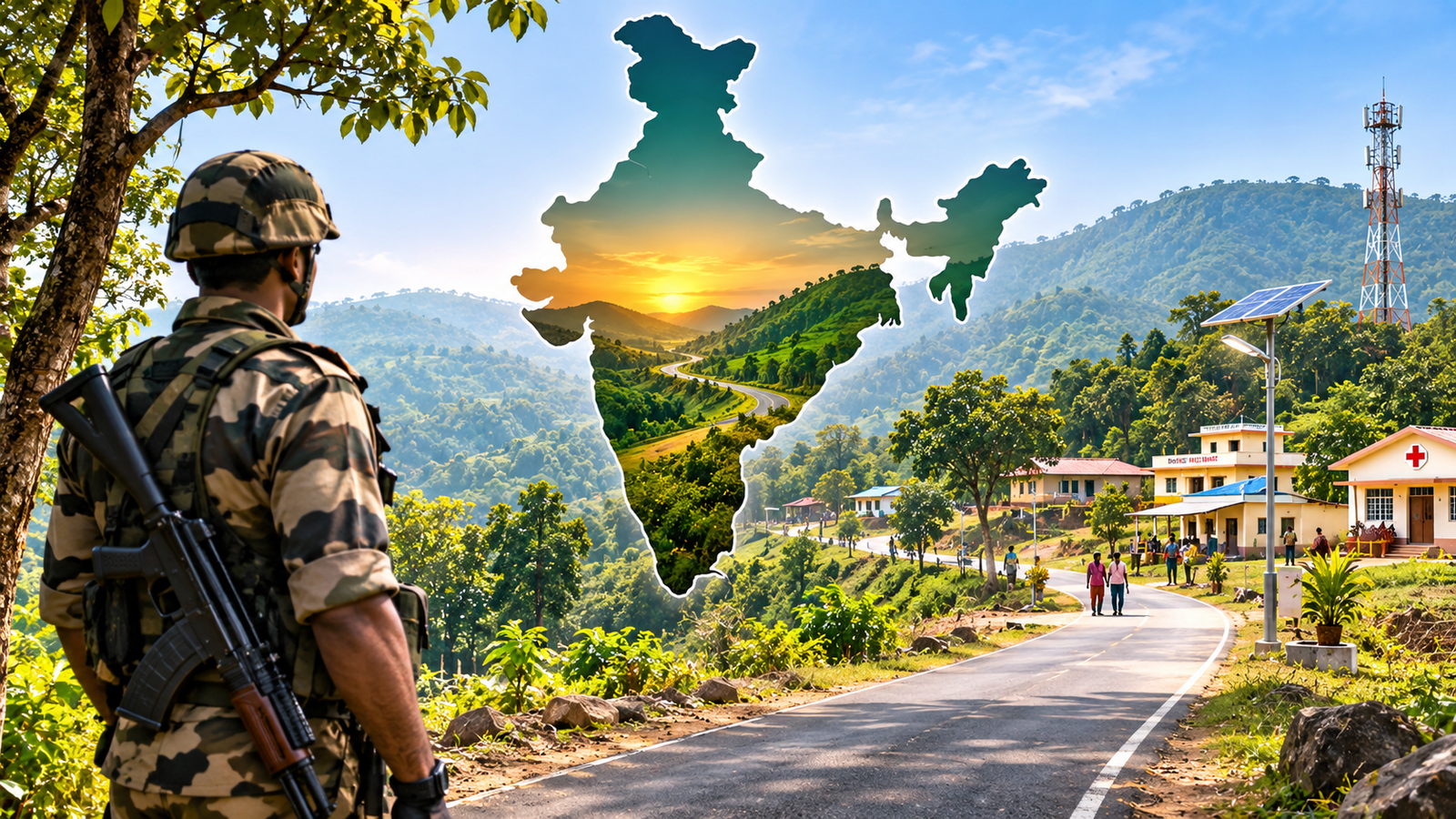
India achieved a major milestone in March 2026 when the number of officially classified LWE-affected districts fell to zero. This development reflects the impact of security operations, better infrastructure, development programmes and coordination between the Centre and State Governments.
However, the challenge is not limited to eliminating armed groups. The long-term priority is to ensure peace, protect tribal rights and provide inclusive development in formerly affected regions.
What is Left-Wing Extremism?
Left-Wing Extremism refers to violent movements that seek to establish political and economic change through armed struggle against the existing state structure.
In India, Naxalism is influenced by Maoist ideology. Maoism advocates revolutionary political change, historically through armed struggle.
The term Naxalism originated from the Naxalbari uprising of 1967 in West Bengal.
What is the Red Corridor?
The Red Corridor refers to areas across central and eastern India that were historically affected by Maoist or Naxalite activities. These areas included parts of Chhattisgarh, Jharkhand, Odisha, Bihar, Maharashtra and Andhra Pradesh.
The geographical spread of Naxalism has reduced significantly over the years.
Naxalism-Free India: Latest Developments
According to the Ministry of Home Affairs, India achieved zero officially classified LWE-affected districts in March 2026.
Key developments include:
- LWE-affected districts declined from 126 to zero.
- The number of affected districts reduced to 8 in December 2025.
- By March–April 2026, no district remained in the officially classified LWE-affected category.
- 37 districts are classified as Legacy and Thrust districts, where continued security and development support is required.
- One district has been placed in the District of Concern category, despite the containment of violent activities.
The government has emphasised that continued surveillance and development interventions are necessary to prevent the return of extremism.
Why Did Naxalism Grow in India?
Naxalism did not emerge only as a law-and-order problem. Its growth was also linked to deeper social, economic and governance-related issues.
Land and Forest Rights
Many tribal communities faced displacement, land alienation and difficulties in accessing forest resources. Lack of effective implementation of land and forest rights contributed to local dissatisfaction.
Poverty and Underdevelopment
Several affected regions suffered from poor roads, limited healthcare facilities, inadequate schools and lack of employment opportunities.
Governance Deficit
In some remote areas, the presence of government institutions and public services remained weak. Extremist groups attempted to exploit this gap.
Exploitation of Tribal Communities
Issues such as displacement, exploitation by contractors and moneylenders, and limited access to justice contributed to grievances in some regions.
Important: These factors help explain the conditions in which extremism developed. They do not justify violence or attacks on civilians and security personnel.
Government Strategy to Eliminate Naxalism
The Government of India adopted a comprehensive approach combining security measures, development interventions and protection of local communities.
National Policy and Action Plan, 2015
The National Policy and Action Plan to address LWE was approved in 2015.
It follows a multi-dimensional approach based on:
- Security-related measures
- Development interventions
- Protection of rights and entitlements
- Improved governance
- Rehabilitation of surrendered cadres
Security Measures
The government strengthened security infrastructure in affected regions through:
- Deployment of Central Armed Police Forces.
- Establishment of security camps.
- Construction of fortified police stations.
- Intelligence sharing between agencies.
- Modernisation of State police forces.
- Coordinated operations between Central and State forces.
Development Measures
Development is essential for preventing the revival of extremism.
Important interventions include:
- Road connectivity in remote areas.
- Expansion of mobile and internet connectivity.
- Better access to education and healthcare.
- Skill development and employment opportunities.
- Banking and financial inclusion.
- Improved access to government welfare schemes.
Rehabilitation of Surrendered Cadres
The government also encourages members of extremist groups to surrender and return to mainstream society.
Rehabilitation measures may include financial assistance, skill development, employment support and other benefits under applicable policies.
Major Achievements
The reduction in LWE-affected districts reflects improvements in security and governance.
According to the Ministry of Home Affairs, major achievements include:
- Reduction in LWE-affected districts from 126 to zero.
- Establishment of security camps in previously inaccessible areas.
- Expansion of road and telecom connectivity.
- Improvement in access to banking and public services.
- Surrender and rehabilitation of former cadres.
- Greater coordination between Central and State agencies.
These achievements have helped restore government presence in several remote regions.
Challenges After Declaring India Naxalism-Free
The reduction of armed insurgency is a major achievement, but maintaining peace requires continuous efforts.
Risk of Resurgence
Extremist networks may attempt to reorganise if security and governance measures are withdrawn too early.
Tribal Rights and Development
Tribal communities must receive fair access to land, forests, education, healthcare and livelihood opportunities.
Trust Deficit
Building trust between local communities and government institutions is essential for sustainable peace.
Rehabilitation and Reintegration
Former cadres need meaningful opportunities to return to normal social and economic life.
Development Without Displacement
Infrastructure and industrial projects in tribal regions should follow environmental safeguards, legal provisions and proper consultation with affected communities.
Way Forward
India needs to move from a security-focused response towards sustainable peace and inclusive development.
- Continue security monitoring in former LWE-affected regions.
- Ensure effective implementation of the Forest Rights Act, 2006.
- Strengthen the Panchayati Raj system and Gram Sabhas.
- Improve healthcare, education and connectivity in remote areas.
- Promote employment, skill development and livelihood opportunities.
- Ensure transparent implementation of rehabilitation policies.
- Protect tribal communities from exploitation and unlawful displacement.
- Strengthen coordination between Central and State Governments.
Conclusion
The achievement of zero officially classified LWE-affected districts in March 2026 marks an important milestone in India’s internal security journey.
However, the real success of a Naxalism-free India will depend on whether peace is sustained through justice, development, democratic participation and protection of tribal rights.
The long-term objective should not only be to eliminate extremism but also to eliminate the conditions that allow extremism to grow.
UPSC Syllabus Relevance
GS Paper III – Internal Security
- Linkages between development and spread of extremism.
- Challenges to internal security.
- Role of external and non-state actors.
- Security forces and their mandate.
GS Paper II – Governance
- Government policies and interventions.
- Welfare schemes for vulnerable sections.
- Issues related to tribal communities and social justice.
Prelims Facts
- Naxalbari uprising: 1967, West Bengal.
- LWE stands for Left-Wing Extremism.
- National Policy and Action Plan to address LWE: 2015.
- Ministry responsible for national-level coordination: Ministry of Home Affairs.
- Police and Public Order are State subjects under the Seventh Schedule.
- India reached zero officially classified LWE-affected districts in March 2026.
- 37 districts were placed in the Legacy and Thrust category, according to the July 2026 government update.
Mains Practice Question
“Elimination of Left-Wing Extremism requires not only strong security measures but also inclusive development and effective governance.” Discuss.
Word limit: 250 words