Critical Mineral Processing Scheme 2026: Objectives, Features and Significance for India
Introduction
Critical minerals have become essential for economic development, national security and the global transition towards clean energy. Minerals such as lithium, nickel, cobalt, graphite and rare earth elements are widely used in electric vehicle batteries, renewable energy technologies, electronics, telecommunications and defence equipment.
However, having access to mineral resources is not enough. Countries also need the technology and industrial capacity to process raw minerals into high-purity materials that can be used by manufacturers.
India currently depends substantially on imports for several refined critical mineral products and high-purity materials. This creates risks for domestic industries, particularly in the electric vehicle, battery, electronics and defence sectors.
To address this challenge, the Union Cabinet approved the CAPEX Support Scheme to Promote Critical Mineral Processing on 4 November 2026, with a financial outlay of ₹2,814 crore.
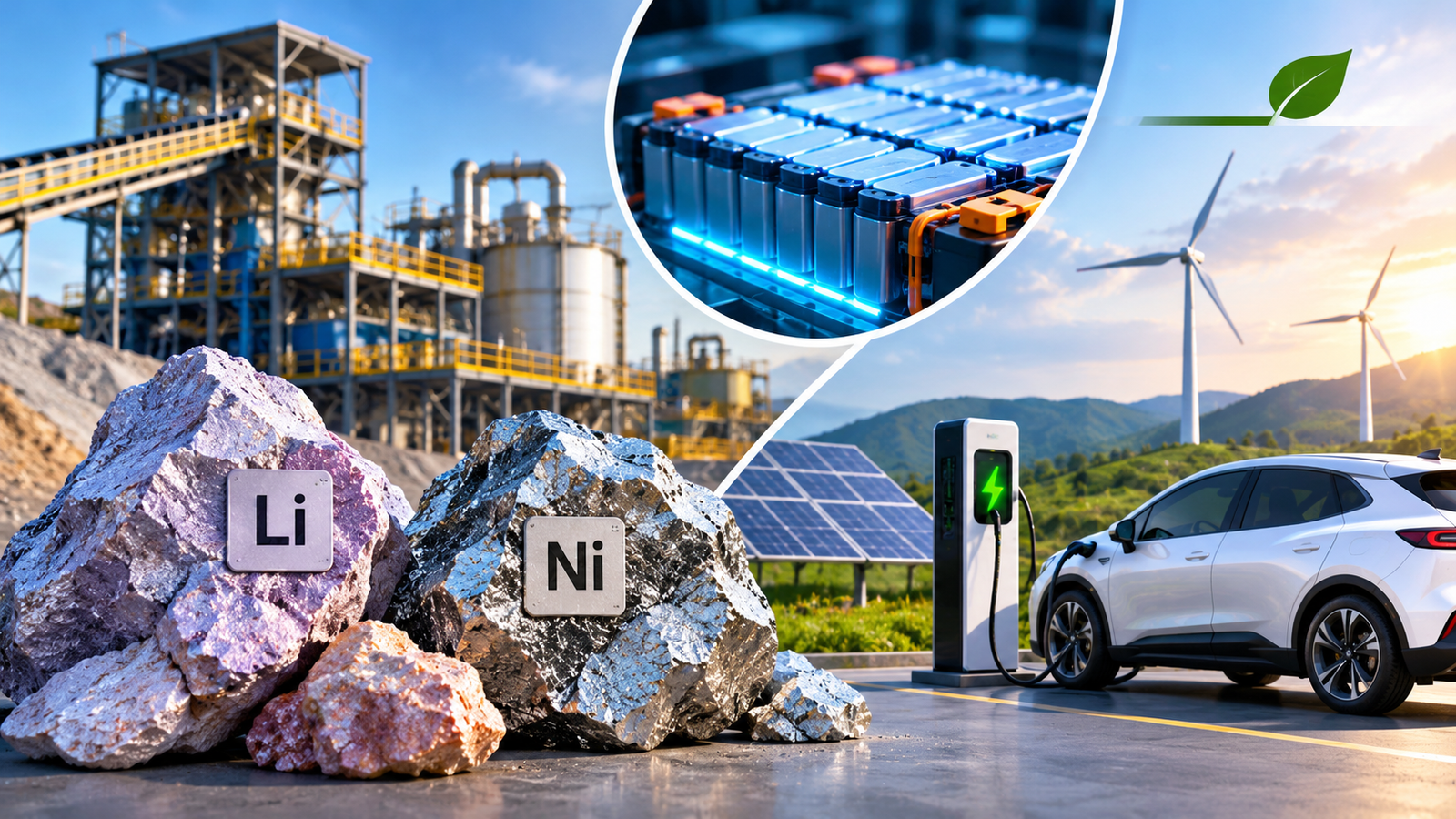
The scheme aims to develop domestic processing facilities for lithium and nickel, encourage private investment, increase domestic value addition and reduce India’s dependence on imported processed minerals.
Why in News?
On 4 November 2026, the Union Cabinet approved the CAPEX Support Scheme to Promote Critical Mineral Processing.
The scheme will operate for five years, from Financial Year 2026–27 to 2030–31.
Under the scheme, the government will provide a capital subsidy of 30% of eligible investment to establish four critical mineral processing plants:
- Two lithium processing plants.
- Two nickel processing plants.
The initiative is expected to attract approximately ₹10,000 crore in investment and strengthen India’s domestic critical mineral supply chain.
What Are Critical Minerals?
Critical minerals are minerals that are economically important and strategically essential but may face risks related to supply disruption.
These minerals are important for industries such as clean energy, electric mobility, electronics, defence, aerospace and telecommunications.
A mineral is generally considered critical when:
- It has high economic importance.
- It is essential for important industries and technologies.
- Its supply is vulnerable to geopolitical, geographical or market-related disruptions.
- Suitable substitutes are limited or difficult to develop.
The Government of India has identified 24 critical minerals, including lithium, nickel, cobalt, graphite and rare earth elements.
Important Critical Minerals and Their Uses
| Mineral | Major Uses |
|---|---|
| Lithium | Electric vehicle batteries and energy storage |
| Nickel | Batteries, stainless steel and industrial alloys |
| Cobalt | Rechargeable batteries and superalloys |
| Graphite | Battery anodes and industrial applications |
| Rare Earth Elements | Electronics, permanent magnets and defence equipment |
| Copper | Electrical equipment, power transmission and renewable energy |
| Titanium | Aerospace, defence and medical applications |
What Is the CAPEX Support Scheme to Promote Critical Mineral Processing?
The CAPEX Support Scheme is a government initiative designed to encourage companies to establish processing facilities for critical minerals in India.
CAPEX stands for Capital Expenditure. It refers to money invested in purchasing or creating long-term assets such as land, buildings, machinery, equipment and industrial plants.
Under this scheme, the government will provide financial assistance to eligible companies for establishing lithium and nickel processing plants.
The focus is not simply on extracting minerals from the earth. It is on developing the industrial capacity to convert mineral ores and intermediate materials into high-purity products required by domestic industries.
Key Objectives of the Scheme
- Develop domestic lithium and nickel processing capabilities.
- Reduce dependence on imported refined critical minerals.
- Encourage private-sector investment in mineral processing.
- Promote domestic manufacturing and value addition.
- Strengthen supply-chain resilience.
- Support electric mobility and battery manufacturing.
- Improve India’s strategic and economic security.
Major Features of the Critical Mineral Processing Scheme 2026
Financial Outlay and Duration
The scheme has a total financial outlay of ₹2,814 crore.
It will be implemented over five years, from FY 2026–27 to FY 2030–31.
The scheme is fully funded through budgetary support from the Government of India.
30% Capital Subsidy
The government will provide a capital subsidy equal to 30% of eligible investment for setting up the approved processing plants.
This financial support is intended to reduce the initial investment burden on companies and make domestic processing projects more commercially viable.
Establishment of Four Processing Plants
The scheme will support four commercial-scale processing plants.
| Mineral | Number of Plants | Minimum Capacity of Each Plant | Maximum Capital Support per Beneficiary |
|---|---|---|---|
| Lithium | 2 | 30 kilotonnes | ₹500 crore |
| Nickel | 2 | 50 kilotonnes | ₹900 crore |
The combined planned processing capacity is expected to reach:
- 60 kilotonnes for lithium.
- 100 kilotonnes for nickel.
The maximum support for lithium beneficiaries will be ₹1,000 crore in total, while nickel beneficiaries can receive a maximum of ₹1,800 crore collectively.
An additional ₹14 crore is allocated for administrative expenses.
Two-Stage Selection Process
The government will select beneficiaries through a competitive two-stage process.
Stage 1: Technical Qualification
Applications will first be assessed on technical criteria. Only applicants meeting the required technical conditions will qualify for the next stage.
Stage 2: Financial Bidding
Technically qualified applicants will participate in financial bidding.
Beneficiaries will be selected according to the least-cost criterion. This means preference will be given to eligible bidders seeking the lowest capital subsidy from the government.
Two beneficiaries will be selected for each mineral, making four beneficiaries in total.
Milestone-Based Release of Subsidy
The government will not release the entire subsidy amount at once. Financial support will be provided in three stages, depending on investment and project progress.
| Stage | Project Milestone | Cumulative Subsidy Released |
|---|---|---|
| First | 25% of committed CAPEX spent and at least 15% of required equity contributed | 25% |
| Second | 50% of committed CAPEX spent and at least 50% of required equity contributed | 50% |
| Third | Plant commissioned and 100% of required equity contributed | 100% |
This mechanism is intended to ensure that government assistance is linked to actual investment and project implementation.
Timeline for Plant Commissioning
Selected beneficiaries must commission their plants within three years of receiving the Letter of Award.
However, commissioning must be completed within a maximum period of five years from the Letter of Award.
If commissioning is delayed beyond three years, the remaining subsidy will be subject to a tapering mechanism until the fifth year.
Why Are Lithium and Nickel Important for India?
The scheme specifically focuses on lithium and nickel because both minerals are important for modern industrial development and clean energy technologies.
Lithium: Essential for Electric Mobility
Lithium is a lightweight metal widely used in rechargeable batteries.
It is particularly important for lithium-ion batteries, which are used in:
- Electric cars and two-wheelers.
- Mobile phones and laptops.
- Grid-scale energy storage systems.
- Renewable energy storage.
India’s growing electric vehicle industry and renewable energy sector will require a reliable supply of battery materials.
Domestic lithium processing can help reduce dependence on imported refined materials and support the development of India’s battery manufacturing ecosystem.
Nickel: Important for Batteries and Industrial Manufacturing
Nickel is an important industrial metal used in stainless steel, special alloys and battery manufacturing.
Its major applications include:
- Electric vehicle batteries.
- Stainless steel production.
- Aerospace and defence equipment.
- Industrial machinery.
- Speciality steel manufacturing.
The scheme also focuses on recovering cobalt as a by-product of nickel processing.
This is important because cobalt is another strategically significant mineral used in several battery technologies and high-performance industrial applications.
Why Does India Need Domestic Critical Mineral Processing?
India’s critical mineral challenge is not limited to the availability of natural resources. The country also needs the technology, infrastructure and industrial capacity to process them.
The development of domestic processing facilities is important for several reasons.
Reducing Import Dependence
India depends heavily on international supply chains for several refined critical mineral products.
Excessive dependence on imports can expose domestic industries to price fluctuations, geopolitical tensions and export restrictions.
Developing domestic processing capacity can reduce these vulnerabilities.
Strengthening National Security
Critical minerals are used in defence equipment, aerospace technologies, communication systems and advanced electronics.
A disruption in their supply can affect important strategic industries.
Domestic processing can therefore contribute to India’s long-term national security.
Supporting Electric Vehicles and Renewable Energy
India is expanding its electric mobility and renewable energy sectors.
Lithium and nickel are important inputs for several battery technologies.
Reliable access to processed minerals can support domestic battery manufacturing and energy storage infrastructure.
Promoting Atmanirbhar Bharat
The scheme aims to increase domestic value addition rather than depending only on imported processed materials.
It can encourage Indian companies to invest in advanced industrial technologies and strengthen domestic manufacturing capabilities.
Creating Investment and Employment Opportunities
The scheme is expected to attract around ₹10,000 crore in investment.
The establishment of processing plants can create direct and indirect employment in engineering, manufacturing, mining services, logistics and associated industries.
Expected Outcomes of the Scheme
The CAPEX Support Scheme is expected to generate several economic and strategic benefits.
| Area | Expected Impact |
|---|---|
| Domestic manufacturing | Development of lithium and nickel processing facilities |
| Investment | Approximately ₹10,000 crore in processing investment |
| Processing capacity | 60 kt lithium and 100 kt nickel |
| Import substitution | Reduced dependence on imported refined materials |
| Electric mobility | Better availability of battery materials |
| Defence and electronics | Stronger domestic supply chains |
| Employment | Direct and indirect job creation |
| Economic security | Greater resilience against global supply disruptions |
These are expected outcomes of the scheme, not results already achieved.
Connection with the National Critical Mineral Mission
The CAPEX Support Scheme is part of India’s broader effort to strengthen its critical mineral ecosystem.
An important initiative in this direction is the National Critical Mineral Mission (NCMM), approved by the Union Cabinet on 29 January 2025.
The mission aims to strengthen India’s entire critical mineral value chain, from exploration and mining to processing, recycling and recovery.
It covers important activities such as:
- Exploration of domestic critical mineral resources.
- Acquisition of critical mineral assets abroad.
- Development of domestic mining capabilities.
- Processing and beneficiation.
- Recycling and recovery of critical minerals.
- Research, development and technological advancement.
The government also approved a ₹1,500 crore Critical Mineral Recycling Incentive Scheme in September 2025 to promote the recovery of critical minerals from secondary sources such as electronic waste, spent lithium-ion batteries and industrial scrap.
How Do These Initiatives Complement Each Other?
| Initiative | Main Focus |
|---|---|
| National Critical Mineral Mission | Strengthening the entire critical mineral value chain |
| CAPEX Support Scheme 2026 | Developing domestic lithium and nickel processing |
| Critical Mineral Recycling Incentive Scheme | Recovering critical minerals from waste and scrap |
| Critical Mineral Exploration and Mining Initiatives | Identifying and developing mineral resources |
Together, these initiatives aim to strengthen India’s domestic capabilities across different stages of the critical mineral value chain.
Challenges in Developing India’s Critical Mineral Processing Industry
Although the scheme is an important step, India faces several challenges in developing a competitive domestic processing industry.
Limited Access to Raw Materials
Processing plants require a reliable supply of mineral ores and concentrates.
Even if India develops processing capacity, inadequate access to raw materials can affect the commercial viability of these facilities.
Technological Limitations
Critical mineral processing requires advanced technology, specialised equipment and technical expertise.
India needs to improve its research and development capabilities to compete with established global processing industries.
High Capital Requirements
Establishing commercial-scale processing facilities requires substantial investment.
The cost of machinery, infrastructure, energy and environmental safeguards can make these projects expensive.
Environmental Concerns
Mineral processing can generate chemical waste, consume large quantities of water and create pollution if not properly managed.
Strict environmental standards, waste treatment systems and responsible resource management are essential.
Global Supply Chain Concentration
The processing of several critical minerals is concentrated in a limited number of countries.
This creates risks related to geopolitical tensions, trade restrictions and supply disruptions.
India needs to diversify its sources of raw materials while building domestic industrial capacity.
Way Forward
To make the scheme successful, India needs a comprehensive strategy covering the entire critical mineral value chain.
Strengthen Research and Development: Invest in advanced processing technologies, mineral recovery methods and indigenous industrial equipment.
Ensure Raw Material Security: Develop domestic mineral resources and diversify international supply sources through strategic partnerships.
Promote Private Investment: Encourage collaboration between the government, private companies, research institutions and public-sector enterprises.
Adopt Sustainable Processing Methods: Ensure efficient water use, pollution control, safe disposal of industrial waste and responsible environmental management.
Develop Skilled Human Resources: Build specialised technical skills in mineral processing, metallurgy, chemical engineering and battery manufacturing.
Strengthen Recycling: Promote the recovery of critical minerals from electronic waste, used batteries and industrial scrap to support a circular economy.
Conclusion
The CAPEX Support Scheme to Promote Critical Mineral Processing is an important step towards strengthening India’s mineral security and domestic manufacturing capabilities.
By supporting the establishment of lithium and nickel processing plants, the scheme aims to address a crucial gap in India’s critical mineral value chain.
Its success will depend on effective implementation, reliable raw material supplies, technological advancement and environmentally sustainable industrial practices.
In the long term, stronger domestic processing capabilities can help India reduce import dependence, support clean energy technologies and strengthen its position in the global critical mineral economy.
UPSC Examination Relevance
GS Paper 2: Government policies and interventions for development; international relations and strategic partnerships.
GS Paper 3: Indian economy, infrastructure, investment models, science and technology, environmental sustainability, energy security and mineral resources.
Prelims: Critical minerals, lithium, nickel, cobalt, National Critical Mineral Mission, government schemes and their financial outlays.
Mains: India’s critical mineral dependence, supply-chain security, clean energy transition, strategic autonomy and domestic manufacturing.
Important Facts for UPSC Prelims
| Question Area | Important Fact |
|---|---|
| Scheme name | CAPEX Support Scheme to Promote Critical Mineral Processing |
| Approval | 4 November 2026 |
| Ministry | Ministry of Mines |
| Total outlay | ₹2,814 crore |
| Duration | FY 2026–27 to FY 2030–31 |
| Subsidy | 30% of eligible investment |
| Total plants | Four |
| Lithium plants | Two, minimum 30 kt each |
| Nickel plants | Two, minimum 50 kt each |
| Lithium support cap | ₹500 crore per beneficiary |
| Nickel support cap | ₹900 crore per beneficiary |
| Expected investment | Approximately ₹10,000 crore |
| National Critical Mineral Mission | Approved on 29 January 2025 |
Frequently Asked Questions (FAQs)
1. What is the Critical Mineral Processing Scheme 2026?
It is a government scheme approved by the Union Cabinet to promote domestic processing of critical minerals, particularly lithium and nickel, through capital expenditure support.
2. What is the total outlay of the scheme?
The scheme has a total financial outlay of ₹2,814 crore.
3. What percentage of capital investment will the government support?
The government will provide a capital subsidy of 30% of eligible investment.
4. Which minerals are covered under the scheme?
The scheme focuses on lithium and nickel processing. It also provides for cobalt recovery as a by-product of nickel processing.
5. How many processing plants will be established?
The scheme will support four plants: two lithium processing plants and two nickel processing plants.
6. What is the National Critical Mineral Mission?
The National Critical Mineral Mission is a government initiative aimed at strengthening India’s critical mineral value chain, including exploration, mining, processing and recycling.
7. Why are critical minerals important for India?
They are essential for electric vehicles, renewable energy, battery storage, electronics, telecommunications, defence and other strategic industries.
Practice MCQs for UPSC Prelims
Q1. With reference to the CAPEX Support Scheme to Promote Critical Mineral Processing, consider the following statements:
- The scheme has a financial outlay of ₹2,814 crore.
- It provides a capital subsidy of 30% of eligible investment.
- It focuses on establishing lithium and nickel processing plants.
Which of the statements given above are correct?
(a) 1 and 2 only
(b) 2 and 3 only
(c) 1 and 3 only
(d) 1, 2 and 3
Answer: (d) 1, 2 and 3
Q2. Which of the following minerals are specifically covered by the CAPEX Support Scheme to Promote Critical Mineral Processing?
(a) Lithium and Nickel
(b) Gold and Silver
(c) Copper and Zinc
(d) Iron ore and Bauxite
Answer: (a) Lithium and Nickel
Q3. Consider the following statements about the National Critical Mineral Mission:
- It aims to strengthen India’s critical mineral value chain.
- It covers exploration, mining, processing and recycling.
- It focuses exclusively on lithium extraction.
Which of the statements given above are correct?
(a) 1 only
(b) 1 and 2 only
(c) 2 and 3 only
(d) 1, 2 and 3
Answer: (b) 1 and 2 only
Q4. Lithium is particularly important for which of the following?
- Electric vehicle batteries
- Energy storage systems
- Rechargeable electronic devices
Select the correct answer:
(a) 1 only
(b) 1 and 2 only
(c) 2 and 3 only
(d) 1, 2 and 3
Answer: (d) 1, 2 and 3
Mains Practice Question
Q. Critical minerals have emerged as an important component of India’s economic and strategic security. Discuss the significance of the CAPEX Support Scheme to Promote Critical Mineral Processing in strengthening India’s domestic manufacturing and supply-chain resilience. (250 words)
Key points to cover in the answer:
- Introduction: Meaning and strategic importance of critical minerals.
- India’s challenge: Import dependence and concentration of global processing capacity.
- Scheme details: ₹2,814 crore outlay, 30% capital subsidy and four processing plants.
- Significance: Domestic value addition, electric mobility, clean energy, defence and employment.
- Challenges: Technology, raw material availability, investment and environmental concerns.
- Way forward: Research and development, international partnerships, recycling and sustainable processing.
- Conclusion: Link with Atmanirbhar Bharat and India’s long-term mineral security.
Sources and References
- Press Information Bureau (PIB), Government of India – CAPEX Support Scheme to Promote Critical Mineral Processing
- Press Information Bureau – Official Press Note on the CAPEX Support Scheme
- Ministry of Mines – Government of India.
- Press Information Bureau – National Critical Mineral Mission and Critical Mineral Recycling Incentive Scheme.
This article is prepared for UPSC CSE aspirants. Scheme details and expected outcomes should be distinguished from actual implementation progress as new government updates become available.