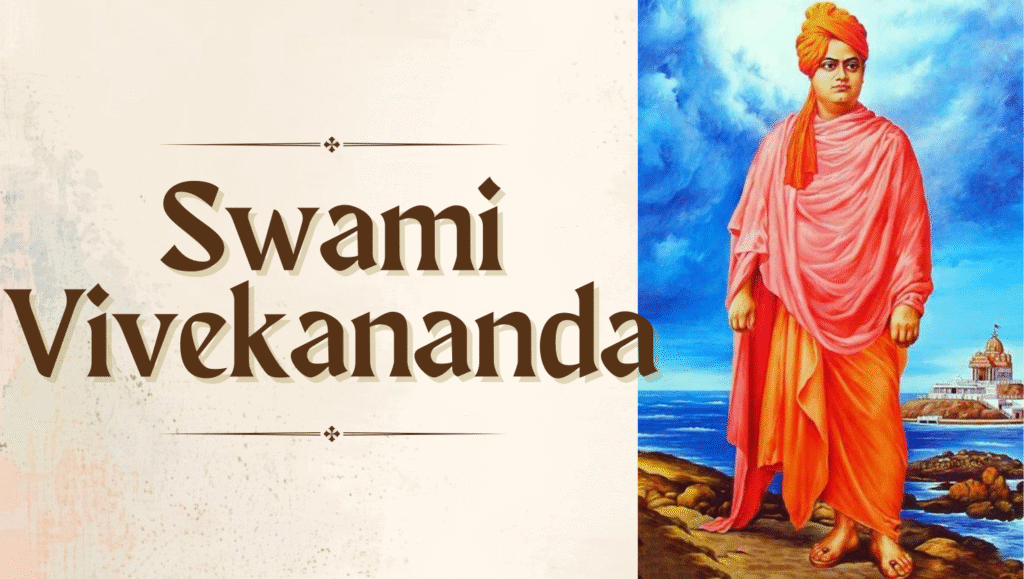
Swami Vivekananda: Background & Contribution
Syllabus: Modern History (UPSC Prelims)
Swami Vivekananda (1863–1902), born Narendranath Datta in Kolkata, was one of India’s most influential spiritual leaders and key thinkers of the Indian Renaissance. He is best known globally for his famous 1893 speech at the Parliament of the World’s Religions in Chicago, where he introduced Vedanta, Yoga, and Hindu thought to the West.
Early Life & Influence of Ramakrishna
Vivekananda grew up in a progressive Bengali family and received education in philosophy and Western thought. His spiritual turning point came when he met Ramakrishna Paramahamsa in 1881. Ramakrishna taught him the unity of all religions and the idea that divinity lies within every human being. After Ramakrishna’s death, Vivekananda took monastic vows and dedicated himself to spreading his guru’s teachings.
Key Contributions
- Revival of Hinduism: Presented Hinduism as a rational, universal religion suitable for modern times.
- Founded Ramakrishna Mission1 (1897): Combined spiritual teachings with social service and philanthropy.
- Education Reform: Advocated a model combining science, rational inquiry, and moral character building.
- Social Reform: Opposed caste rigidity, supported women’s education and upliftment of the poor.
- Globalization of Vedanta & Yoga: Popularised neo-Vedanta and Yoga in the West through lectures and writings.
His books like Raja Yoga, Karma Yoga, Jnana Yoga remain foundational texts.
Philosophy
Vivekananda believed:
- all religions lead to the same truth (universalism)
- the aim of life is self-realisation
- service to human beings is service to God (Jiva is Shiva)
- Karma Yoga (selfless action) is the path to liberation
Legacy
Swami Vivekananda is regarded as a major force behind modern Indian nationalism and spiritual reform. His teachings continue through the Ramakrishna Mission. In India, 12 January (his birth anniversary) is celebrated as National Youth Day, highlighting his lasting influence on youth empowerment and nation-building.
- Question Reference
(HPAS PYQ 2025) ↩︎