Jyotiba Phule – Life, Satyashodhak Samaj & Legacy
Syllabus: Modern History (UPSC Prelims)
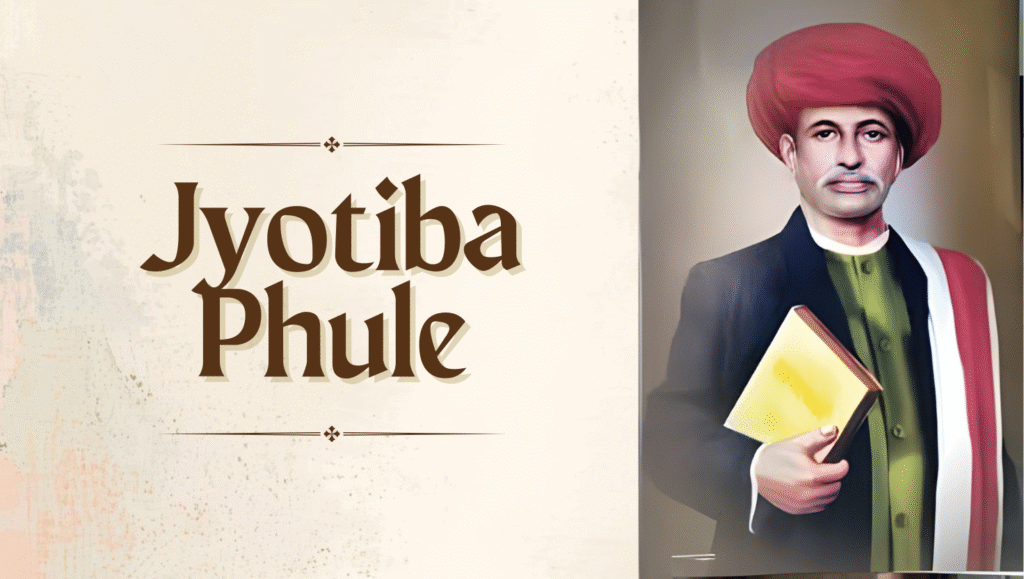
Jyotirao Govindrao Phule (1827–1890), popularly known as Mahatma Jyotiba Phule, was one of the earliest social reformers to challenge caste hierarchy, Brahmanical dominance, and patriarchy in colonial India. He worked to democratise education, promote equality for women and Shudra–Atishudra communities, and expose structural oppression in Hindu society.
Early Life
- Born on 11 April 1827 in Pune in an OBC Mali family
- Studied at Scottish Mission School; influenced by ideas of modern rationalism and liberal thought
- Marriage to Savitribai Phule (age 13) later became a major turning point — both became a reformist team
Reform Initiatives
- In 1848, caste discrimination at a friend’s wedding pushed Phule to begin public activism
- First Girls’ School (1848) opened with Savitribai — pioneering step towards women’s education in India
- Also opened schools for Dalits, Shudras, and working labourers (night schools)
Satyashodhak Samaj (1873)
- Founded Satyashodhak Samaj1 to fight caste oppression
- Emphasised equality, human dignity, and truth-seeking without priestly mediation
Ideas & Writings
- Rejected Brahmanical scriptures as instruments of social control
- Advocated rationalism and secularism
- Major works: Gulamgiri (Slavery), Shetkaryacha Asud (criticised peasant oppression and landlordism)
Legacy
- Pioneer of anti-caste thought before Ambedkar
- Early advocate of widow remarriage, women’s rights, and universal education
- His ideas deeply influenced later social justice movements and constitutional vision
Jyotiba Phule remains a foundational figure of India’s 19th century social reform — challenging caste, patriarchy, and exclusion, and building a framework for modern social equality.
- Question Reference
(HPAS PYQ 2025) ↩︎