
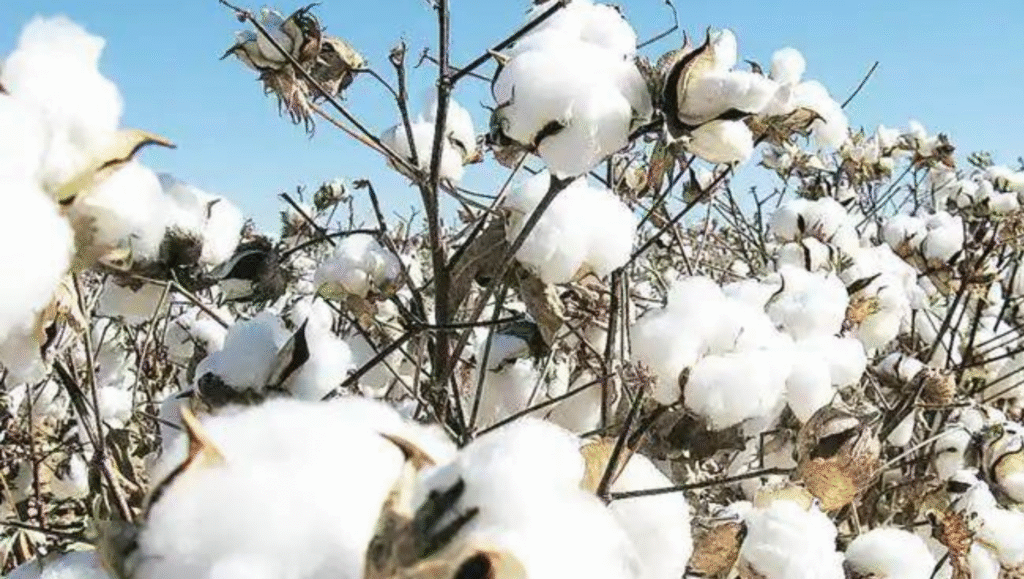
HTBt Cotton – Towards Commercial Approval in India
Syllabus: Science & Technology / Agriculture (Prelims)
Source: The New Indian Express
Context
An expert panel under India’s biotech regulator has submitted a favourable biosafety report on HTBt cotton, bringing it closer to commercial approval by the Genetic Engineering Appraisal Committee (GEAC).
What is HTBt Cotton?
- HTBt stands for Herbicide-Tolerant Bacillus thuringiensis Cotton, a genetically modified (GM) crop combining:
- Bt trait for insect resistance (mainly against bollworm)
- Herbicide-tolerant trait to withstand glyphosate spraying for effective weed control
- Developed by:Mahyco-Monsanto Biotech (now Bayer)
- Based on Bollgard II Roundup Ready Flex (BG-II RRF) technology
How is HTBt Cotton Developed?
- Incorporates Cry genes from Bacillus thuringiensis for bollworm resistance
- Adds the CP4-EPSPS gene, enabling the plant to survive glyphosate while killing surrounding weeds
Key Features of HTBt Cotton
- Dual-Trait Technology: Integrates bollworm resistance and herbicide tolerance
- Efficient Weed Management: Allows over-the-top glyphosate spraying, reducing the need for manual labour
- Higher Yield Stability: Minimises losses from weed competition and pest attacks
- Supports Mechanisation: Facilitates large-scale, mechanised farming in labour-scarce regions
- Farmer Cost Savings: Reduces expenditure on weeding, increasing profitability
Significance of HTBt Cotton
- Addresses labour shortages and rising manual weeding costs in cotton farming
- Counters yield stagnation, especially due to Tobacco Streak Virus (TSV) in Bt cotton areas
- Legalisation can curb the spread of illegal HTBt seeds and promote quality assurance through formal channels