Cold Deserts – Classification, Characteristics & Challenges
Syllabus: Geography (UPSC Prelims)
What are Cold Deserts?
- Cold deserts are arid regions with annual rainfall below 25 cm.
- Found at high altitudes and latitudes, they experience hot summers and severe winters.
- Poor soil and harsh climate make them unsuitable for dense vegetation.
- Vegetation is sparse, mainly herbaceous shrubs and grasses.
- Found mainly in Ladakh, Leh, Kargil (J&K) and Spiti Valley (Himachal Pradesh) in India.
Experts warn that cold desert areas in India are expanding due to deglaciation caused by climate change.
Classification of Cold Deserts
- Dry Temperate Zone:
Vegetation – Betula utilis, Salix spp., Juniperus recurva - Alpine Zone:
Vegetation – Junipers, Birch, Rhododendron, and grasses - Perpetual Snow Zone:
No vegetation due to permanently frozen soil
Global Examples:
- North America: Great Basin
- South America: Atacama, Patagonian Deserts
- Eurasia: Iranian, Gobi, Turkestan Deserts
- Africa: Namib Desert
Characteristics of Cold Deserts
- Temperature1:
- Overall mean annual temperature: Below 18°C.
- Winter: Long and cold, averaging –2°C to 4°C, sometimes dropping below –40°C.
- Summer: Short and moderately warm, averaging 21°C to 26°C.
- In some polar deserts, the warmest month may average below 10°C.
- Rainfall: Extremely low — less than 400 mm annually.
- Snowfall: Heavy from November to April.
- Wind erosion is common.
- Soil: Sandy to loamy, slightly alkaline, with poor organic matter and low water retention.
- Growing season: Short (3–4 months), mainly in summer.
Challenges in Cold Deserts
- Increasing drought frequency and desertification due to global warming.
- Glacial melt causing ecological imbalance.
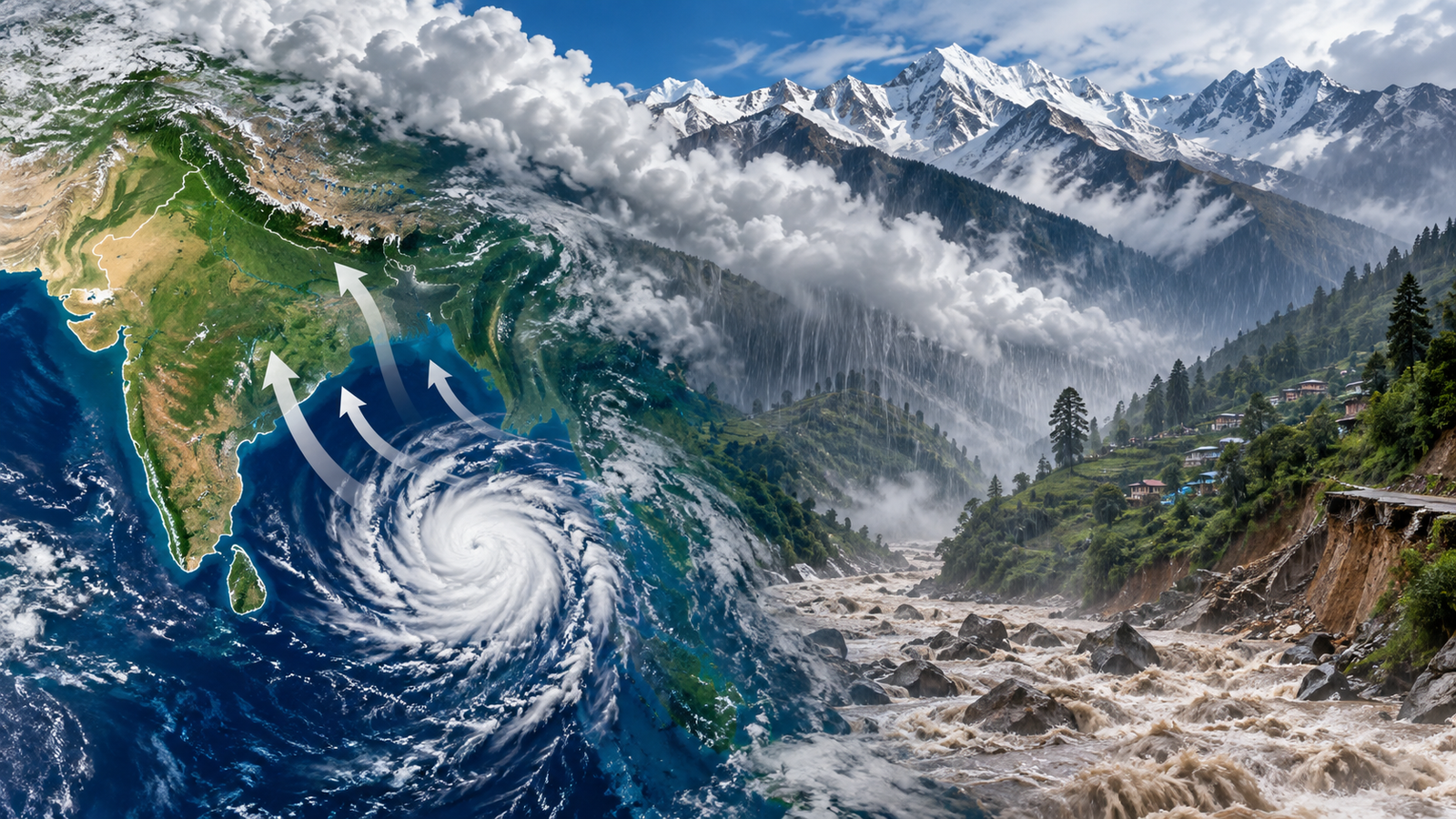
- Prone to rapid-onset disasters (landslides, flash floods, rockfalls).
- Vulnerable to slow-onset hazards (droughts, soil degradation).
- Fragile Himalayan ecosystems make disaster response difficult.
- Wildfires and vegetation loss worsen land degradation.
- Low adaptive capacity of local communities and fragile ecosystems.
Way Forward
- Promote research and monitoring on cold desert ecosystems.
- Encourage community-led adaptation and sustainable land use.
- Implement measures in line with the UN Convention to Combat Desertification (UNCCD).
- Strengthen early warning systems and eco-restoration projects.
- Question Reference
(HPAS PYQ 2025) ↩︎