India Bans Export of Battery Black Mass 2026: Why Critical Mineral Recycling Matters
India has prohibited the export of lithium-ion battery black mass to strengthen domestic recycling and reduce dependence on imported critical minerals.
On 10 November 2026, the Directorate General of Foreign Trade (DGFT) prohibited the export of lithium-ion battery black mass under ITC (HS) Code 85491400. The export category was changed from ‘Free’ to ‘Prohibited’, with immediate effect.
The move aims to ensure that valuable minerals recovered from used batteries are processed within India rather than being sent abroad. It is an important step towards strengthening India’s electric vehicle (EV), battery manufacturing and clean-energy supply chains.
What Is Battery Black Mass?
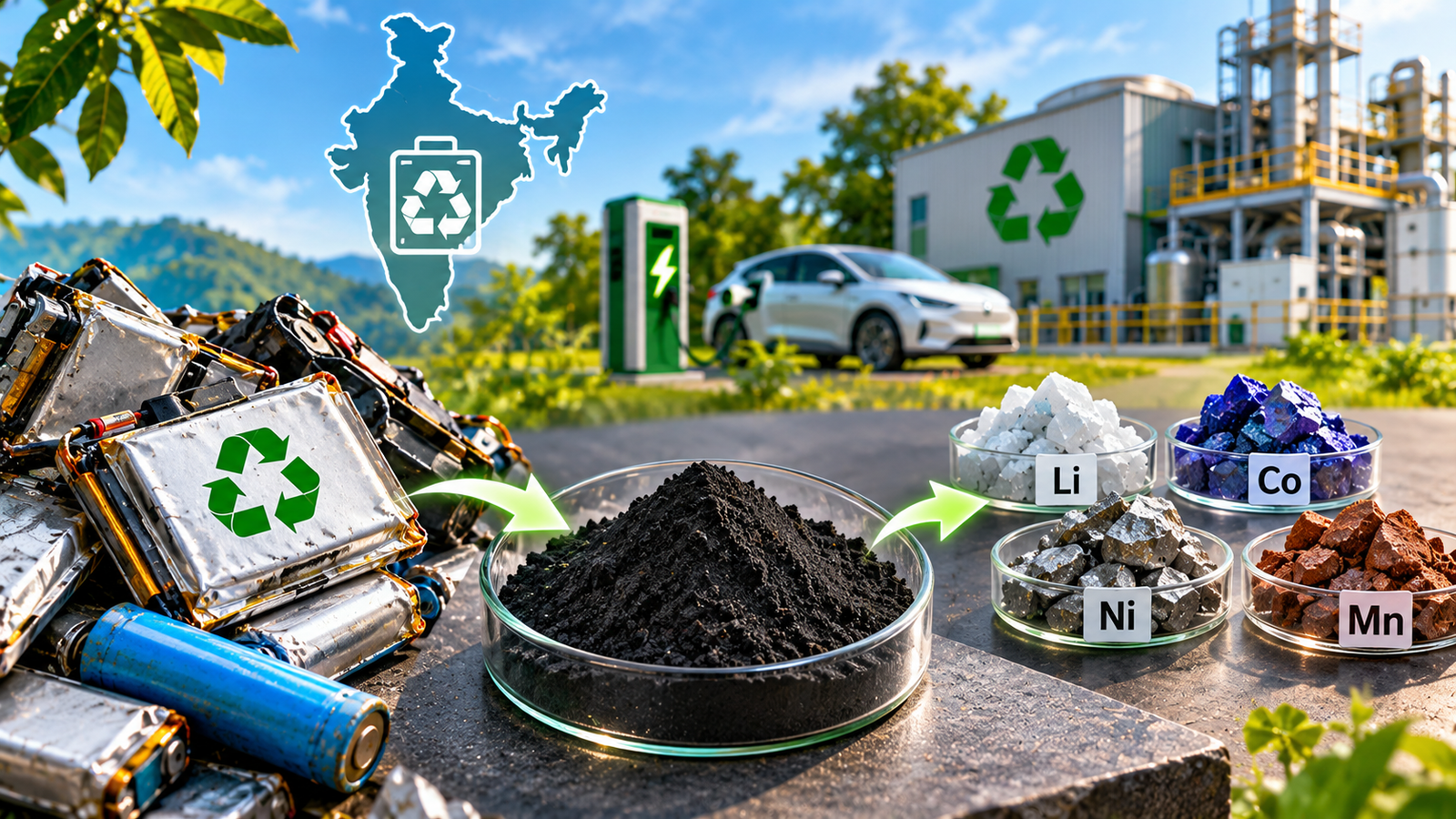
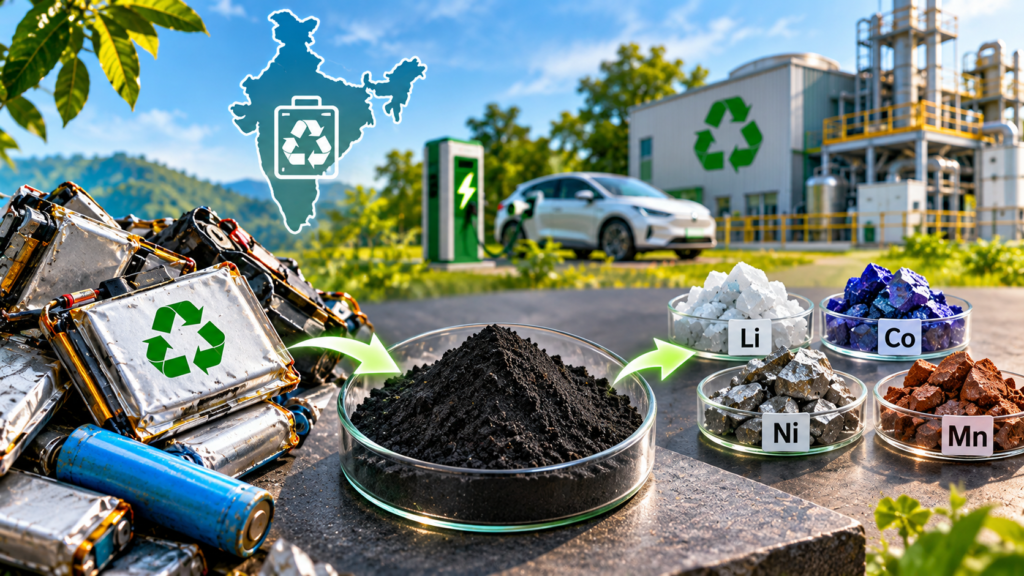
Black mass is a powder-like material obtained by shredding and processing used lithium-ion batteries and battery manufacturing waste.
It contains valuable and recoverable minerals such as:
- Lithium: Used in rechargeable batteries.
- Cobalt: Helps improve battery performance and stability.
- Nickel: Important for energy density in certain battery chemistries.
- Manganese: Used in several battery cathode materials.
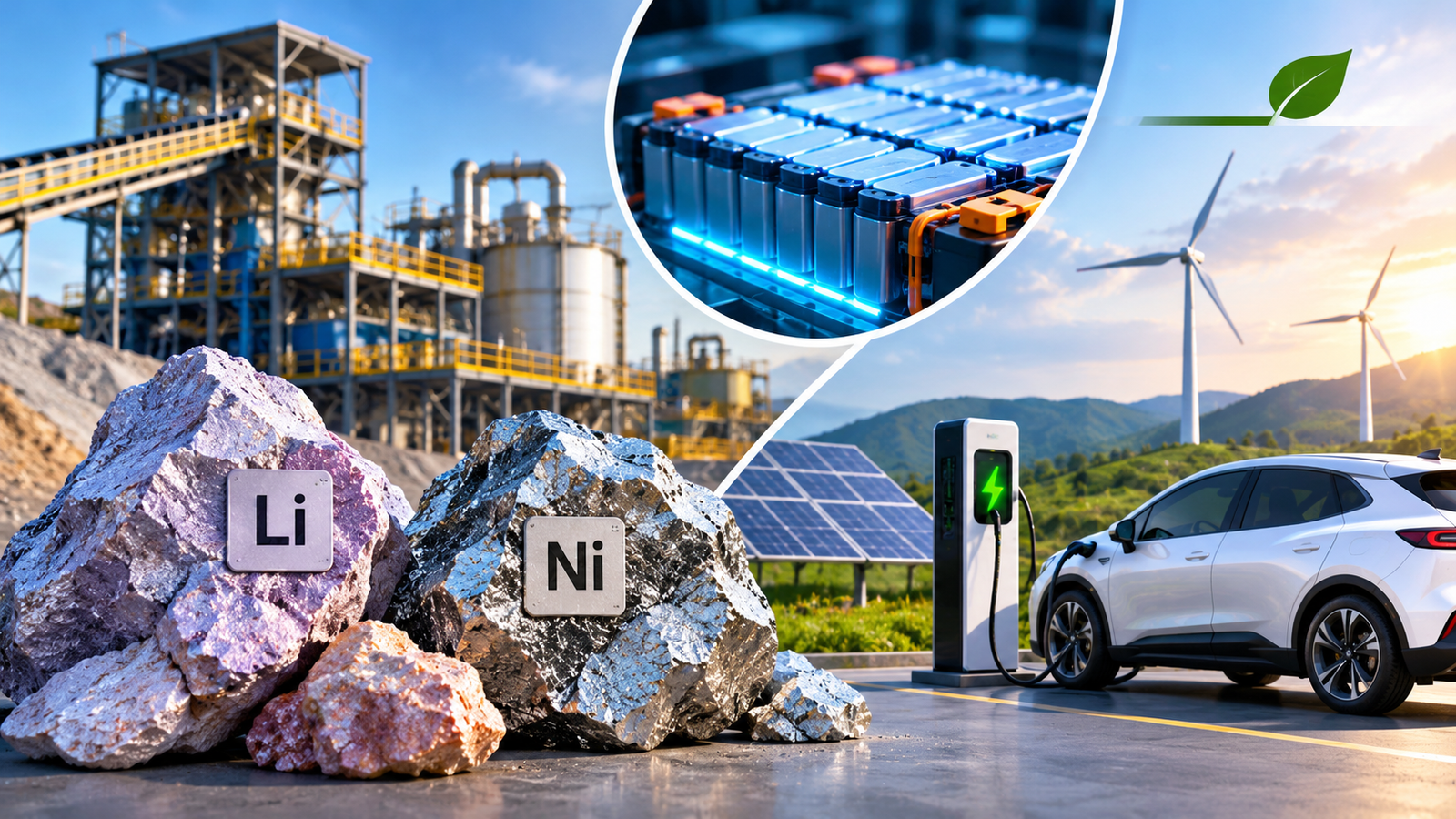
These minerals are essential for electric vehicles, energy storage systems, electronics and renewable energy technologies.
In simple terms: Black mass is a valuable secondary source of minerals recovered from discarded batteries.
Why Has India Banned Its Export?
India depends substantially on imports for several critical minerals. At the same time, domestic battery recycling facilities need a regular supply of used battery material.
The government has identified inadequate availability of raw material, known as feedstock, as one reason why domestic recycling capacity is not being fully utilised.
The export prohibition aims to:
- Ensure the availability of black mass for Indian recycling industries.
- Increase domestic recovery of lithium, cobalt, nickel and other minerals.
- Reduce dependence on imported critical minerals.
- Encourage investment and employment in battery recycling.
- Strengthen domestic supply chains for EVs and clean-energy technologies.
How Does This Support India’s Electric Vehicle Industry?
Electric vehicles depend on advanced batteries, which require minerals such as lithium, nickel and cobalt.
India’s dependence on imported minerals creates supply-chain vulnerabilities and exposes industries to international price fluctuations.
By recovering minerals from used batteries, India can develop an additional domestic source of essential raw materials.
This can support:
Battery Recycling → Critical Mineral Recovery → Domestic Manufacturing → Stronger EV Supply Chain
However, recycling alone cannot meet all India’s future mineral requirements. Domestic processing technology, efficient collection systems and responsible mineral sourcing will also be necessary.
Important Government Initiatives
The export prohibition complements India’s broader efforts to develop domestic critical mineral capabilities.
National Critical Mineral Mission (NCMM)
The mission aims to strengthen the domestic critical mineral value chain, including exploration, mining, processing, recycling and overseas resource acquisition.
₹1,500 Crore Incentive Scheme for Critical Mineral Recycling
Approved by the Union Cabinet in September 2025, this scheme supports the recovery of critical minerals from secondary sources such as battery waste and electronic waste.
Battery Waste Management Rules, 2022
These rules provide a framework for environmentally sound management of battery waste, including recycling and the responsibilities of producers under the Extended Producer Responsibility (EPR) framework.
What Is a Circular Economy?
A circular economy is an economic system in which resources and materials are reused, repaired, recycled and recovered for as long as possible.
Unlike the traditional linear model of Take–Make–Dispose, a circular economy aims to minimise waste and maximise resource utilisation.
Battery recycling is an important example because valuable minerals can be recovered from discarded batteries and used again in manufacturing.
Challenges Ahead
The export prohibition is an important policy step, but its success will depend on effective implementation.
- Technology gap: Recovering high-purity minerals requires advanced recycling and refining technology.
- Collection infrastructure: Used batteries must be collected and transported safely.
- Environmental risks: Improper recycling can release hazardous substances and cause pollution.
- High processing costs: Recycling must become economically viable and competitive.
- Manufacturing capacity: India needs stronger domestic battery-cell manufacturing and mineral-processing capabilities.
Way Forward
India should focus on developing an integrated battery recycling ecosystem.
- Expand collection and authorised recycling facilities.
- Invest in research and advanced mineral recovery technologies.
- Strengthen implementation of Battery Waste Management Rules.
- Encourage private investment and innovation.
- Develop domestic refining and battery manufacturing capacity.
- Ensure environmentally safe handling and disposal of hazardous battery waste.
Conclusion
India’s decision to prohibit the export of lithium-ion battery black mass reflects a broader shift towards resource security, domestic manufacturing and a circular economy.
The real objective is not merely to retain battery waste within the country, but to convert it into valuable resources that support India’s clean-energy transition.
For India, tomorrow’s critical minerals may partly come from today’s discarded batteries.
UPSC Syllabus Relevance
GS Paper III – Economy
- Industrial development and manufacturing.
- Investment and infrastructure.
- Import dependence and supply-chain security.
GS Paper III – Environment
- Waste management.
- Circular economy.
- Sustainable development and resource conservation.
GS Paper III – Science and Technology
- Electric vehicle technology.
- Battery recycling and critical mineral recovery.
- Clean-energy technologies.
Prelims Quick Facts
| Fact | Details |
|---|---|
| Export prohibition | 10 November 2026 |
| Issuing authority | Directorate General of Foreign Trade (DGFT) |
| Notification | No. 49/2026–27 |
| ITC (HS) Code | 85491400 |
| Export policy change | Free to Prohibited |
| Important minerals | Lithium, cobalt, nickel, manganese |
| Related mission | National Critical Mineral Mission |
| Recycling incentive scheme | ₹1,500 crore |
Practice MCQ
Q. Consider the following statements about lithium-ion battery black mass:
- It is obtained from the processing of used lithium-ion batteries.
- It contains recoverable critical minerals such as lithium, cobalt and nickel.
- Recycling black mass can help reduce dependence on primary mineral extraction.
Which of the statements given above are correct?
(a) 1 and 2 only
(b) 2 and 3 only
(c) 1 and 3 only
(d) 1, 2 and 3
Answer: (d)
All three statements are correct.