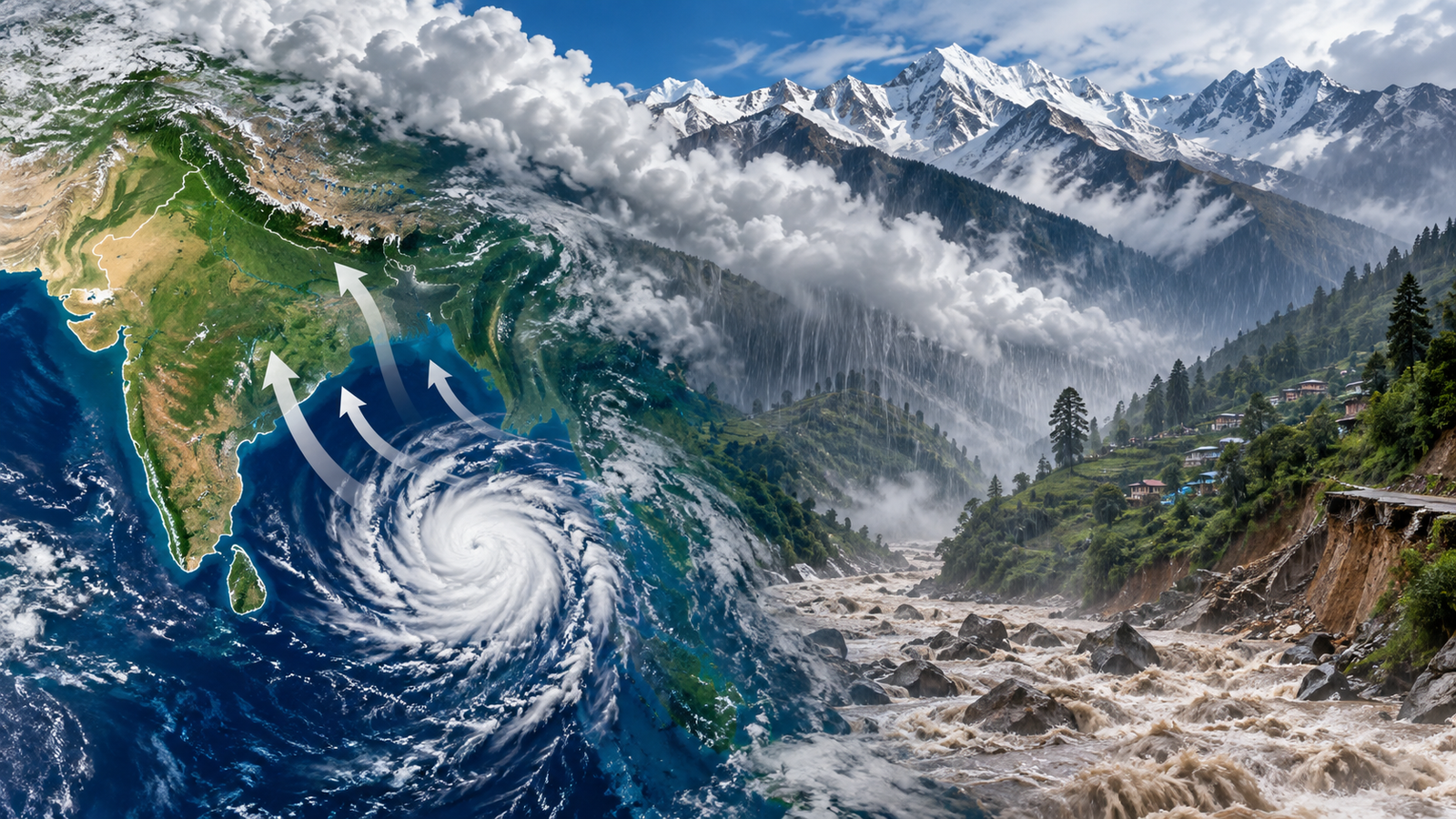

Khirganga National Park (Himachal Pradesh)
Syllabus: HP Geography (UPSC, HPPSC Prelims)
Overview
- Established: July 28, 20101
- Location: Parvati Valley, Kullu District, Himachal Pradesh
- Area: 710 sq. km (second-largest national park after GHNP)
- Altitude: 1,500 – 5,810 meters above sea level
- Administered by: Forest Department, Himachal Pradesh
- Purpose: To protect the region’s unique Himalayan biodiversity and promote ecotourism.
Location and Boundaries
- Lies within the Parvati River catchment in the western Himalayas.
- Boundaries:
- North: Lahaul and Spiti district
- East: Pin Valley National Park (Spiti Valley)
- South: Great Himalayan National Park (GHNP)
- West: Kullu Valley region
- Nearest Towns: Manikaran and Barshaini
Geography and Geological Features
- Located in the Middle Himalayan Zone, formed by the collision of the Indian and Eurasian tectonic plates.
- Terrain includes rugged mountains, glacial valleys, and alpine meadows.
- The park’s highest peak — Parvati Parbat (6,632 m) — is the second most prominent mountain in Himachal Pradesh.
- Geology:
- Formed from sedimentary and metamorphic rocks (gneiss, schist, granite).
- Hot springs indicate active geothermal processes.
Climate
- Influenced by altitude and Himalayan geography.
- Temperature range: 0°C – 30°C.
- Winters (Dec–Feb): Heavy snowfall, sub-zero temperatures.
- Monsoon (Jun–Sep): Moderate to heavy rainfall, slippery trails.
- Best visiting seasons:
- Summer (Apr–Jun) – pleasant weather, rich flora.
- Autumn (Sep–Nov) – clear skies and ideal for trekking.
Flora
- Vegetation varies with altitude and climate:
- Subtropical forests: Oak, maple, chestnut.
- Coniferous forests: Deodar, blue pine, spruce, fir.
- Alpine meadows: Grasses, herbs, wildflowers.
- Medicinal plants: Kutki (Picrorhiza kurroa), Kali Musli (Curculigo orchioides), Aconitum spp.
- Rhododendron blooms add color to the landscape in spring.
Fauna
Mammals:
- Snow Leopard 🐆
- Himalayan Black Bear
- Himalayan Brown Bear
- Musk Deer
- Himalayan Tahr
- Bharal (Blue Sheep)
- Red Fox
Birds (Avifauna):
- Western Tragopan (state bird of HP)
- Himalayan Monal
- Golden Eagle
- Himalayan Griffon
- Koklass Pheasant
- White-capped Water Redstart
Reptiles:
- Himalayan Pit Viper
- Himalayan Keelback
- Himalayan Ground Skink
Hot Springs and Cultural Significance
- Named after the village of Khirganga, known for its natural hot springs.
- The springs are believed to have therapeutic and healing properties.
- The site also has a Lord Shiva temple, enhancing its religious significance.
- Nearby sacred sites include Parvati Kund and Rudra Nag Temple.
- According to legend, the valley once had a river of kheer (sweet rice pudding) that turned into water at Lord Shiva’s request.
Trekking and Tourism
- Base Point: Barshaini (12 km from Kasol).
- Trek Distance: ~14 km one way.
- Duration: 4–5 hours (moderate difficulty).
- Popular Routes:
- Kalga Route (dense forest, shaded)
- Rudra Nag Route (scenic waterfalls)
- Tosh Route (open landscapes)
- Highlights: Waterfalls, dense forests, Parvati River views, and hot springs.
- Camping: Available at Kheerganga top; facilities include tents, food, and bonfires.
- Tip: Trek on weekdays to avoid crowds.
Connectivity
- By Air: Bhuntar (Kullu–Manali) Airport – 35 km from Barshaini.
- By Rail: Joginder Nagar Railway Station – 120 km from Kullu.
- By Road: Well-connected by bus and taxi services from Delhi, Chandigarh, and Kullu.
Ecological and Geographical Significance
- Forms an ecological corridor between GHNP and Pin Valley National Park.
- Acts as a watershed for the Parvati River, vital for local agriculture and communities.
- Supports rare Himalayan flora and fauna, contributing to biodiversity conservation.
- Promotes sustainable tourism and environmental awareness.
Conclusion
Khirganga National Park is a blend of natural beauty, biodiversity, spirituality, and adventure. Known for its snow-capped peaks, alpine forests, hot springs, and wildlife, it offers both ecological value and cultural charm. Whether for trekking, studying Himalayan ecosystems, or simply enjoying nature, Khirganga remains one of Himachal Pradesh’s most captivating protected areas.
- Question Reference
(HPAS PYQ 2025) ↩︎