
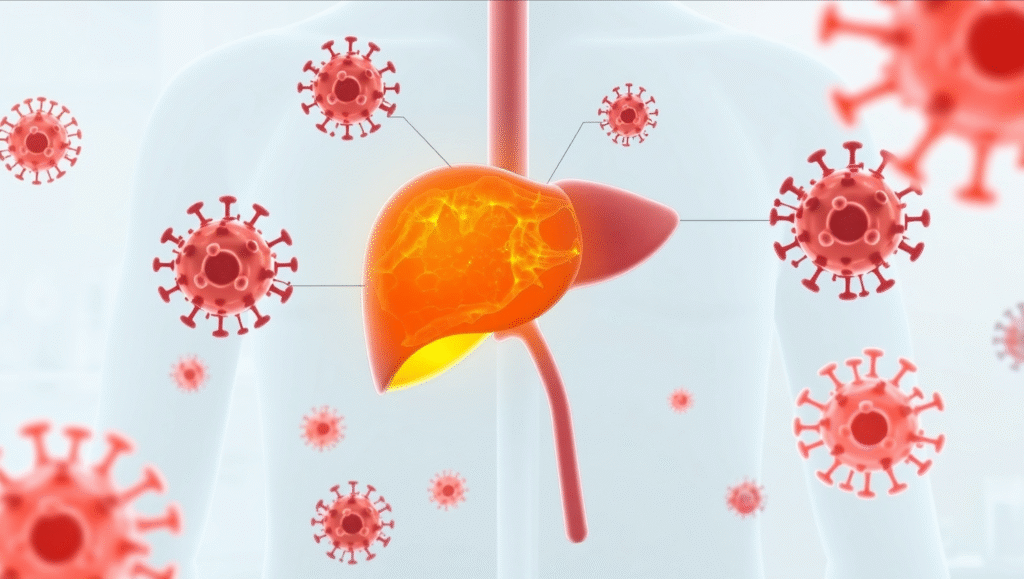
WHO–IARC Classifies Hepatitis D Virus as Carcinogenic
Syllabus: Health – Communicable Diseases, Science & Technology in Medicine (UPSC Prelims)
Source: Business Standard
Context:
The World Health Organization (WHO) and the International Agency for Research on Cancer (IARC) have officially classified Hepatitis D virus (HDV) as carcinogenic to humans, placing it in Group 1 alongside Hepatitis B and C — proven causes of liver cancer.
What is Hepatitis D Virus (HDV)?
- A blood-borne virus that requires Hepatitis B virus (HBV) to replicate.
- Occurs as:
- Co-infection: Contracted simultaneously with HBV.
- Superinfection: Acquired after existing HBV infection.
- Cannot survive independently without HBV.
Global and Regional Burden
- Affects ~12 million people globally (~5% of chronic HBV carriers).
- High prevalence in Asia, Africa, and the Amazon Basin.
- High-risk groups: injection drug users, dialysis patients, people with unsafe medical practices.
Symptoms and Transmission
- Symptoms: Fatigue, jaundice, nausea, abdominal pain, dark urine — often misdiagnosed.
- Transmission:
- Infected blood
- Unprotected sex
- Unsafe injections
- Mother-to-child transmission
Why HDV is Cancer-Causing
- Increased Cancer Risk: Co-infection with HBV raises liver cancer risk by 2–6 times.
- Faster Liver Damage: 75% develop cirrhosis within 15 years (vs. 50% in HBV-only cases).
- Aggressive Disease: Rapid fibrosis and liver failure, often in younger populations.
- Mechanism: HDV hijacks HBV’s replication machinery, amplifying viral load and cancer risk.
Current Treatment & Prevention
- No HDV-specific vaccine — HBV vaccination is the only preventive measure for both viruses.
- Bulevirtide (approved in Europe) + pegylated interferon show promise.
- HBV managed with lifelong antivirals.
- Therapies for HDV remain limited and expensive.
WHO–IARC Reclassification: Expected Impact
- Boosts funding for hepatitis prevention and treatment programmes.
- Expands global surveillance and improves primary healthcare integration for hepatitis screening.
- Encourages universal HDV testing for all HBV-positive individuals.
- Supports WHO’s 2030 elimination targets:
- 60% of cases diagnosed
- 50% treated
- Reduce global burden to 9.8 million infections and 2.8 million deaths.