Atomic Bombings of Hiroshima and Nagasaki – A Turning Point in World History
Syllabus: World History (UPSC GS I)
Source: HT
Context:
August 2025 marks 80 years since the U.S. dropped atomic bombs on Hiroshima and Nagasaki, ending World War II and starting the nuclear age.
Background – Path to the Bombings
Pearl Harbor and U.S. Entry into WWII
- Date: 7 December 1941 – Japan launched a surprise attack on the U.S. naval base at Pearl Harbor, Hawaii.
- Impact: Over 2,400 Americans killed; much of the Pacific Fleet damaged or destroyed.
- Result: U.S. formally entered World War II the next day, determined to fight Japan without compromise.
War in the Pacific – High Costs and Stalemate
- Battles like Guadalcanal, Iwo Jima, and Okinawa saw heavy losses.
- Okinawa (Apr–Jun 1945): Over 200,000 casualties highlighted the cost of a land invasion of Japan.
Japanese Refusal to Surrender
- Despite massive losses and firebombing (e.g., Tokyo, March 1945), Japan resisted unconditional surrender.
- Potsdam Declaration (July 1945): Warned of “prompt and utter destruction” if Japan did not surrender.
- Japanese leadership split – Emperor Hirohito inclined towards peace, but military leaders resisted.
The Manhattan Project
- Secret U.S. program (since 1942) to develop nuclear weapons.
- Trinity Test (16 July 1945): First successful atomic bomb test in New Mexico.
- Gave the U.S. a new weapon to potentially end the war quickly.
The Bombings
Hiroshima – 6 August 1945
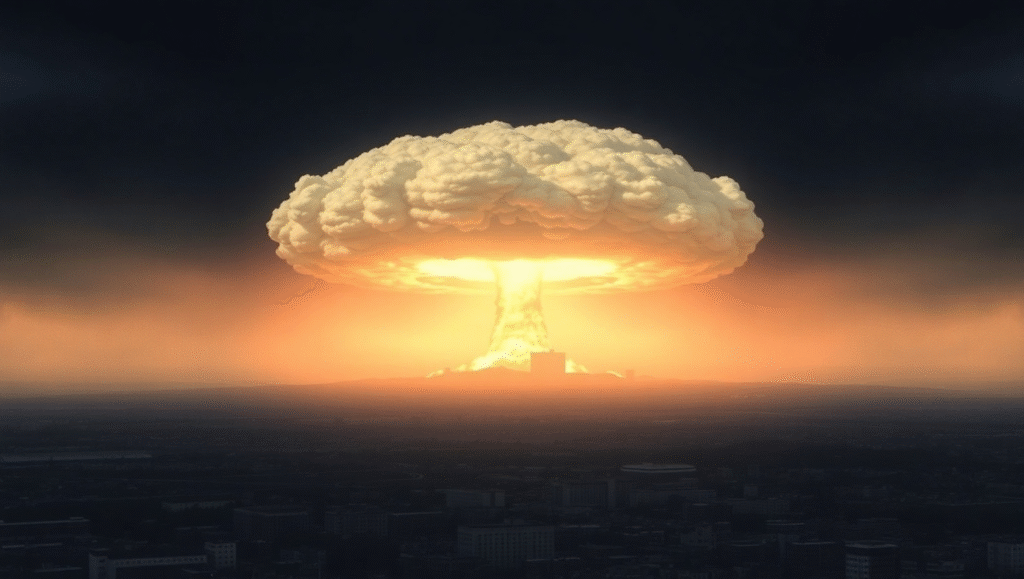
- Bomb: Little Boy (uranium-based) dropped by B-29 Enola Gay.
- Immediate deaths: ~80,000; by end of 1945: ~140,000.
- Targeted for its military and industrial importance.
Nagasaki – 9 August 1945
- Bomb: Fat Man (plutonium-based) – dropped after cloud cover prevented bombing of Kokura.
- Immediate deaths: ~40,000; by end of 1945: ~73,000.
Why the U.S. Chose the Bomb Option
- Avoiding a Land Invasion:
- Operation Downfall (planned invasion) could have cost up to 1 million Allied lives.
- Forcing Japan’s Surrender:
- Conventional bombings and blockades had failed; atomic bombs aimed to shock Japan into surrender.
- Geopolitical Signalling to USSR:
- USSR declared war on Japan on 8 August 1945.
- U.S. wanted to limit Soviet influence in post-war Asia and show its new military power.
- Justifying the Manhattan Project:
- $2 billion spent on secret research – political pressure to use the weapon.
Immediate Outcomes
End of World War II
- Japan indicated willingness to surrender on 10 August; accepted terms on 14 August 1945.
- Formal surrender: 2 September 1945 on USS Missouri.
Start of the Nuclear Age
- Nuclear weapons became a key part of global security strategies.
- Cold War saw doctrines like Mutual Assured Destruction (MAD).
Long-Term Impacts
- Nuclear Proliferation: Sparked U.S.–USSR arms race, NPT debates, and concerns over nuclear terrorism.
- Military Strategy: Introduced nuclear deterrence as a core defence policy.
- International Law: Influenced Geneva Conventions and rules on civilian protection.
- Ethical Debates: Raised lasting questions on proportionality and morality in warfare.
Conclusion
The atomic bombings were not only military actions but also political, scientific, and moral decisions. They ended the Second World War quickly but unleashed the nuclear era—bringing new fears, ethical dilemmas, and strategic rivalries that continue to shape global politics today.