🌓 Total Lunar Eclipse (Chandra Grahan) – 3 March 2026
A Rare “Blood Moon” on Holi | Comprehensive UPSC Briefing
1️⃣ Executive Overview: A Rare Celestial Convergence
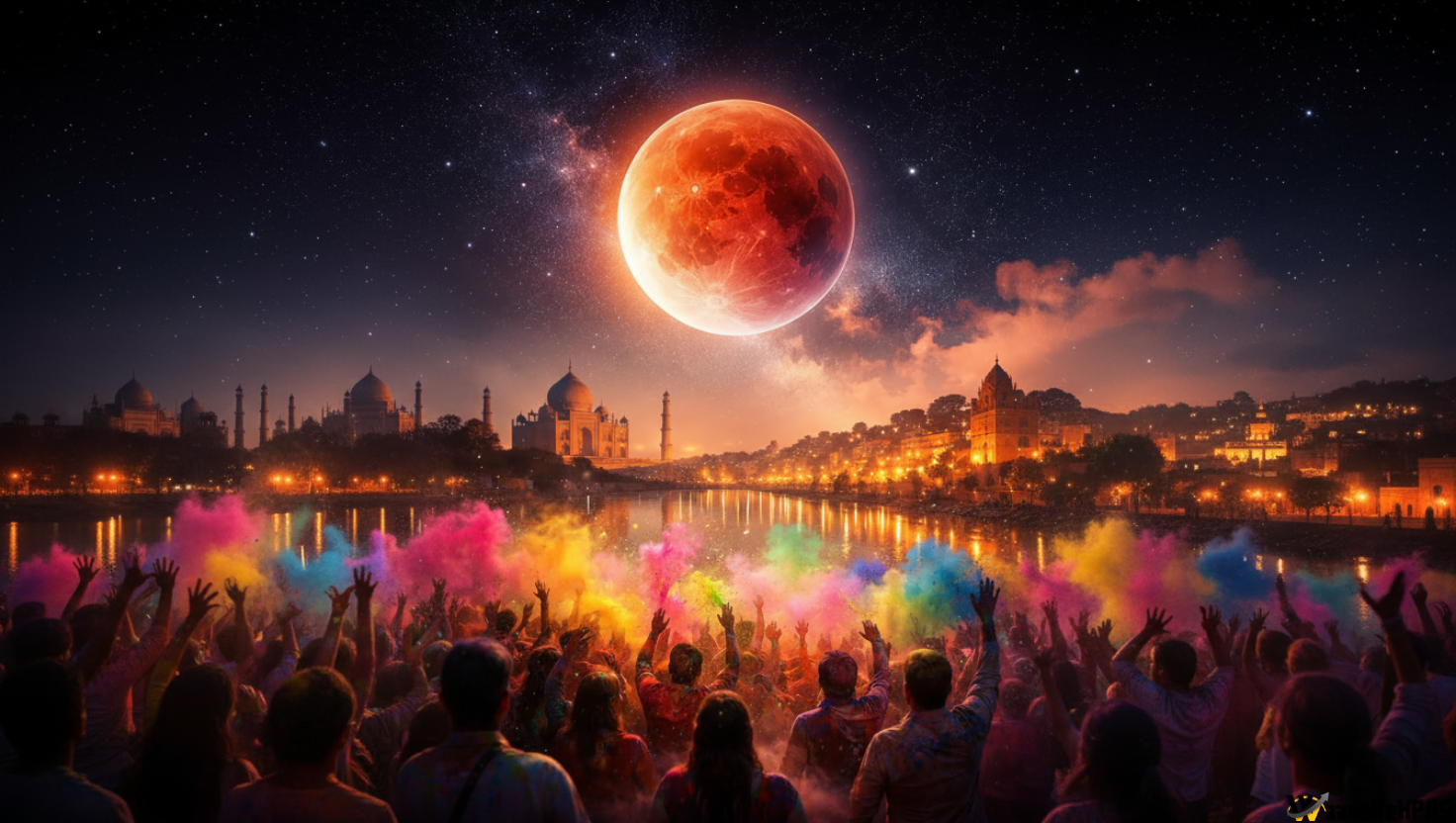
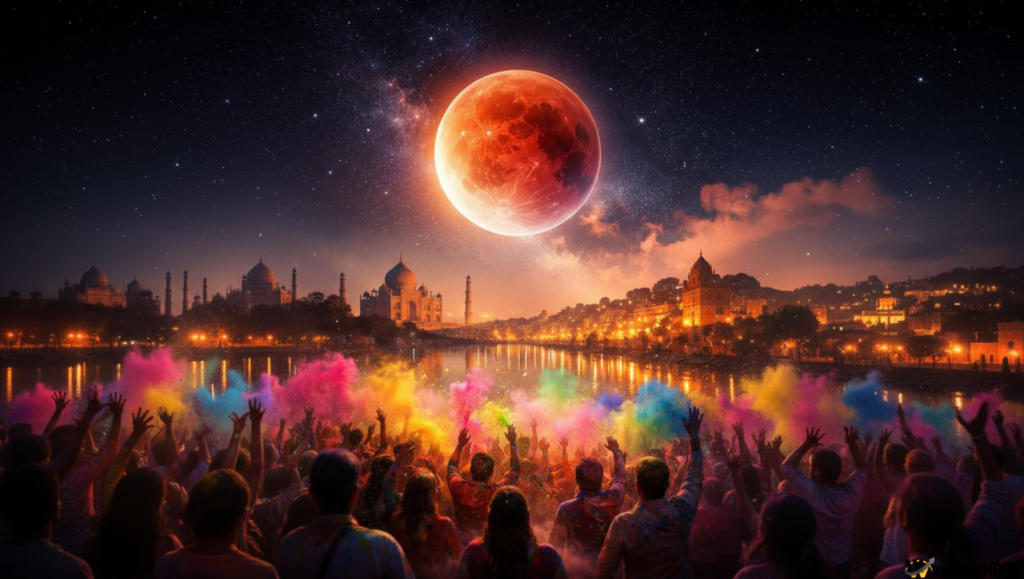
On 3 March 2026, the world will witness the only Total Lunar Eclipse of 2026 — a dramatic “Blood Moon” event. In India, this phenomenon coincides with Holi (Phalguna Purnima), making it both scientifically significant and culturally complex.
This eclipse is notable because:
- 🌕 It is the only total lunar eclipse of 2026.
- ⏳ It features ~58 minutes of totality.
- 🔴 It is the last Blood Moon until the eclipse series beginning 31 December 2028.
- 🎨 It coincides with Holi — a rare calendrical overlap (nearly once in a century in such alignment).
For UPSC aspirants, this topic bridges:
- GS I (Geography – Astronomy basics)
- GS I (Indian Culture – Festivals & Rituals)
- GS III (Science & Technology – Space Science)
- Essay & Ethics (Science vs Belief debate)
2️⃣ Scientific Basis: Why Does the Moon Turn Red?
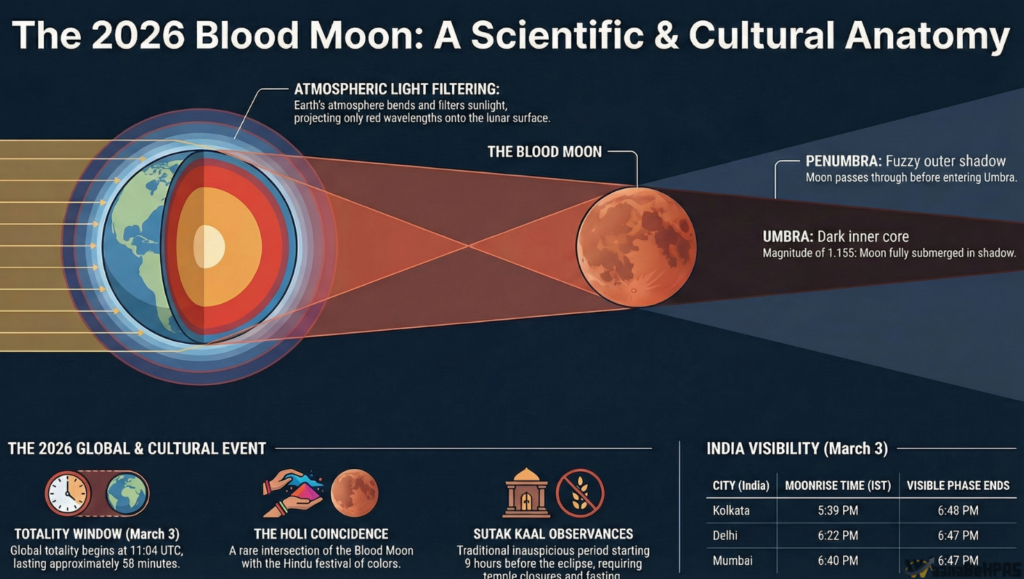
🌍 Eclipse Mechanics
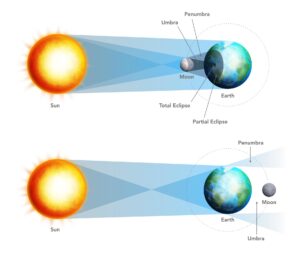
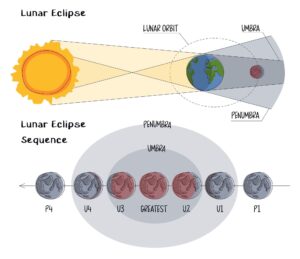
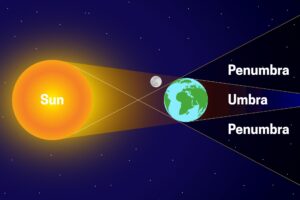
A Total Lunar Eclipse occurs when:
Sun → Earth → Moon align in a straight line
The Moon passes completely into Earth’s umbra (darkest shadow).
🔴 Why “Blood Moon”?
The reddish appearance is due to Rayleigh Scattering:
- Earth’s atmosphere filters sunlight.
- Shorter blue wavelengths scatter away.
- Longer red wavelengths bend (refract) into Earth’s shadow.
- The Moon glows copper-red.
This is the same reason sunsets appear red.
📌 Important for Prelims:
- Lunar eclipses occur only on Full Moon (Purnima).
- Safe to view with naked eyes (unlike solar eclipse).
3️⃣ Chronological Mapping: Global & Indian Timings
🌍 Global Eclipse Milestones (3 March 2026)
| Phase | GMT | IST | Visual Character |
|---|---|---|---|
| Penumbral Start | 08:44 | 2:14 PM | Subtle dimming |
| Partial Start | 09:50 | 3:20 PM | Shadow “bite” visible |
| Totality Begins | 11:04 | 4:34 PM | Moon turns red |
| Totality Ends | 12:03 | 5:33 PM | Red fades |
| Moksha (Umbral End) | 13:18 | 6:48 PM | Shadow leaves Moon |
| Penumbral End | 14:23 | 7:53 PM | Eclipse ends |
4️⃣ Visibility in India: A Strategic Viewing Challenge
India’s classification: Grastodit Khagrasa
(Moon rises already eclipsed)
Regional Analysis:
- 🌄 Northeast India (Guwahati, Itanagar)
→ Best views; may catch last part of totality. - 🏙️ Delhi, Mumbai, Bengaluru
→ Moon rises during late phase.
→ Mostly visible: Moksha (release) phase (~20 mins). - 🌅 Western India
→ Limited visibility due to timing & horizon obstruction.
📌 UPSC Insight:
This shows how astronomical events are experienced differently across latitudes & longitudes — linking astronomy with geography.
5️⃣ Cultural & Religious Intersection: Holi and Sutak
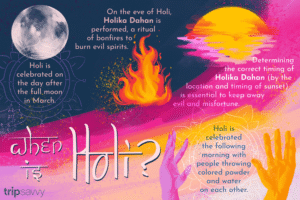
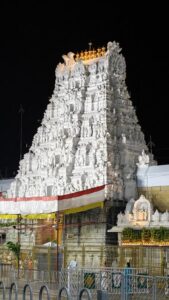
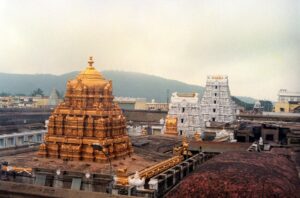
The eclipse coincides with Holi, creating ritual and calendrical complexity.
🕉️ Sutak Kaal (Inauspicious Period)
- Begins ~9 hours before umbral phase
- Starts: ~6:20 AM IST (general public)
- Ends: 6:48 PM IST (Moksha)
Observances:
- Temple closures (e.g., Tirumala Venkateswara Temple)
- Avoid cooking/eating (Ahara Niyama)
- Tulsi leaves placed in stored food
- Exemptions: Children, elderly, sick
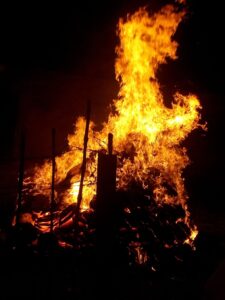
🔥 Holika Dahan Muhurat Dilemma
Two options were suggested traditionally:
- Primary (March 2 night) – During Bhadra Puchh window
- Secondary (Post 6:48 PM on March 3) – After eclipse ends
This demonstrates:
The intersection of astronomical precision and ritual timing in Hindu calendar systems.
6️⃣ Spiritual Precedent: Transforming Eclipse into Devotion
A historic parallel is the birth of
Chaitanya Mahaprabhu,
during a lunar eclipse on Holi in the 15th century.
He led mass Sankirtan (devotional chanting), turning fear of eclipse into spiritual celebration.
📌 UPSC Value Addition:
Shows how Indian traditions adapt natural phenomena into socio-spiritual movements.
7️⃣ Observation & Astrophotography Strategy
📷 DSLR Strategy
- Manual focus via Live View
- f/8–f/11 (partial phase)
- f/2.8, ISO 800–1600 (during totality)
- Exposure bracketing (0.5–2 sec)
📱 Smartphone Strategy
- Use tripod
- Avoid digital zoom
- Lock focus on Moon
- Use Night Mode
- Reduce exposure compensation
🌤️ Atmospheric Note
- Clear eastern horizon required in India.
- Even 5° obstruction can block viewing window.
8️⃣ Analytical Significance for UPSC
🌌 Geography (GS I)
- Umbra vs Penumbra
- Rayleigh scattering
- Orbital mechanics
- Moonrise timing differences
🎭 Culture (GS I)
- Panchang calculations
- Holi & lunar calendar
- Ritual adaptation to astronomy
🔬 Science & Tech (GS III)
- Observational astronomy
- Public engagement with science
- Space awareness movements
🧠 Essay Themes
- “Science and Faith: Conflict or Coexistence?”
- “Astronomy in Ancient Civilizations”
- “Tradition in the Age of Scientific Temper”
9️⃣ Synthesis: The Last Red Moon Before 2028
The 3 March 2026 Total Lunar Eclipse represents:
- 🌍 A global astronomical spectacle
- 🕉️ A deeply cultural event in India
- 🔴 The final Blood Moon before 31 Dec 2028
- 👁️ A naked-eye safe celestial event
It symbolizes the beautiful intersection of:
Physics, Culture, Geography, and Faith
📌 Final Exam Takeaways
- Total Lunar Eclipse occurs only on Full Moon.
- Red color due to Rayleigh scattering.
- India sees mostly Moksha phase, except Northeast.
- Coincides with Holi (Phalguna Purnima).
- Safe for naked-eye observation.
- Next similar major event: 31 December 2028 eclipse series.