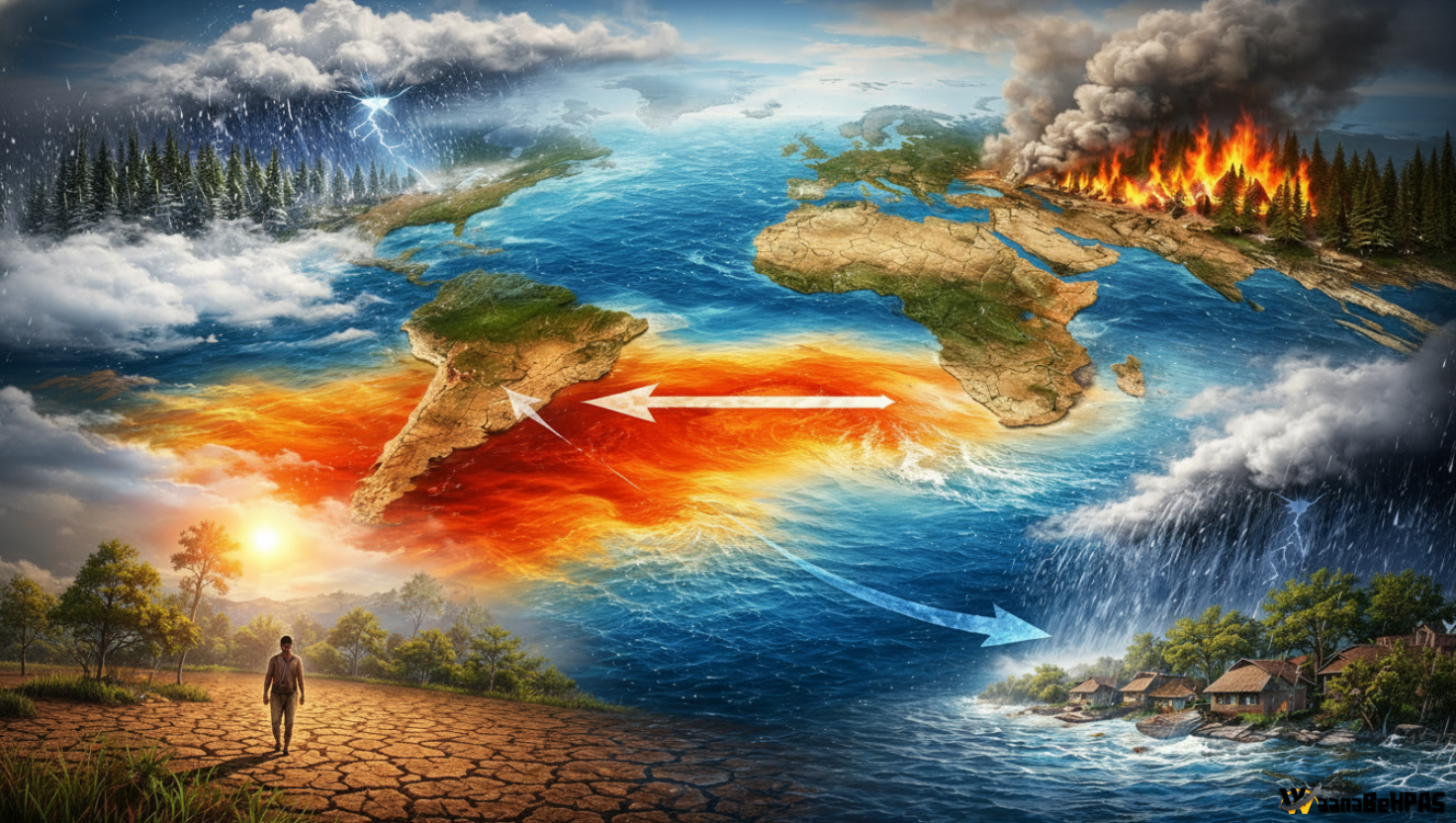
Super El Niño 2026: A Detailed Scientific and Global Overview
Syllabus: Geography (Climatology – Ocean-Atmosphere Interaction / ENSO – El Niño Phenomenon)
1. What is El Niño?
- El Niño is a climate phenomenon in which the surface water of the central and eastern Pacific Ocean becomes warmer than normal.
- It occurs every 2–7 years and affects weather across the world.
👉 It is part of the ENSO cycle (El Niño–Southern Oscillation):
- El Niño → Warming phase
- La Niña → Cooling phase
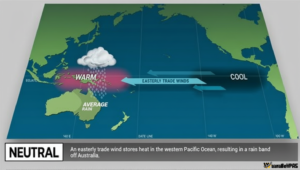
- Neutral → Normal conditions
📌 Important: Changes in the Pacific Ocean directly influence the Indian monsoon system.
2. What is “Super El Niño”?
- It is an extremely strong El Niño event
- Occurs when sea surface temperature (SST) rises ≥ 2°C above average
👉 Not an official term, but widely used in climate science.
Examples:
- 1997–98
- 2015–16
👉 2026 is expected to be very strong and may become a “Super El Niño”, possibly one of the strongest in more than a century.
3. Timeline of Super El Niño 2026
| Stage | Time | Explanation |
|---|---|---|
| End of La Niña | Early 2026 | Cooling phase weakens quickly |
| Formation | June–Aug 2026 | El Niño develops (62–80% chance) |
| Intensification | Late 2026 | May become “Super” |
| Peak Impact | Winter 2026–27 | Strong global effects |
| After-effects | 2027 | Climate impacts continue |
👉 Key Point: Effects are not limited to one year, they can continue into the next year.
4. Causes of Super El Niño (Simple Explanation)
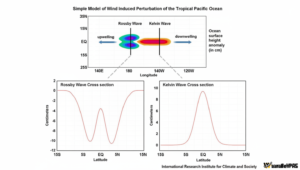

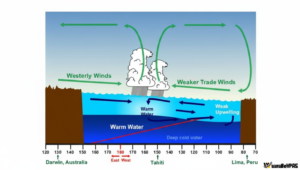
1. Subsurface Warming (Kelvin Wave)
- A huge wave of warm water moves under the ocean surface (100–250 m depth)
- This heat later comes up and warms the surface
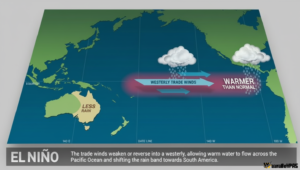
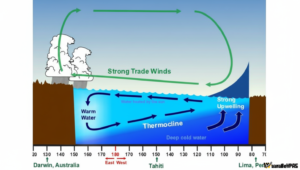
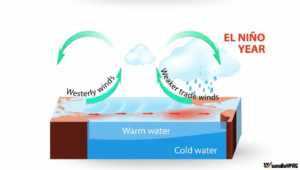
2. Weak Trade Winds
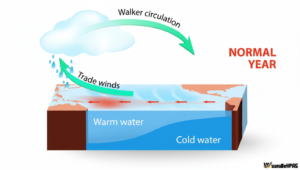
- Normally, winds push warm water towards Asia (west)
- When winds weaken, warm water moves towards South America (east)
3. Reduced Upwelling
- Cold water from deep ocean does not rise up
- So surface water becomes warmer
4. (New Theory) Astroclimatic Forcing
- A new concept (IRGON) suggests orbital factors influence climate shifts
- ⚠️ Not fully accepted → mention carefully in answers
5. Global Impacts of Super El Niño
🌍 Rise in Temperature
- Releases heat from oceans into atmosphere
- 2027 may become the hottest year recorded
🌧️ Rainfall Changes
- Some regions → heavy rainfall & floods
- Others → drought conditions
🌪️ Storm Pattern Changes
- Atlantic hurricanes ↓ (due to wind shear)
- Pacific storms ↑
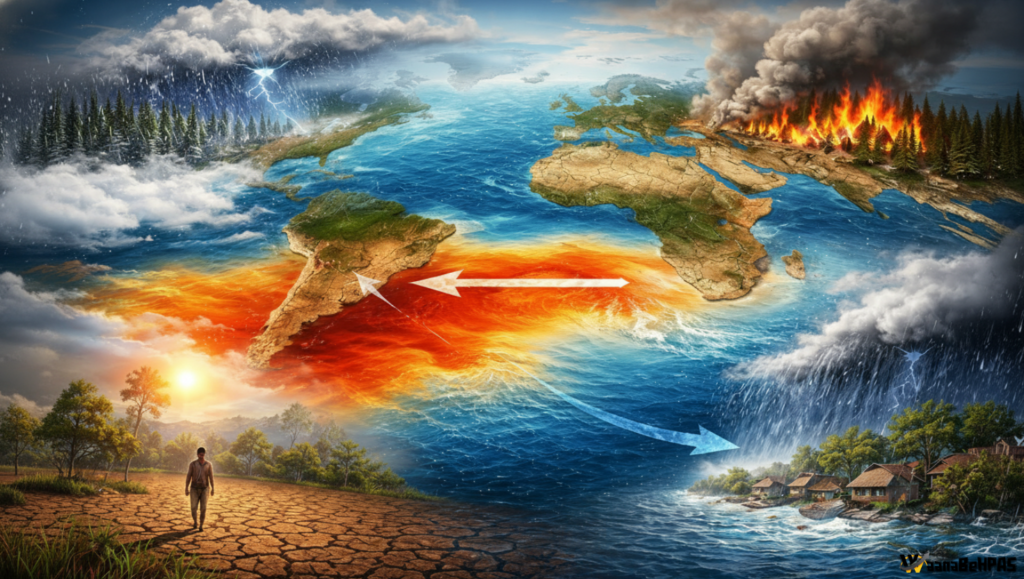
🌎 Special Feature: “Ice and Fire”
- Some areas → extreme heat & wildfires
- Others → extreme cold & snowfall
👉 Shows imbalance in global climate.
6. Impact on India (Very Important)
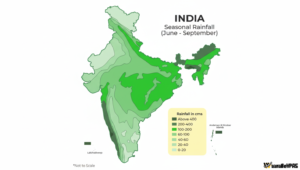


🌧️ Monsoon
- El Niño weakens southwest monsoon winds
- Leads to:
- Less rainfall
- Late or uneven monsoon
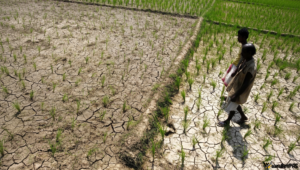
🌾 Agriculture
- Rain-fed crops suffer (rice, pulses)
- Crop yield decreases
- Food prices increase
🔥 Heatwaves
- Higher temperatures in summer
- Longer and more intense heatwaves
💧 Water Scarcity
- Low rainfall → drought-like conditions
- Reduced groundwater recharge
7. Impact on Himachal Pradesh (State-Specific)
👉 Important for HPPSC answers
- Irregular rainfall → increases landslide risk
- Less snowfall in winter → affects tourism & water supply
- Apple production affected (needs proper chilling & weather balance)
- Seasonal water shortages in hill areas
8. Environmental Impact
- Coral bleaching due to warm oceans
- Damage to mangroves (Sundarbans)
- Disturbance in marine ecosystem and fisheries
9. Socio-Economic Impacts
- Inflation increases (food + energy prices)
- Farmers face losses → rural distress
- Increased disaster management challenges
- Global economic instability
10. Important Terms (Use in Answers)
- ENSO
- Sea Surface Temperature (SST)
- Trade Winds
- Kelvin Wave
- Upwelling
- Climate Regime Shift (CRS)
11. Quick Revision Points
- El Niño = warming of Pacific Ocean
- Super El Niño = very strong warming (≥2°C)
- 2026 → high probability of strong event
- India → weak monsoon + heatwaves
- Global → extreme weather + temperature rise
12. Sample Mains Answer (Improved)
Q. What is Super El Niño? Explain its impact on India.
👉 Answer:
Super El Niño refers to an unusually strong El Niño event in which sea surface temperatures in the equatorial Pacific Ocean rise more than 2°C above normal. Though not an official term, it is used to describe extreme climate events such as those of 1997–98 and 2015–16.
The 2026 event is expected to be strong and may continue into 2027. It can weaken the Indian monsoon by reducing rainfall and disturbing wind patterns. This leads to drought conditions, agricultural losses, and rising food prices. It also increases the frequency of heatwaves and water scarcity. Therefore, Super El Niño has serious environmental and economic impacts on India.