Sheep Breeds of India – Major Breeds, States & Key Features
Syllabus: Economic Geography – Livestock and Agriculture (UPSC Prelims)
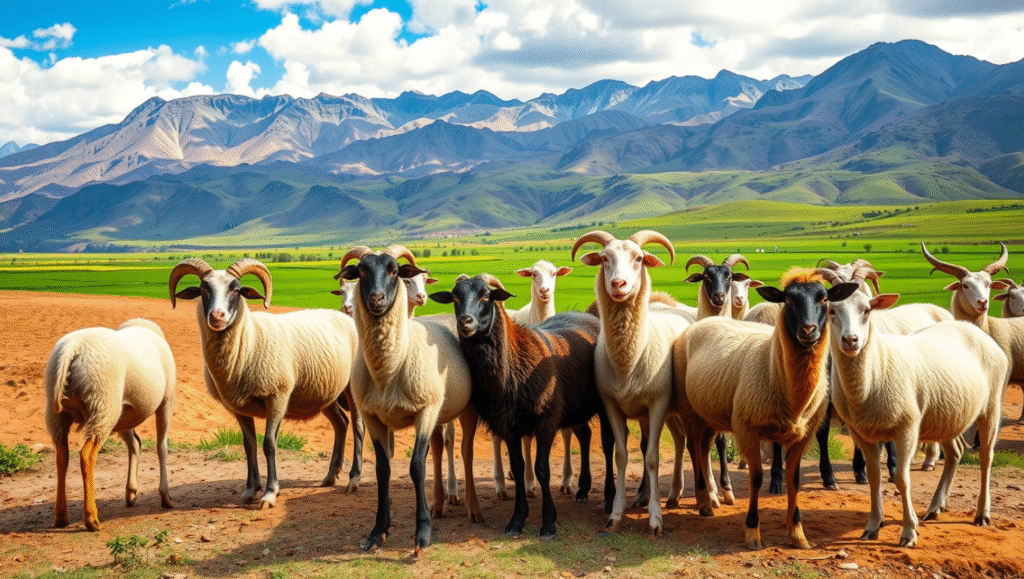
India has a rich diversity of sheep breeds adapted to different climates—from deserts and coasts to hills and high mountains. These breeds are important for wool, meat, carpets, rural livelihoods.
This article provides a clean, state-wise, overview of India’s main sheep breeds.
Major Sheep Breeds of India (State-wise)
Rajasthan (Largest number of wool breeds)
Chokla (Shekhawati) – Fine carpet wool; found in Sikar, Jhunjhunu, Churu.
Marwari – Coarse wool; black face; very hardy; used for carpet industry.
Magra – Best white carpet wool; found in Bikaner region.
Malpura – Popular meat breed; Tonk–Jaipur belt.
Pugal – White body, black face; adapted to desert.
Jaisalmeri – Medium wool; suited to extreme arid conditions.
Nali – Good wool quality; spread in Rajasthan–Punjab belt.
Sonadi – Dual-purpose (meat + wool).
Kheri (New breed) – Emerging desert breed.
Lohi (Also spelled Lohi/Lohi Ram)
- Found in Punjab (Pakistan + India), Rajasthan and Haryana.
- Known for carpet-quality wool and good meat production.
- Body is white; head usually tan, black or brown.
- Adapted to semi-arid regions.
Gujarat
Patanwadi1 – Medium wool; good milk yield.
Panchali (New) – Desert breed; dual-purpose.
Punjab
Kajali (New) – Good wool; found in Fazilka and adjoining areas.
Lohi – Also present in Punjab region of India.
Himachal Pradesh
Rampur-Bushair – High-altitude wool breed; good apparel wool.
Gaddi – Fine, lustrous wool; used for shawls (Kullu shawls).
Jammu & Kashmir / Ladakh
Changthangi – Produces world-famous Pashmina wool.
Bhakarwal – Migratory wool breed.
Gurez, Karnah, Poonchi – Medium wool breeds.
Uttar Pradesh & Uttarakhand
Jalauni – Dual-purpose.
Muzzafarnagri – Large-sized; good meat breed.
Odisha
Balangir – Meat breed.
Ganjam – Medium-sized; popular meat animal.
Kendrapada (New) – Highly prolific coastal breed.
Jharkhand
Chottanagpuri – Small-sized; good reproductive efficiency.
West Bengal
Garole – Smallest Indian breed; highly prolific; source of Booroola (FecB) gene.
Tamil Nadu (Many meat breeds)
Mecheri – Medium body; pale purple skin; meat breed.
Madras Red – Red/purple body; meat type.
Ramanathapuram White – White body; horned males.
Keelakaraisal – Black-red skin; coiled horns in males.
Vembur – Tall breed; white with red spots.
Nilgiri – Only wool breed of Tamil Nadu.
Tiruchi Black – Small black wool breed.
Coimbatore – Wool type; white body with black/purple facial bands.
Katchaikatty Black (New) – Meat type.
Chevaadu (New) – Indigenous black sheep; robust.
Karnataka
Bellary – Meat breed.
Kenguri – Red-bodied; popular for mutton.
Mandya (Bannur) – Famous mutton breed; compact body.
Hassan – Medium wool type.
Andhra Pradesh / Telangana
Nellore – Tallest Indian sheep; long ears; excellent meat breed.
Deccani – Hardy; coarse wool; used for blankets.
Macherla (New) – Coastal breed; meat type.
Maharashtra
Deccani – Most widespread breed; hardy in drought zones.
Sikkim
Bonpala – Dual-purpose wool + meat.
Arunachal Pradesh
Tibetan – High-altitude wool breed.
Bihar
Shahbadi – Medium-sized; meat breed.
Important Exotic Sheep Breeds in India
Useful for UPSC Prelims:
- Merino – Fine wool; Spain origin.
- Rambouillet – Fine wool; France; hardy.
- Dorset – Meat breed; white face, polled.
- Suffolk – Black face and legs; meat breed.
- Cheviot – Medium wool; erect ears.
- Southdown – Old English mutton breed.