Satpura Range: Physiography, Biodiversity and Significance
Syllabus: Indian Geography (UPSC Prelims)
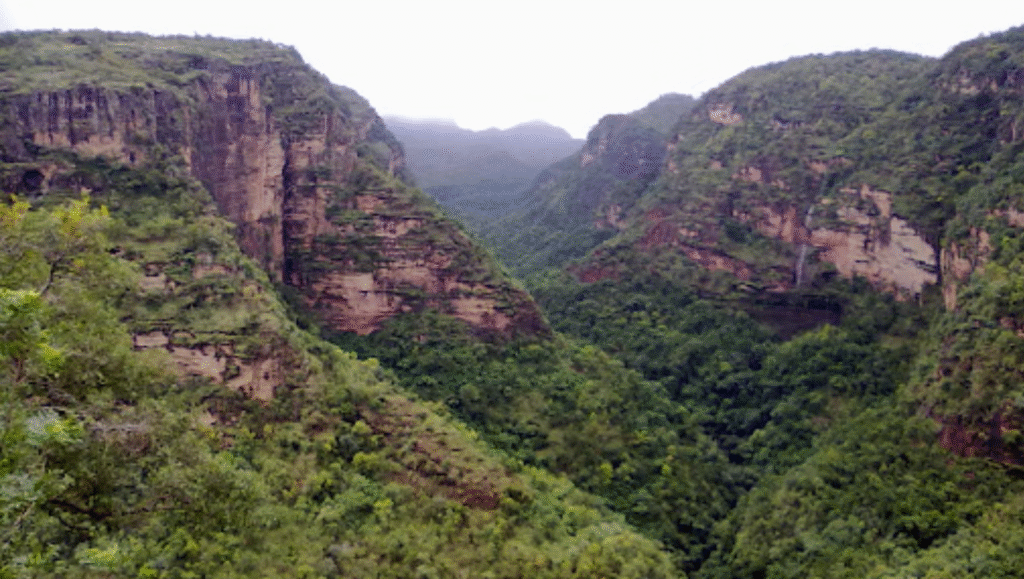
The Satpura Range is a prominent hill system in central India forming the southern boundary of the Narmada Valley. It begins in eastern Gujarat and extends eastward across Maharashtra and Madhya Pradesh before ending in Chhattisgarh. Running parallel to the Vindhya Range to the north, the two together form an important east–west divide separating the Indo-Gangetic plains from the Deccan Plateau. The Satpuras are a horst—a tectonically uplifted block—composed mainly of schists, granites, quartzites and basaltic flows.
Key Features
- Extends for about 900 km across western and central India.
- Includes major hill units such as Mahadeo Hills, Maikala Range, and Rajpipla Hills.
- Dhupgarh1 (1,350 m) is the highest peak.
- Acts as a watershed between the Narmada (north) and Tapti (south) rivers.
- Tributaries of the Godavari and Mahanadi also originate in its eastern parts.
- Peaks have plateau-like tops with steep southern slopes and gentler northern slopes.
Climate and Vegetation
- Eastern Satpuras receive higher rainfall and support wet deciduous forests, forming part of the Eastern Highlands ecosystem.
- Western Satpuras are drier and fall in the Narmada valley dry deciduous zone.
- Vegetation includes teak, sal, bamboo and other deciduous species.
Biodiversity and Protected Areas
- Home to endangered fauna such as Bengal tiger, gaur, sloth bear, barasingha, dhole, and blackbuck.
- Major protected areas:
- Kanha National Park
- Pench National Park
- Satpura National Park
- Melghat Tiger Reserve
- Pachmarhi Biosphere Reserve
- Bori Reserve Forest
Significance
- Forms a major physiographic divide with the Vindhyas.
- Important for river systems, biodiversity, and forest resources.
- Pachmarhi, known as the “Queen of Satpuras,” is a major hill station and tourism centre.
- The range plays a role in regulating local climate and supporting tribal communities and forest-based livelihoods.
- Question Reference
(HPAS PYQ 2025 ↩︎