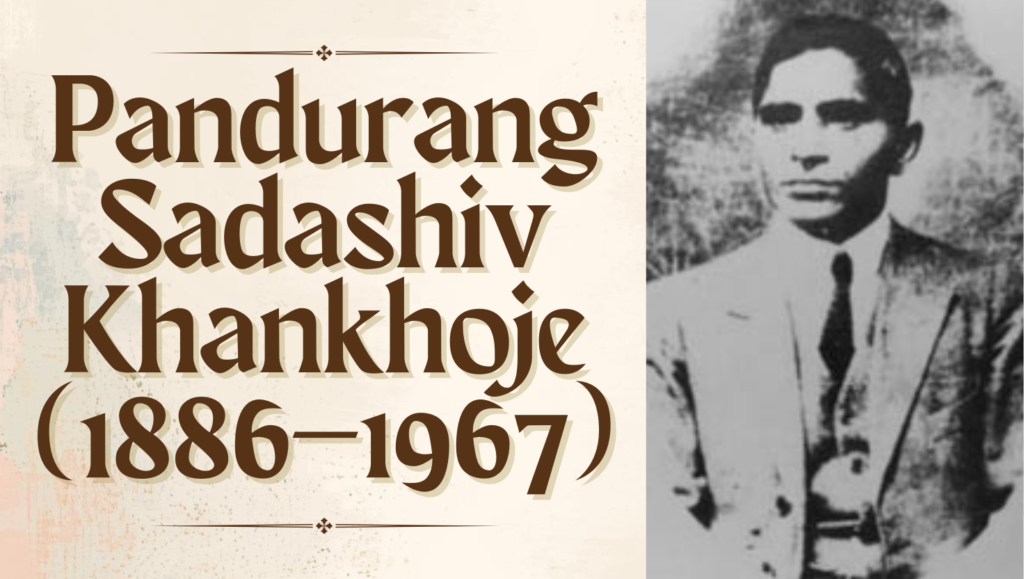
Pandurang Sadashiv Khankhoje (1886–1967): Revolutionary Internationalist and Agrarian Scientist
Introduction

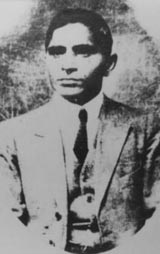
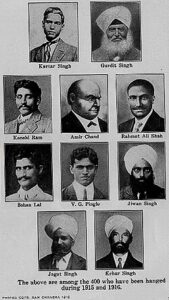
Pandurang Sadashiv Khankhoje was a rare 20th-century figure who embodied two revolutions: the militant struggle against British colonialism and the scientific transformation of agriculture in Mexico. A founding member of the Ghadar Party and later a pioneering agronomist in Mexico, Khankhoje’s life connects India’s freedom movement with global anti-imperial networks and early foundations of the Green Revolution.
For UPSC aspirants, his biography intersects Modern Indian History, International Relations, Diaspora Politics, and Science & Technology in Agriculture (GS I & GS III).
I. Early Life and Ideological Formation
- Born in 1886 in Wardha, Maharashtra.
- Influenced by the memory of the 1857 Revolt and rising nationalist sentiment after the 1905 Bengal Partition.
- Inspired by leaders like Bal Gangadhar Tilak.
- Departed for Japan in 1906; interacted with Sun Yat-sen, who emphasized agriculture as the backbone of nation-building.
Bandhav Samaj
Khankhoje co-founded a secret society that blended:
- Secular republican ideals (inspired by Mazzini and Garibaldi).
- Hindu symbolism for mobilization.
- Goal: Armed overthrow of colonial rule and establishment of a secular republic.
II. The Pacific Front: Ghadar and Diaspora Radicalism
Between 1907–1913, Khankhoje migrated to the U.S. West Coast.
Key Developments:
- Co-founded the Indian Independence League.
- Played a major role in establishing the Ghadar Party in 1913.
- Collaborated with Lala Hardayal and Sohan Singh Bakhna.
- Trained ex-servicemen and coordinated plans for armed insurrection.
His U.S. years were not purely revolutionary—he also:
- Worked menial jobs for survival.
- Earned an agricultural degree (Oregon State/Berkeley).
- Studied at Mount Tamalpais Military Academy.
This dual engagement laid the foundation for his later scientific career.
III. World War I and the Hindu–German Conspiracy
During WWI, Khankhoje became a key figure in the Indo-German revolutionary network.
Operational Theatre:
- Iran and Baluchistan border.
- Operated under aliases such as “Mohammad Khan.”
- Attempted to mobilize tribal militias.
Military Record:
- Temporary capture of Shiraz (1916).
- Escaped imprisonment through disguise and mobility.
Post-war, he traveled to Soviet Russia and met Vladimir Lenin (1917–1921).
Outcome:
- No immediate military aid.
- Strengthened his ideological leanings toward socialist agrarian reform.
IV. Mexican Transformation: From Sword to Seed
In 1924, Khankhoje relocated to Mexico.
Institutional Role:
- Professor of Botany at the National School of Agriculture (Chapingo).
- Directed Free Schools of Agriculture (Escuelas Libres).
- Focused on farmer-centered scientific education.
Scientific Contributions:
- Developed drought-resistant maize varieties (Maiz Granada).
- Conducted genetic regression experiments on Teozinte.
- Contributed to early crop-breeding innovations.
While not the architect of the institutional Green Revolution, he served as a precursor to later work by scientists such as Norman Borlaug.
V. Art, Memory, and Symbolism
Khankhoje’s legacy entered Mexican cultural memory through:
- Diego Rivera’s mural El Pan Nuestro, where he is believed to be depicted.
- Photographic documentation by Tina Modotti.
These representations symbolized his transformation from militant revolutionary to provider of “daily bread.”
VI. Return to India and Later Years
- Returned to India in 1955 after decades of exile.
- Settled in Nagpur.
- Refused personal financial benefits from the government.
- Advocated agricultural development.
- Passed away in 1967.
His return marked a poignant irony: a revolutionary once banned by colonial authorities came back to an independent nation that barely remembered him.
VII. Critical Historical Assessment
Heroic Narrative vs. Scholarly Revision
| Claim | Critical View |
|---|---|
| Sole leader of Green Revolution | Precursor; institutional scaling done later |
| Constant militant planning in U.S. | Time split between labor and academics |
| Discovery of Mexican monolith | Previously documented |
Modern historians caution against the “biographical illusion” — the tendency to present revolutionary lives as perfectly coherent destinies.
VIII. Broader Significance for UPSC
1. Transnational Anti-Colonialism
Demonstrates the global character of India’s freedom struggle.
2. Diaspora Politics
Shows how expatriate networks shaped revolutionary strategy.
3. Science & Nation-Building
Illustrates how agricultural science can become a tool of sovereignty.
4. South–South Cooperation
Embodies early India–Mexico scientific collaboration.
IX. Conceptual Lessons
Khankhoje’s life offers a synthesis:
Political independence without food security is incomplete freedom.
He began as a militant seeking liberation through armed revolt; he ended as a scientist fighting hunger through genetic improvement.
Conclusion
Pandurang Sadashiv Khankhoje’s life traversed continents and ideologies. From Ghadar revolutionary to Mexican agronomist, he exemplified how anti-colonial struggle and scientific modernity can converge. His legacy lies not merely in rebellion but in seeds—literally and metaphorically—that contributed to global food security.
For UPSC aspirants, Khankhoje represents a multidimensional case study linking History, International Relations, Agricultural Science, and Diaspora Studies into one coherent narrative of global resistance and development.