National Board for Wildlife (NBWL)
(Structure, Functions & Meetings – Complete Analysis)
1. Introduction
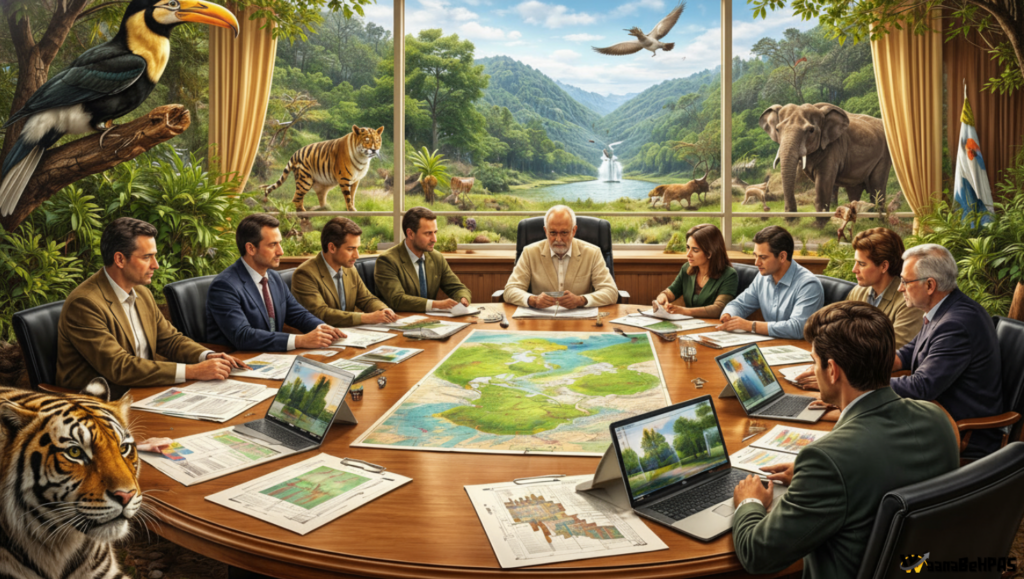
The National Board for Wildlife (NBWL) is India’s highest advisory body on wildlife conservation, constituted under the Wildlife (Protection) Act, 1972 (amended in 2002).
Key Features:
- Chairperson: Prime Minister of India
- Vice-Chairperson: Environment Minister
- Includes:
- Experts, NGOs, MPs, State representatives
👉 It plays a crucial role in:
- Wildlife policy formulation
- Approval of projects in protected areas
- Biodiversity conservation planning
2. Evolution and Background
- Established: 2003
- First meeting chaired by Atal Bihari Vajpayee
- Replaced the earlier Indian Board for Wildlife (IBWL)
👉 Purpose:
- Strengthen institutional mechanism for wildlife protection
3. Functions of NBWL
Core Functions:
- Advise government on wildlife conservation policies
- Approve/reject projects in:
- National Parks
- Wildlife Sanctuaries
- Frame and review National Wildlife Action Plan (NWAP)
- Promote:
- Research
- Awareness
- International cooperation (CITES, CBD)
4. Structure of NBWL
Two-Tier Structure:
1. Full Board (Apex Body)
- Meets rarely
- Chaired by Prime Minister
2. Standing Committee (SC-NBWL)
- Meets frequently
- Handles project clearances
👉 Most decisions are taken by the Standing Committee
5. Meetings of NBWL (Very Important for Exams)
A. Full Body Meetings
Timeline:
| Meeting No. | Year | Chairperson | Key Point |
|---|---|---|---|
| 1st | 2003 | Atal Bihari Vajpayee | Formation stage |
| 2nd–6th | 2004–2012 | Manmohan Singh | Policy expansion |
| 7th | 2025 | Narendra Modi | First meeting after 12+ years |
👉 Important Fact:
- Last meeting before 2025 was in 2012
- Gap of more than 10 years (frequently asked)
7th Meeting (Most Important – 2025)
📍 Held at: Gir National Park, Gujarat
📅 Date: 3 March 2025 (World Wildlife Day)
👉 Chaired by: Prime Minister Narendra Modi
Key Highlights:
- First full-body meeting in over a decade
- Launch of:
- River Dolphin estimation report (~6327 dolphins)
- Focus on:
- Project Lion
- Project Cheetah
- Gharial conservation
📌 Exam Point:
- Conducted on World Wildlife Day
B. Standing Committee Meetings (SC-NBWL)
👉 These meetings are frequent and crucial for exam
Historical Timeline (Important Selected Meetings)
Early Phase:
- 1st–10th meetings → 2005–2008
- 20th meeting → 2010
- 30th meeting → 2013
Mid Phase:
- 32nd–35th meetings → 2015
- 50th meeting → 2018
Recent Phase:
- 57th meeting → 2020
- 76th meeting → 2024 (agenda reference)
Latest Meetings (Very Important)
84th Meeting
- Date: 26 June 2025
89th Meeting
- Date: 28 February 2026
- Location: Bhopal
- Chaired by Environment Minister
Recent Meeting Schedule (2024–2025)
- 22 April 2025
- 12 March 2025
- 21 December 2024
- 09 October 2024
- 31 July 2024
- 22 February 2024
- 30 January 2024
👉 Shows high frequency of meetings at committee level
6. Importance of NBWL
1. Environmental Governance
- Ensures legal clearance for projects in protected areas
2. Biodiversity Conservation
- Supports:
- Project Tiger
- Project Elephant
- Snow Leopard conservation
3. Development vs Conservation Balance
- Approves infrastructure projects with safeguards
4. Policy Formulation
- Guides:
- National Wildlife Action Plan (2017–2031)
7. Issues and Criticism
Key Concerns:
- Irregular meetings of full board
- Over-reliance on Standing Committee
- Criticism for:
- Approving projects in eco-sensitive zones
- Lack of transparency in decision-making
8. Key Terms for Exam
- NBWL
- Standing Committee
- Wildlife Clearance
- Eco-sensitive Zone
- National Wildlife Action Plan
9. Quick Revision Points
- NBWL established in 2003
- Apex body for wildlife conservation in India
- Chaired by Prime Minister
- Last full meeting before 2025 → 2012
- Latest full meeting → 2025 (Gir)
- Standing Committee → frequent meetings (89th in 2026)
10. Sample Mains Answer
Q. Discuss the role and functioning of the National Board for Wildlife.
👉 Answer:
The National Board for Wildlife is a statutory body constituted under the Wildlife Protection Act, 1972, and serves as India’s apex advisory body on wildlife conservation. Chaired by the Prime Minister, it formulates policies, approves projects in protected areas, and promotes biodiversity conservation. While the Standing Committee meets regularly to grant clearances, the full board meets infrequently, as seen by the gap between 2012 and 2025 meetings. Despite its importance in balancing development and conservation, concerns remain regarding transparency and project approvals. Strengthening scientific decision-making and regular meetings can enhance its effectiveness.