🚢 The 2026 Maritime Convergence: Exercise MILAN & MAHASAGAR Vision
Syllabus: UPSC GS II & III – International Relations, Defence & Security
🧭 Introduction: A Maritime Turning Point in India’s Strategic Doctrine
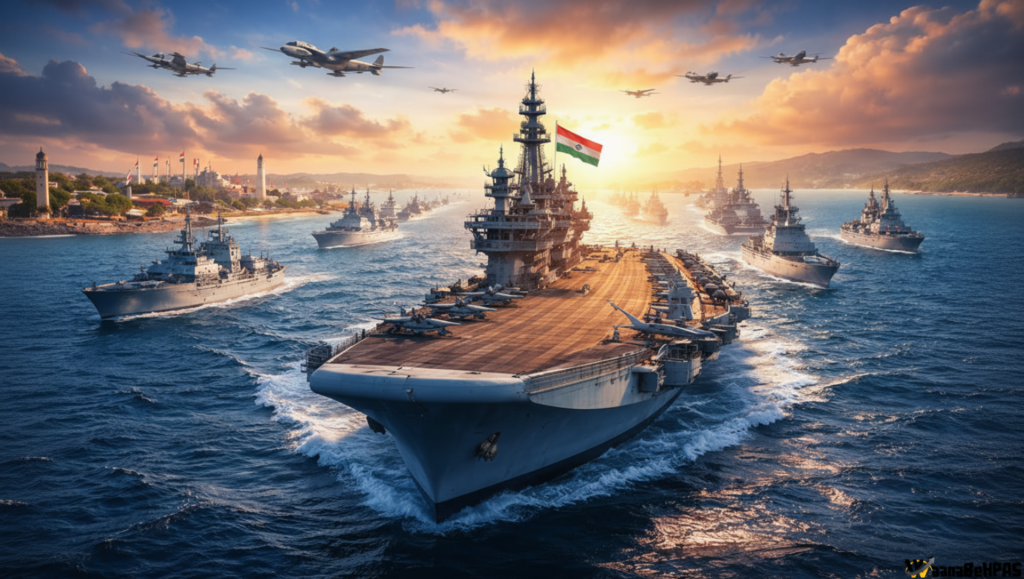
The 2026 Maritime Convergence at Visakhapatnam—comprising Exercise MILAN 2026, International Fleet Review (IFR), and IONS Conclave—marks a decisive shift in India’s maritime outlook from a regional security provider to a global maritime stakeholder. At the core of this transformation lies the evolution from SAGAR (Security and Growth for All in the Region) to MAHASAGAR (Mutual and Holistic Advancement for Security and Growth Across Regions), reflecting India’s ambition to shape the governance of the Indo-Pacific maritime commons.
- Signals India’s rise as a Preferred Security Partner
- Integrates diplomacy, defence, economy, and sustainability
- Aligns with Maritime Amrit Kaal Vision 2047
🌊 I. Strategic Pivot: From SAGAR to MAHASAGAR
India’s maritime doctrine has undergone a normative and operational expansion since 2015. While SAGAR focused on the Indian Ocean Region (IOR), MAHASAGAR extends India’s strategic horizon to global maritime governance.
Key Transformation in Doctrine
- From Regional to Global: Expansion from IOR security to Indo-Pacific and global maritime cooperation
- From Net Security Provider to Preferred Security Partner: More egalitarian and trust-based engagement
- From Security-centric to Holistic Strategy: Inclusion of blue economy, climate resilience, and technological connectivity
Expanded Strategic Objectives under MAHASAGAR
- Contesting hegemonic influence (especially BRI and “String of Pearls”)
- Strengthening island partnerships (Mauritius, Seychelles, Maldives)
- Promoting UNCLOS-based rule-based maritime order
- Enhancing maritime domain awareness via satellite and radar networks
- Advancing Global South maritime leadership
Thus, MAHASAGAR reflects India’s aspiration to become a normative leader in maritime jurisprudence and governance.
⚓ II. Institutional Triad 2026: IFR, MILAN and IONS – A Force Multiplier
The 2026 convergence represents a strategic case of institutional layering, where ceremonial diplomacy, operational drills, and strategic dialogue are synchronised.
1. International Fleet Review (IFR) 2026
- Theme: United Through Oceans
- Celebrates naval prestige and global camaraderie
- Coincides with 75th Anniversary of the Republic
- Acts as a diplomatic bridge among participating navies
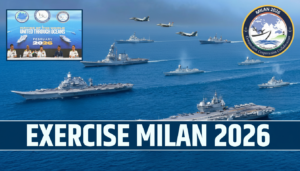
2. Exercise MILAN 2026 – The Operational Core
- Theme: Camaraderie, Cooperation, Collaboration
- Flagship multilateral naval exercise of the Indian Navy
- Operational manifestation of MAHASAGAR vision
3. IONS Conclave of Chiefs
- Strategic platform for Indian Ocean navies
- Agenda-setting forum for maritime governance
- Institutionalises collective responsibility for maritime order
Participation Metrics (Exam Enrichment)
- 70+ countries and 65 foreign navies
- 71 ships (Indian Navy, Coast Guard, and foreign vessels)
- 50+ aircraft
- Large international contingents and naval delegations
🌍 III. Exercise MILAN 2026: Operational Analysis
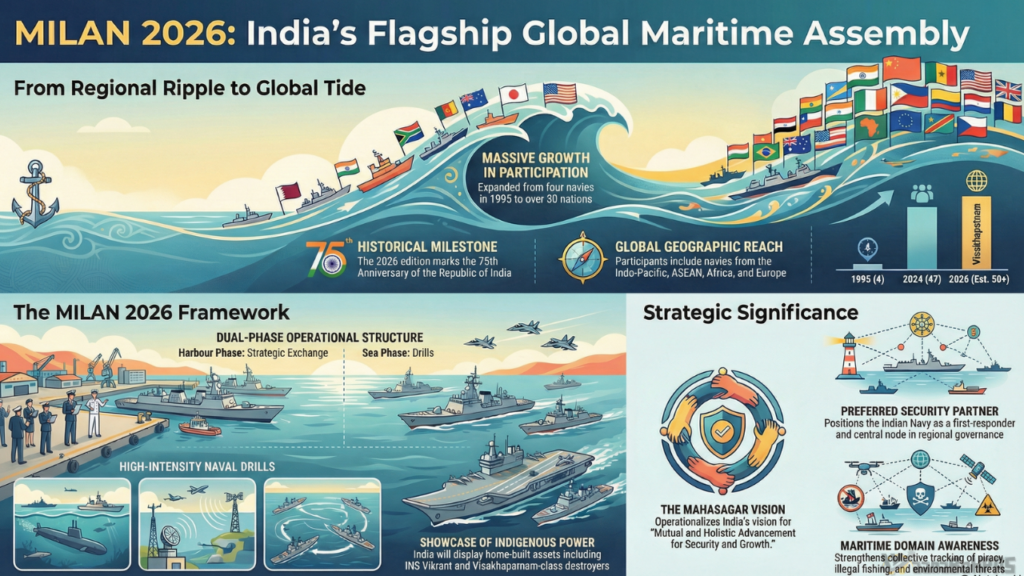
Exercise MILAN has evolved from a small regional exercise (1995, Port Blair) into a global-scale naval engagement hosted at Visakhapatnam in 2026.
Dual-Phase Structure of MILAN
1. Harbour Phase (Soft Diplomacy + Interoperability)
- MILAN Village cultural exchanges
- Maritime seminars and subject expert interactions
- Confidence-building and human interoperability
2. Sea Phase (Hard Power Cooperation)
- Anti-Submarine Warfare (ASW) drills
- Air defence coordination
- Complex surface manoeuvres
- Search and Rescue (SAR) operations
- Maritime interdiction and tactical exercises
Core Operational Objectives
- Enhancing multi-navy interoperability
- Securing Sea Lines of Communication (SLOCs)
- Promoting coordinated maritime security operations
- Strengthening coalition naval response mechanisms
🛰️ IV. Geostrategic Significance in the Indo-Pacific
MILAN 2026 must be understood in the backdrop of intensifying Indo-Pacific competition and expanding Chinese naval presence.
Strategic Relevance
- Counters China’s maritime expansion and “String of Pearls”
- Strengthens QUAD and ASEAN naval partnerships
- Secures critical chokepoints (Malacca, Hormuz, Bab-el-Mandeb)
- Supports Free, Open, and Inclusive Indo-Pacific vision
Rules-Based Maritime Order
- Reinforces UNCLOS principles
- Promotes freedom of navigation
- Enhances anti-piracy and maritime law enforcement cooperation
🤝 V. Naval Diplomacy & the Narrative of a “Preferred Security Partner”
India is consciously shifting its diplomatic identity from a hierarchical “Net Security Provider” to a cooperative “First Responder” and “Preferred Security Partner.”
Dimensions of Naval Diplomacy
- Normative Diplomacy: Trust-building with smaller littoral states
- HADR Leadership: Disaster relief, evacuation missions, Vaccine Maitri
- Multilateral Engagement: QUAD, IONS, and regional forums
- Cultural Diplomacy: MILAN Village and international naval interactions
Presence and Absence Diplomacy
- Inclusion of diverse navies signals strategic autonomy
- Absence of China and Pakistan reflects geopolitical caution
- Networked coalitions rather than rigid alliances
🛠️ VI. Showcase of Indigenous Capability: The “Builder’s Navy”
The 2026 convergence is a major platform to demonstrate Atmanirbhar Bharat in defence manufacturing.
Key Indigenous Platforms Displayed
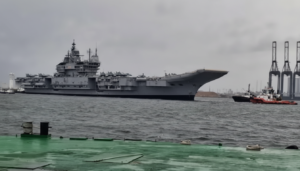
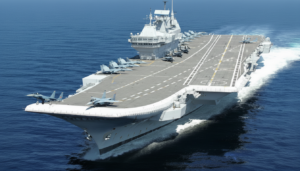
- INS Vikrant (Indigenous Aircraft Carrier)
- Visakhapatnam-class Destroyers
- Nilgiri-class Frigates
- Indigenous Offshore Patrol Vessels
Strategic Implications
- Transition from defence buyer to defence builder
- Enhances credibility in defence exports and capacity building
- Enables gifting of naval assets to friendly nations (capacity diplomacy)
- Strengthens India’s blue-water navy image
🌐 VII. MAHASAGAR Vision: A Holistic Maritime Framework
MAHASAGAR expands India’s maritime philosophy beyond security to integrated ocean governance.
Core Pillars of MAHASAGAR
- Maritime security cooperation
- Blue economy integration
- Climate resilience and sustainable shipping
- Technological maritime connectivity
- Global South leadership in ocean governance
Economic & Connectivity Dimensions
- Support to supply chain resilience
- Local currency trade and economic partnerships
- Alignment with India-Middle East-Europe Economic Corridor (IMEC)
⚠️ VIII. Challenges and Limitations
Despite its strategic success, certain structural challenges remain.
- Geopolitical rivalries in Indo-Pacific
- Resource-intensive naval modernisation
- Maritime militarisation concerns
- Need for sustained logistics and infrastructure expansion
- Fluid alignments among global naval powers
🧱 IX. Link with Maritime Amrit Kaal Vision 2047
The 2026 convergence is a milestone in India’s long-term maritime roadmap toward becoming a leading global maritime power.
Future Aspirations
- Tripling port capacity and maritime infrastructure
- Net-zero carbon shipping and green ports
- Expanded maritime domain awareness networks
- Transcontinental connectivity via IMEC
- Leadership in global maritime governance institutions
📝 X. Conclusion: India as a Shaper of the Maritime Order
The convergence of MILAN 2026, IFR, and IONS represents a maritime renaissance in India’s strategic trajectory. By blending hard power interoperability, diplomatic outreach, indigenous capability, and normative leadership under the MAHASAGAR vision, India is transitioning from a regional security provider to a central architect of the Indo-Pacific maritime order.
It underscores that India is no longer merely navigating the global maritime system but actively shaping a cooperative, rules-based, and inclusive maritime architecture for the 21st century.
📚 UPSC Quick Revision Box
🔹 Prelims Focus
- MILAN Exercise conducted by: Indian Navy
- Started in: 1995 (Port Blair)
- MAHASAGAR Full Form: Mutual and Holistic Advancement for Security and Growth Across Regions
- Venue 2026: Visakhapatnam
🔹 Mains Value Addition Keywords
- Institutional Layering
- Preferred Security Partner
- Rules-Based Maritime Order
- Maritime Domain Awareness
- Blue-Water Navy
- Naval Diplomacy
🔹 Probable UPSC Mains Questions
- Discuss the strategic significance of Exercise MILAN 2026 in India’s Indo-Pacific maritime strategy.
- Examine the evolution from SAGAR to MAHASAGAR and its implications for global maritime governance.
- Analyse how naval diplomacy enhances India’s role as a preferred security partner in the Indian Ocean Region.