🌍 Israel–United States–Iran War (2026)
Strategic Analysis of Operations Epic Fury & Roaring Lion | UPSC Briefing

1️⃣ Executive Overview: From Proxy Conflict to Direct War
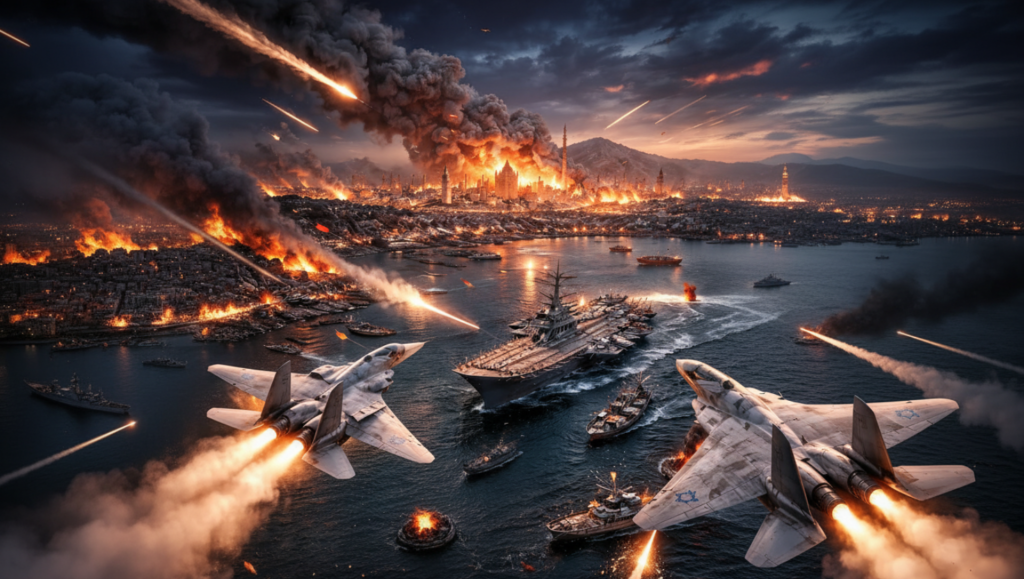
In late February 2026, tensions between Israel, United States, and Iran escalated into full-scale kinetic warfare.
Two coordinated campaigns were launched:
- 🇺🇸 Operation Epic Fury (U.S.-led)
- 🇮🇱 Operation Roaring Lion (Israel-led)
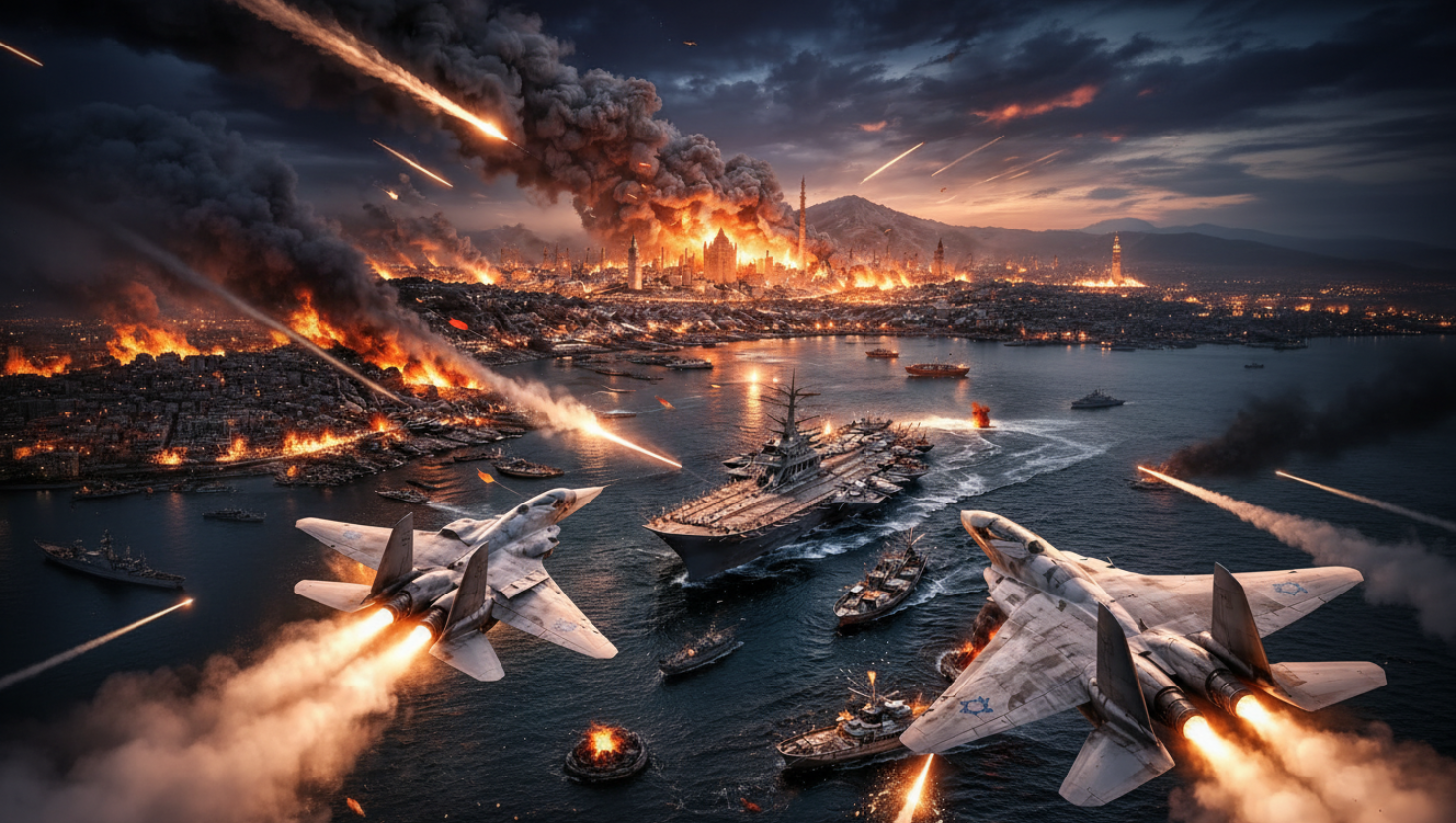
The conflict marked a radical shift from shadow warfare and proxy engagement to direct leadership decapitation strikes, cyber disruption, and multi-theatre escalation across West Asia.
For UPSC aspirants, this conflict intersects with:
- GS II – International Relations
- GS III – Security & Energy
- GS I – Post-Cold War geopolitics
- Essay – Ethics of Pre-emptive War
2️⃣ Conflict Genesis: Why Did War Break Out?
A. The “Maximum Pressure” Revival
Following political changes in Washington, economic sanctions on Iran were intensified to unprecedented levels. The objective:
- Collapse the Iranian rial
- Trigger domestic unrest
- Force nuclear concessions
The resulting economic breakdown led to:
- Nationwide protests (100+ cities)
- Severe state repression
- Thousands of civilian casualties (figures vary widely)
The humanitarian crisis was later cited as a moral justification for intervention.
B. The Nuclear Flashpoint
The International Atomic Energy Agency (IAEA) reportedly detected highly enriched uranium at an undeclared site in late February 2026.
However, intelligence ambiguity persisted:
- Pentagon briefings: No confirmed imminent Iranian attack.
- Administration claims: Iran nearing nuclear threshold.
This mirrors debates seen during the 2003 Iraq WMD controversy, raising questions of:
Intelligence politicization vs preventive security doctrine.
3️⃣ Strategic Military Buildup
By late February 2026, U.S. deployments in the Gulf resembled pre-2003 Iraq invasion levels.
Major Components:
| Category | 2026 Deployment |
|---|---|
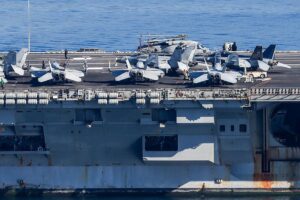
| Carrier Strike Groups | USS Abraham Lincoln, USS Gerald R. Ford |
| Stealth Assets | B-2 Bombers |
| Missile Systems | Black Sparrow ALBMs |
| ISR | NATO AWACS |
| Cyber Units | Multi-domain pre-emptive operations |
The objective was not occupation — but rapid regime decapitation.
4️⃣ Execution of Operations Epic Fury & Roaring Lion
🎯 Leadership Decapitation Strike (28 Feb 2026)
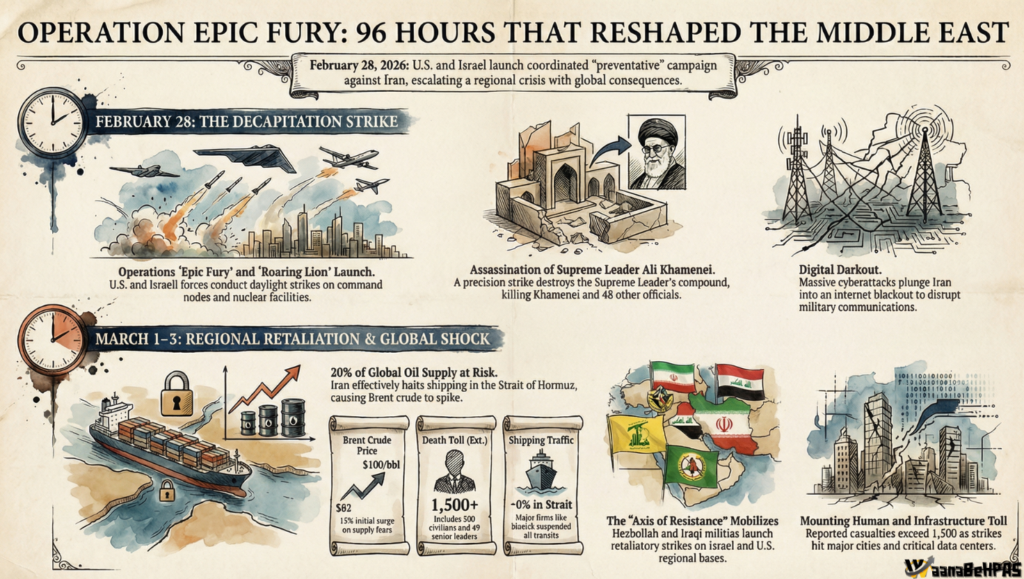
At 9:45 a.m. IRST, precision strikes targeted leadership compounds in Tehran.
Key outcomes:
- Assassination of Supreme Leader Ali Khamenei
- Elimination of top IRGC leadership
- Destruction of command nodes
Israel’s Unit 8200 reportedly used AI-driven pattern-of-life algorithms based on hacked surveillance feeds.
This marks a doctrinal shift:
From regime containment → to regime removal.
💻 Cyber Warfare Phase
Before kinetic strikes:
- National prayer app hacked (“BadeSaba” breach)
- 5 million push notifications urging military defections
- Internet connectivity collapsed to 4%
- Mobile towers jammed near command centers
This reflects Hybrid Warfare 2.0:
Simultaneous cyber, psychological, and kinetic action.
5️⃣ Regional Contagion: The War Expands
🛢️ Persian Gulf Theatre
Iran retaliated by striking:
- Al Udeid (Qatar)
- Al Dhafra (UAE)
- Bahrain Fifth Fleet HQ
- Kuwaiti airbases
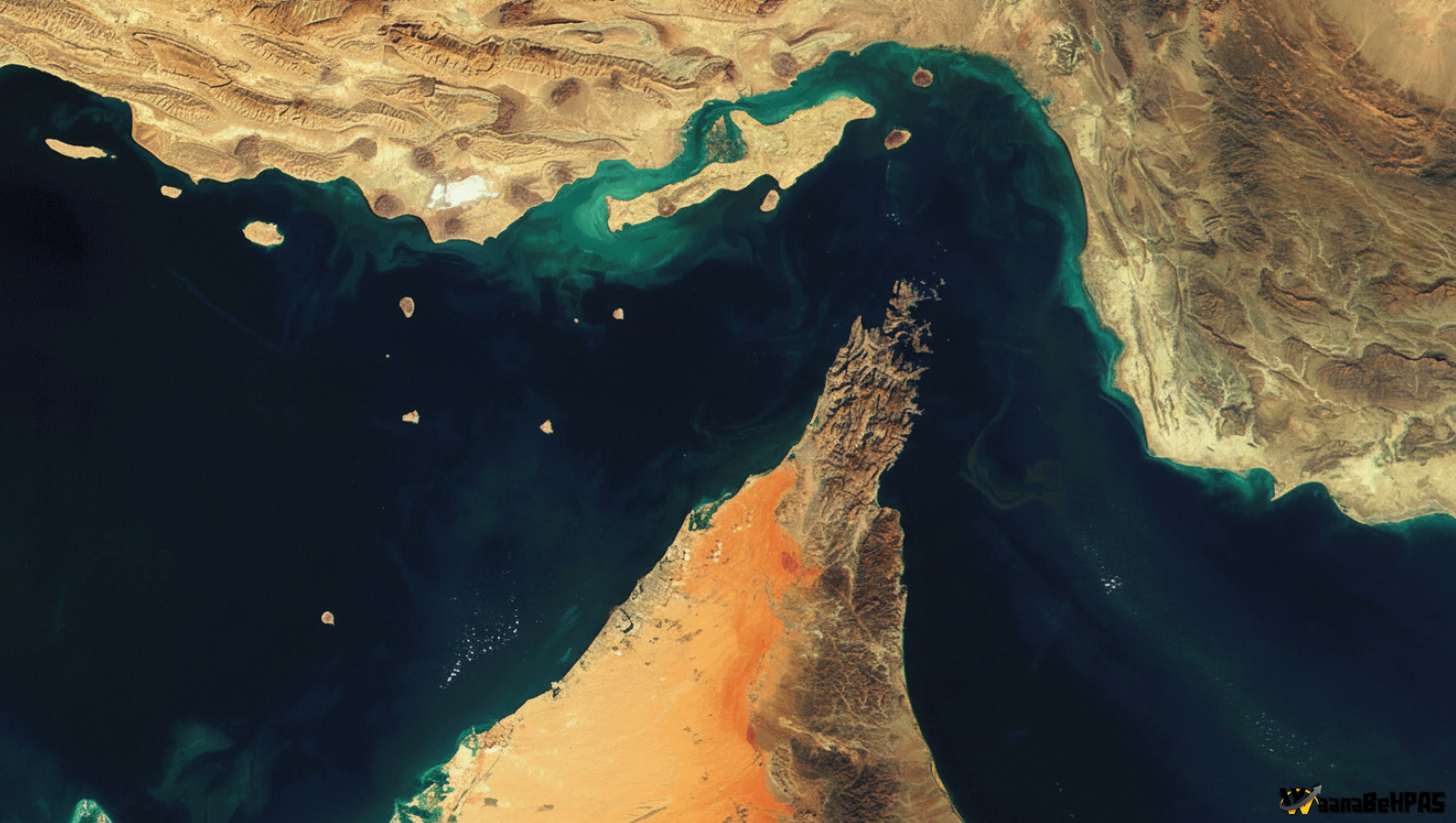
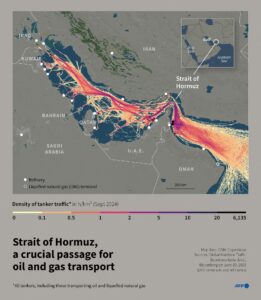
The Strait of Hormuz was partially closed.
Impact:
- 20% of global oil trade disrupted
- 150 ships stranded
- Energy prices spiked
🚀 Hezbollah & Northern Front
Iran-aligned Hezbollah launched rockets into northern Israel.
Israel responded with:
- Strategic bombing of Beirut
- Ground incursion into Southern Lebanon
- Evacuation orders for 50+ communities
🌊 Red Sea & African Spillover
Houthi forces:
- Targeted Red Sea shipping
- Threatened Somaliland ports
Djibouti warned of merger between:
- Horn of Africa conflicts
- Gulf war theatre
This signals:
Risk of Middle East–Africa conflict fusion.
6️⃣ Humanitarian & Economic Impact
Casualties Snapshot (Week 1)
| Category | Estimated Impact |
|---|---|
| Iranian Military | 1,000–1,500 killed |
| Iranian Civilians | 700+ confirmed |
| U.S. Forces | 6 killed |
| Israel | 12 killed |
| Third-country nationals | India, China, Nepal affected |
🌐 Digital Infrastructure Collapse
Drone strikes hit AWS data centers in UAE & Bahrain.
Consequences:
- Regional cloud outage
- EC2 & S3 collapse
- Banking & aviation systems disrupted
This reveals:
Modern war now targets data sovereignty.
7️⃣ Geopolitical Realignment
🇺🇳 United Nations Response
Emergency United Nations Security Council session convened.
- Russia demanded IAEA safeguards.
- E3 supported “proportionate defensive action.”
- NATO heightened missile defense readiness.
⚖️ Legal Debate
Key IR Questions:
- Does Article 51 (Self-defense) justify pre-emptive decapitation?
- Is leadership assassination lawful?
- Does humanitarian justification legitimize regime change?
8️⃣ Strategic Risks Ahead
⚠️ 1. Power Vacuum in Tehran
Interim council formed under Ali Larijani.
Risk:
- Balkanization
- IRGC splinter insurgencies
- Secessionist uprisings
⚠️ 2. Hormuz Shock
Energy chokepoint remains vulnerable.
Implications for:
- India’s oil imports
- Global inflation
⚠️ 3. Precedent Setting
Assassinating a sitting head of state:
Sets new global intervention standard.
9️⃣ UPSC Analytical Framework
🔹 Prelims Focus
- Strait of Hormuz location
- IAEA role
- IRGC structure
- Carrier Strike Group definition
🔹 Mains Focus
- Ethics of regime change
- Impact on energy security
- West Asia balance of power
- India’s strategic autonomy
🔹 Essay Themes
- “Pre-emptive War and International Law”
- “Energy Security in an Age of Hybrid Warfare”
- “Leadership Decapitation: A New Military Doctrine?”
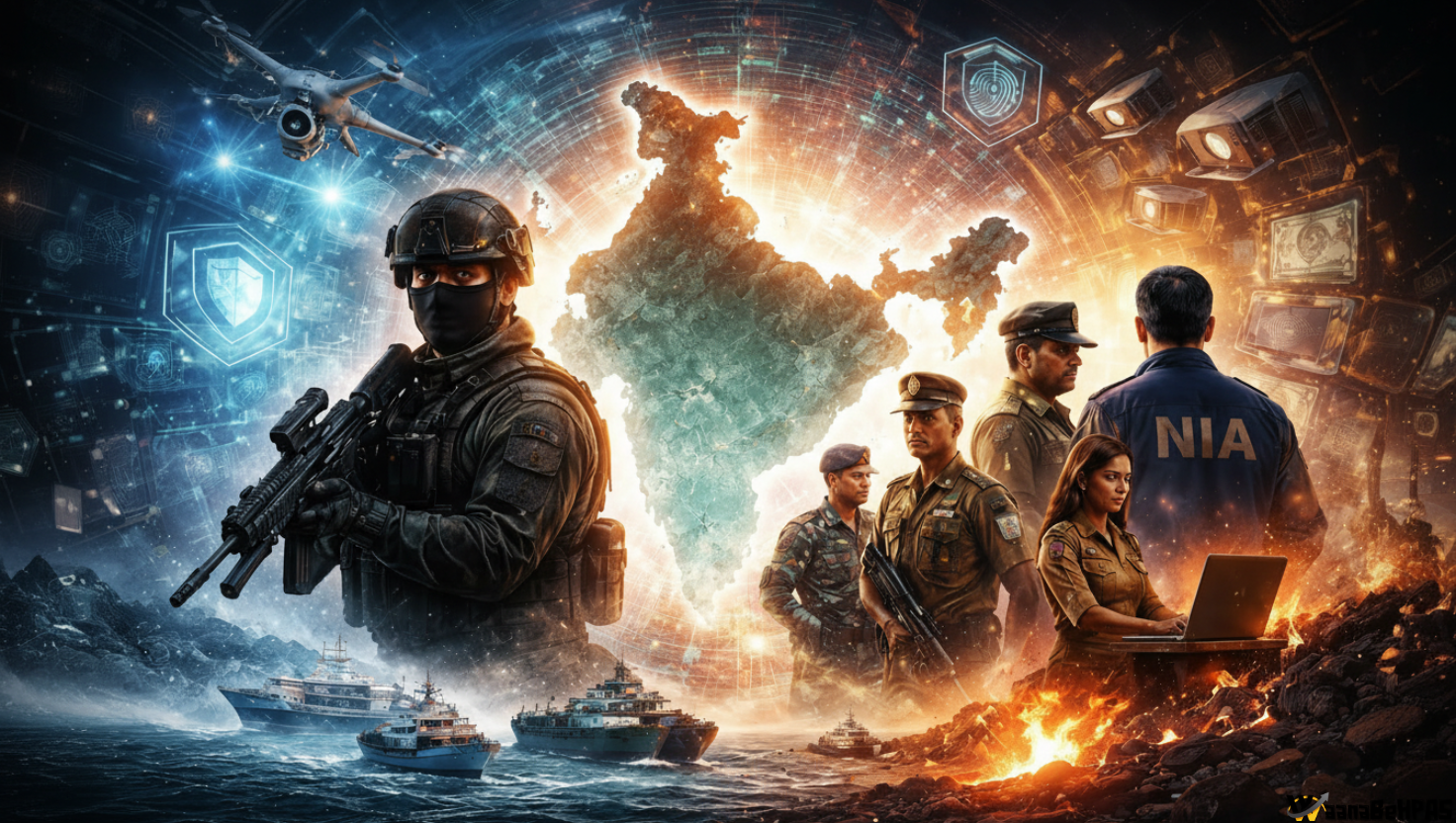
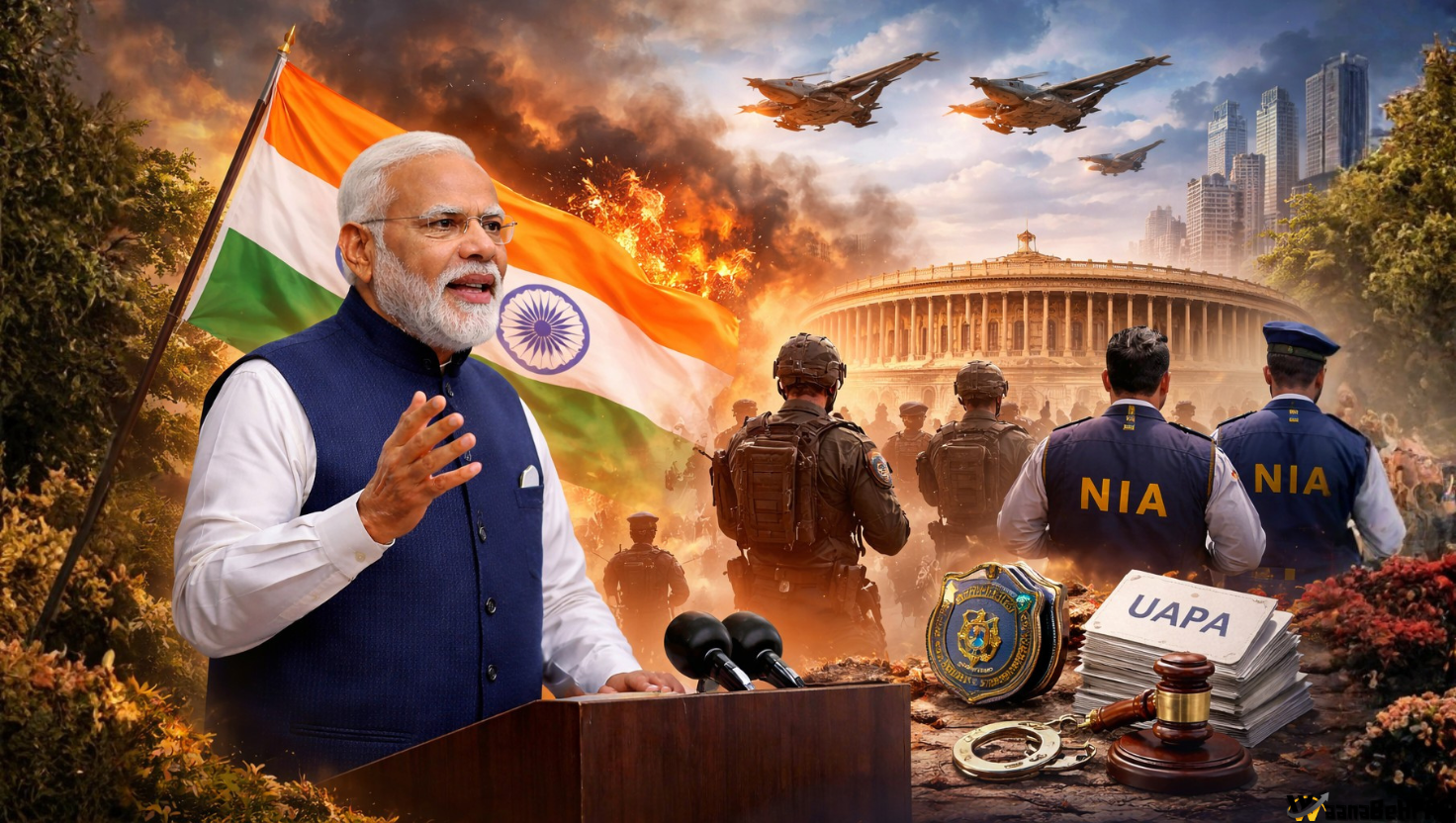
🔟 India’s Strategic Concerns
For India:
- 60%+ crude imports via Gulf
- Large Indian diaspora in UAE, Qatar
- Maritime security in Arabian Sea
- Balancing ties with U.S., Israel & Iran
India must pursue:
- Strategic neutrality
- Energy diversification
- Diplomatic de-escalation advocacy
📌 Final Strategic Takeaways
- The war marks transition from proxy war → direct state war.
- Decapitation strategy replaced attrition warfare.
- Cyber warfare now precedes kinetic warfare.
- Hormuz remains global vulnerability.
- Regional conflict risks continental spillover.
🧭 Conclusion
The 2026 Israel–U.S.–Iran War is not merely a regional confrontation. It is a test case for 21st-century warfare, where:
- Artificial intelligence meets missile strikes
- Cyber disruption precedes air raids
- Energy corridors become battlefields
- International law is stress-tested
As the conflict enters its second week, the Middle East stands at a crossroads — between regime transition, prolonged insurgency, or broader regional conflagration.