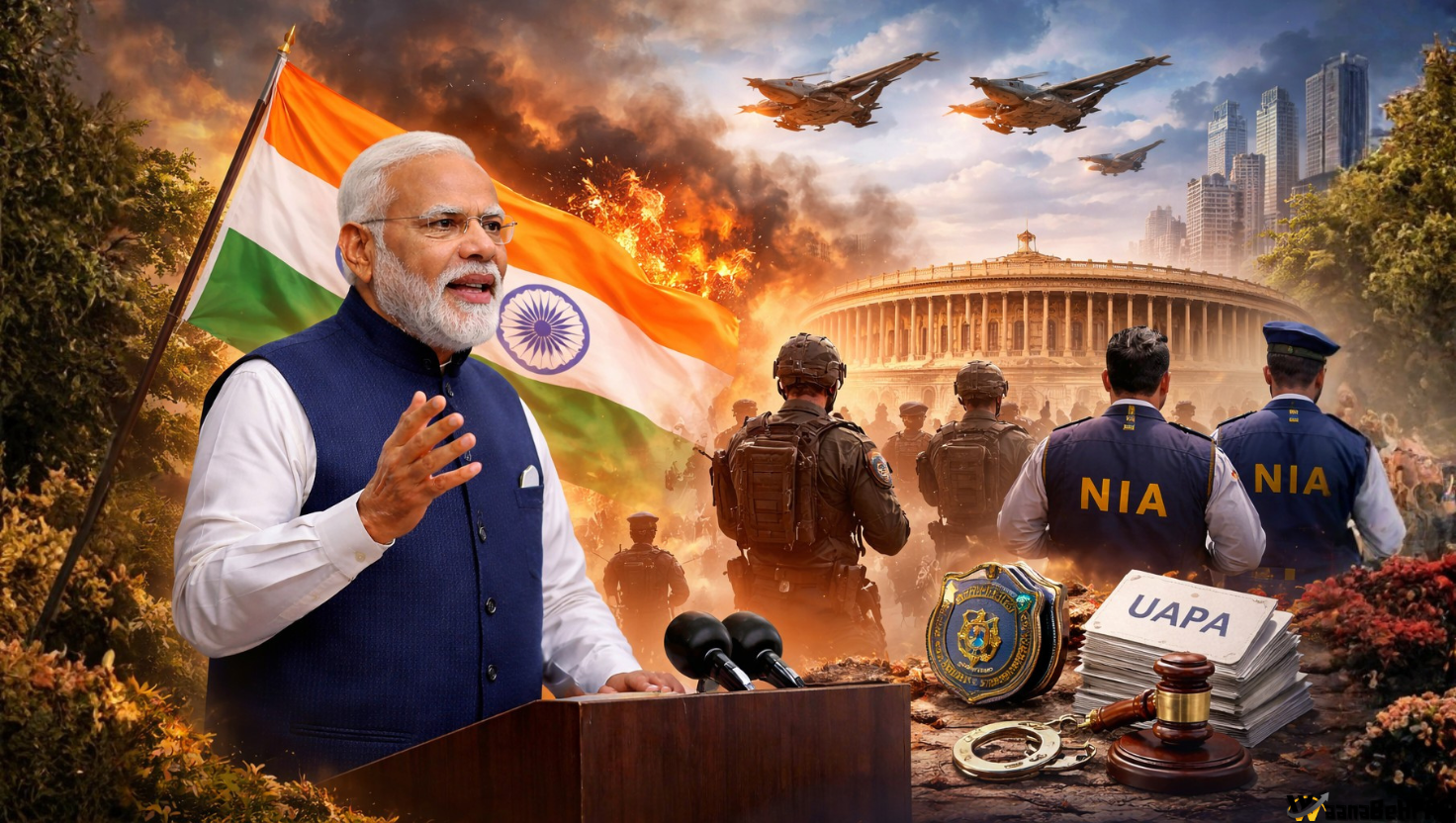
India’s Counter-Terrorism Doctrine: From Parliament Attack to the “Zero Tolerance” Global Framework
1. Introduction: Terrorism as the Core National Security Challenge
Terrorism has emerged as the most persistent human-led threat to India’s sovereignty, territorial integrity, and democratic order. While India has historically faced insurgencies, the December 13, 2001 Parliament attack marked a structural shift in India’s security doctrine.
The attack transformed terrorism from a domestic law-and-order issue into a central driver of foreign policy and national security architecture. Since then, India’s approach has evolved into a clearly articulated doctrine:
“No cause can justify the murder of civilians” — Zero Tolerance for Terrorism.
This principle now shapes India’s domestic legislation, military strategy, diplomatic engagements, and global norm-setting initiatives.
2. Phase I (2001–2008): Securitization of Foreign Policy
🔹 2001 Parliament Attack – Strategic Pivot
- Framed terrorism as cross-border aggression, not merely internal insurgency.
- Led to Operation Parakram (military mobilization).
- Strengthened India’s diplomatic push to internationalize Pakistan-sponsored terrorism.
🔹 Legislative Response
- POTA (2002) enacted (later repealed).
- Shift toward centralizing counter-terror powers.
This period marked the beginning of India’s transition from reactive containment to strategic securitization.
3. Phase II (2008–2014): Institutional Consolidation
🔹 26/11 Mumbai Attacks — Systemic Shock
The 2008 Mumbai attacks exposed gaps in:
- Coastal security
- Intelligence coordination
- Urban rapid response
Key Reforms:
- Establishment of National Investigation Agency (NIA)
- 2008 Amendments to Unlawful Activities (Prevention) Act (UAPA)
- Strengthening of Multi-Agency Centre (MAC)
The NIA marked India’s federalization of counter-terrorism, modeled conceptually on the FBI.
4. Phase III (2014–Present): The Zero Tolerance Doctrine
🔹 Ideological Pillar: No Double Standards
Under the current administration, counter-terrorism became:
- A core diplomatic message
- A security doctrine
- A global leadership theme (G20, UNSC engagements)
Core Tenets:
- Rejection of Double Standards
No distinction between “good” and “bad” terrorists. - Proactive Retaliation
Cross-border kinetic responses when necessary. - Whole-of-Government Approach
Integration of:- NATGRID
- NCORD
- NIDAAN
- AI-based analytics
- Ecosystem Disruption
Targeting financing, radicalization, narcotics-terror nexus.
5. Legislative Evolution: UAPA & Federalization
🔹 The 2019 UAPA Amendment
Major Shift:
- Individuals (not just organizations) can be designated terrorists.
- Expanded powers to NIA for property seizure.
- Detention without charge up to 180 days.
Comparative Perspective
| Country | Detention Framework | Sunset Clause | Review Mechanism |
|---|---|---|---|
| UK Terrorism Act | Shorter detention | Yes | Independent reviewer |
| US PATRIOT Act | Emergency-based | Yes | Congressional oversight |
| India (UAPA) | Up to 180 days | No | Judicial review |
India treats terrorism as a permanent structural threat, not a temporary emergency.
6. Catalytic Incidents and Strategic Outcomes
🔹 2019 Pulwama Attack
Led to Operation Bandar (Balakot airstrikes) — first airstrike inside Pakistan since 1971.
Strategic Significance:
- Established precedent for cross-border kinetic deterrence
- Altered cost-benefit calculus for terror sponsors
📊 Data-Backed Outcomes (2009–2019)
- 86% reduction in J&K terrorist incidents
- 70% reduction in hinterland terror incidents
- Sharp decline in organized stone-pelting ecosystem
These outcomes reflect operationalization of the Zero Tolerance mandate.
7. Global Counter-Terror Diplomacy
India positions itself as a norm-setter in global counter-terror regimes.
Key Multilateral Initiatives:
| Platform | Objective |
|---|---|
| UN | Push for Comprehensive Convention on International Terrorism (CCIT) |
| G20 (Delhi Declaration 2022) | Counter misuse of drones & fintech |
| USA (JWC-CT) | Cyber-radicalization intelligence |
| Russia | Drug-terror nexus cooperation |
| EU | Border security & tech collaboration |
India chaired the UN Security Council Counter-Terrorism Committee (2022), pushing for:
- Criminalization of all forms of terror
- Denial of safe havens
- Cutting terror financing
8. The Balancing Act: Security vs Civil Liberties
Key Jurisprudential Issues:
- Section 43D(5) — stringent bail provisions
- Extended pre-trial detention
- Allegations of misuse against activists
Judicial Moderation:
In Union of India v. K.A. Najeeb, the Supreme Court held that right to speedy trial cannot be overridden by strict bail provisions.
In Thwaha Fasal v. Union of India, the Court ruled that mere possession of literature does not constitute terrorist intent.
This ensures constitutional oversight over executive power.
9. International Projection of the Doctrine
India’s stance that:
“No cause can justify murder of civilians”
has become a recurring diplomatic assertion in West Asia, UN forums, and G20 platforms.
India’s policy reflects:
- Strategic de-hyphenation (Israel–Palestine–Iran balance)
- Counter-terror cooperation without ideological alignment
- Geo-economic hedging
India now seeks to move from a victim state to a security architecture designer.
10. Strategic Assessment
Achievements:
✔ Federalized CT response (NIA)
✔ Strong legislative backing (UAPA 2019)
✔ Cross-border deterrence credibility
✔ Global norm-setting diplomacy
✔ Technology integration (AI, financial tracking)
Concerns:
⚠ Civil liberties debate
⚠ Long pre-trial detention
⚠ Need for clearer definition of terrorism
11. Way Forward: Toward a National Counter-Terror White Paper
India would benefit from publishing a comprehensive National Terrorism Strategy White Paper that:
- Clearly defines terrorism
- Harmonizes federal & state coordination
- Codifies oversight mechanisms
- Aligns Zero Tolerance with constitutional safeguards
12. UPSC Syllabus Linkage
GS Paper II
- International Relations
- Bilateral & multilateral counter-terror cooperation
- Effect of global policies on India
GS Paper III
- Internal security challenges
- Role of NIA
- Security laws & amendments
- Border management
Essay Themes
- “Security vs Liberty in Democratic States”
- “India’s Strategic Autonomy in Counter-Terrorism”
- “Global Governance Against Non-State Actors”
Conclusion
India’s counter-terror journey since 2001 reflects a transformation from vulnerability to strategic assertiveness. The Zero Tolerance doctrine integrates:
- Legislative strength
- Intelligence modernization
- Military deterrence
- Global norm-building
Yet, the ultimate test lies in balancing robust security enforcement with constitutional resilience.
India today stands not only as a frontline state against terrorism, but as a potential architect of 21st-century global counter-terror governance.