India–Bangladesh Relations 2026: Reset, Realignment and Strategic Stabilisation
I. The Paradigm Shift: From the “Golden Chapter” to Strategic Uncertainty
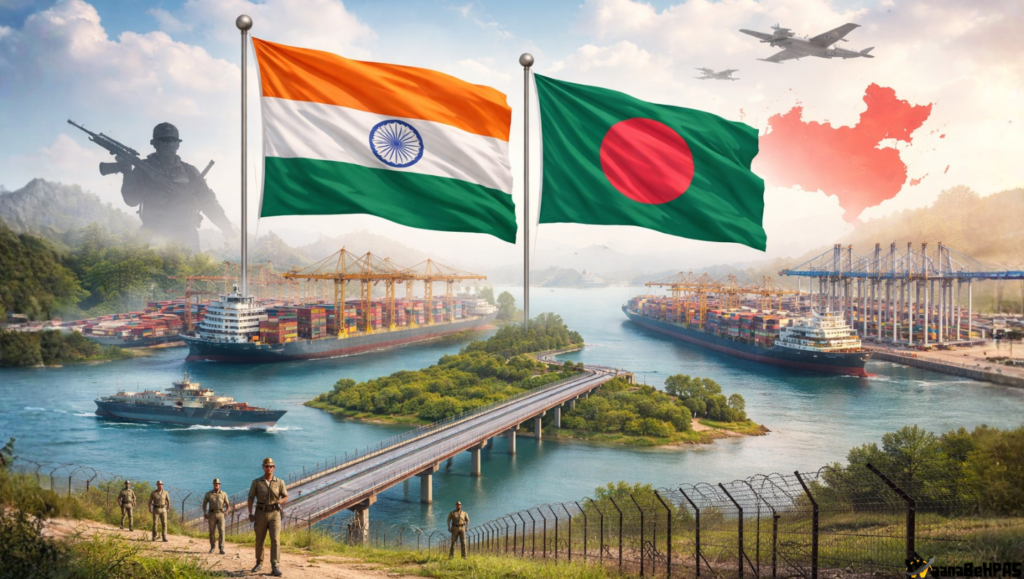
India and Bangladesh entered 2026 at a critical inflection point. The landslide victory of the Bangladesh Nationalist Party (BNP) under Tarique Rahman in February 2026 has effectively ended the “Golden Chapter” (2009–2024) of bilateral ties that flourished under Sheikh Hasina.
For nearly two decades, India enjoyed a stable, security-centric partnership with Dhaka:
- 2015 Land Boundary Agreement (LBA) resolved the complex enclave issue.
- Enhanced counter-insurgency cooperation curbed Northeast militant safe havens.
- Unprecedented connectivity projects integrated Bangladesh into India’s Act East Policy.
However, the BNP’s return represents a shift toward a more nationalist and Islamic-identity driven political posture. The new regime’s domestic legitimacy is partly anchored in demonstrating strategic distance from India. This marks a paradigm shift in South Asian geopolitics.
II. Visa Restoration 2026: A Soft Reset Amid Hard Realities
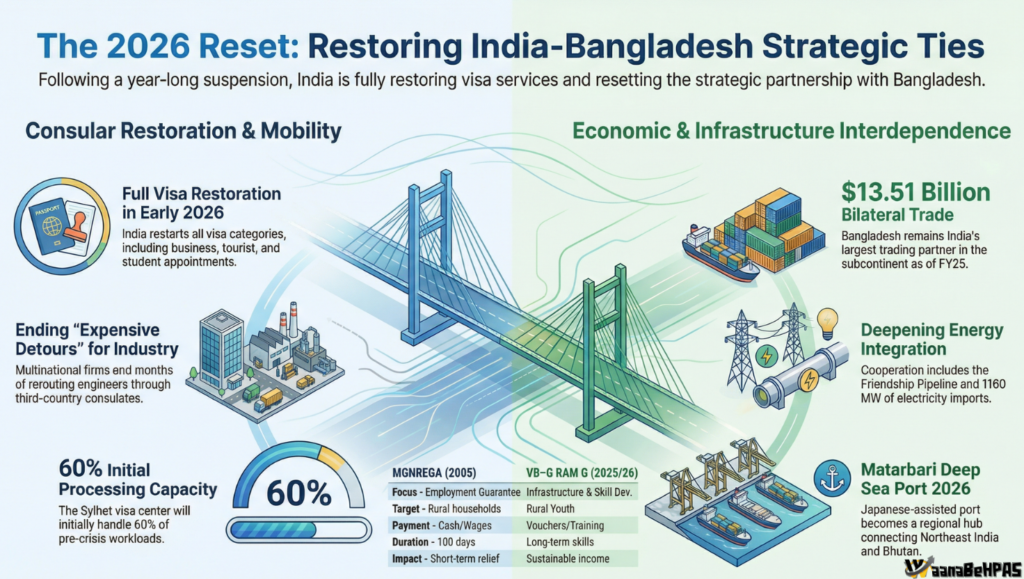
One of the earliest diplomatic signals of thaw was the restoration of visa services in February 2026.
Why It Matters:
- Revives medical tourism, education flows, and business mobility.
- Restores confidence in people-to-people connectivity.
- Signals willingness for calibrated engagement.
However, operational constraints remain. Visa centres such as Sylhet are initially functioning below pre-crisis capacity. While symbolic, the move represents only a first step in rebuilding trust.
For UPSC, this illustrates how soft power instruments (visas, education, healthcare diplomacy) function as tools of foreign policy recalibration.
III. The “Hasina Factor”: Extradition as Diplomatic Flashpoint
The continued presence of Sheikh Hasina in India has emerged as a major diplomatic bottleneck.
The BNP government is under domestic pressure to seek:
- Formal extradition of Hasina on charges linked to the 2024 uprising.
- Political “de-hyphenation” — demanding India demonstrate neutrality between Awami League and BNP.
India’s Strategic Constraints:
- Protecting a long-standing ally.
- Avoiding dangerous diplomatic precedent.
- Preventing escalation of the “India Out” movement in Bangladesh.
This is no longer a bilateral legal issue — it is tied to domestic consolidation in Dhaka. Any refusal may inflame anti-India rhetoric, affecting border security and economic cooperation.
UPSC Angle:
Extradition diplomacy, political asylum norms, international law, and bilateral treaty frameworks.
IV. Security Red Lines: Siliguri Corridor and Insurgency Concerns
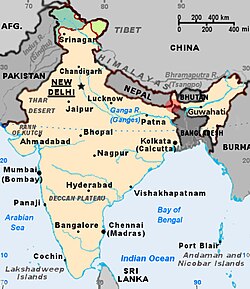
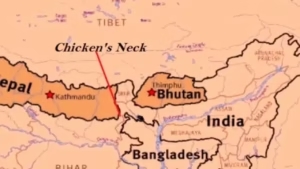

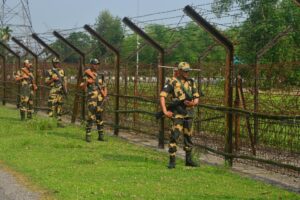
India’s foremost concern remains the Siliguri Corridor (“Chicken’s Neck”), the narrow strip connecting mainland India to the Northeast.
Three Non-Negotiable Security Red Lines:
- Zero Tolerance for Insurgency
Groups like ULFA and NDFB had earlier used Bangladeshi territory as safe havens. Any rollback in cooperation would be unacceptable. - Protection of Minorities
Violence against Hindus could trigger refugee inflows into West Bengal and Assam, destabilising domestic politics. - Border Integrity & Radicalisation
The electoral gains of Jamaat-linked forces in border regions raise concerns of infiltration and smuggling networks.
Security cooperation, once the bedrock of ties, now faces strategic uncertainty.
UPSC GS-III Relevance: Internal security, cross-border terrorism, border management, refugee crisis.
V. Economic Interdependence: Trade as Stabilising Anchor
Despite political shifts, economic ties remain robust.
- Bilateral trade: $13.51 billion (FY25)
- Bangladesh: India’s largest trade partner in South Asia.
- India supplies cotton, power, petroleum — vital to Bangladesh’s manufacturing ecosystem.
Critical 2026 Milestones:
1. LDC Graduation
Bangladesh’s graduation from Least Developed Country status reduces preferential Western market access — making India a crucial economic cushion.
2. CEPA Imperative
The proposed Comprehensive Economic Partnership Agreement is now strategic rather than optional.
3. Rupee–Taka Settlement
Reducing US Dollar dependence enhances financial sovereignty and trade resilience.
Economic interdependence creates structural “lock-in” even amid political turbulence.
UPSC GS-III Relevance: Regional trade blocs, currency settlements, economic diplomacy.
VI. The Matarbari Pivot: Connectivity as Strategy
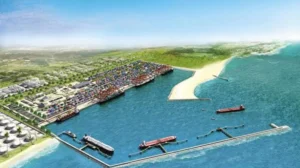
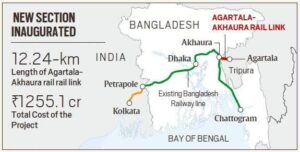
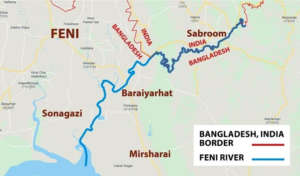
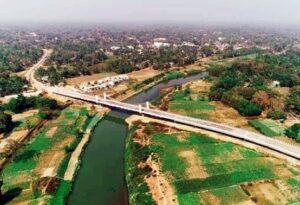
The operationalisation of the Matarbari Deep Sea Port under Japan’s BIG-Hubs initiative marks a transformative moment.
Connectivity Locks Now Operational:
- Akhaura–Agartala Rail Link
- Maitri Setu over the Feni River
- Transshipment access to Chittagong & Mongla ports
For India’s Northeast Region (NER), particularly Tripura, this reduces dependence on the Siliguri Corridor and enhances maritime access.
This is connectivity diplomacy in action — aligning economic geography with strategic depth.
UPSC GS-I & GS-III: Infrastructure, regional development, Northeast integration.
VII. The China–Pakistan–India Triangle
China is expected to accelerate Belt and Road Initiative (BRI) projects under the new Dhaka dispensation.
Concerns include:
- Dual-use port facilities at Mongla and Payra.
- Strategic proximity to China’s Kyaukpyu port in Myanmar.
- Potential maritime encirclement of India’s Eastern Naval Command.
Simultaneously, increased Pakistani engagement could restrict Dhaka’s diplomatic flexibility.
Bangladesh thus becomes a theatre of Indo-Pacific competition — a crucial pivot state in the Bay of Bengal.
UPSC GS-II Relevance:
Neighbourhood First Policy, Indo-Pacific strategy, maritime security.
VIII. Strategic Recommendations for India (UPSC Analytical Framework)
- De-hyphenation Strategy
Move beyond Awami League-centric engagement. Broaden outreach to BNP, civil society, youth movements. - Soft Power Recalibration
Expand medical visas, scholarships, digital connectivity. - Cooperative Federalism in Border Policy
Align Assam, Tripura, West Bengal, and Manipur in unified border governance. - Balanced Deterrence & Engagement
Clear red lines on insurgency; flexibility on trade and connectivity. - Accelerate CEPA & Connectivity Projects
Deepen economic integration to create irreversible interdependence.
IX. Conclusion: Pragmatic Engagement in a New Era
The 2026 reset in India–Bangladesh relations is not merely a diplomatic episode — it is a structural realignment in South Asian geopolitics.
The restoration of visas marks the beginning of a cautious thaw, but deeper challenges remain:
- Extradition diplomacy
- Security recalibration
- China factor
- Domestic political narratives
For India, stability in Dhaka is essential for:
- Security of the Northeast
- Success of the Act East Policy
- Indo-Pacific maritime strategy
- Bay of Bengal economic architecture
The path forward lies in “Pragmatic Engagement” — firm on security red lines, flexible on economic cooperation, and proactive in people-to-people diplomacy.
📌 UPSC Exam Value Addition
Prelims Focus:
- LDC Graduation
- Siliguri Corridor
- Land Boundary Agreement 2015
- CEPA
- Matarbari Port
GS-II:
- Bilateral relations
- Neighbourhood First Policy
- Extradition and diplomacy
GS-III:
- Internal security
- Border management
- Maritime strategy
Essay Themes:
- “Geography as Destiny: The India–Bangladesh Equation”
- “Neighbourhood First in a Competitive Indo-Pacific”