India AI Impact Summit 2026: Architecting the Global South’s Digital Future
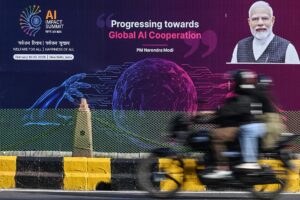


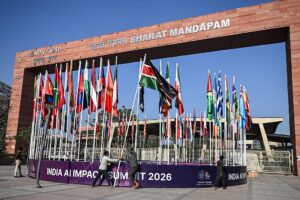
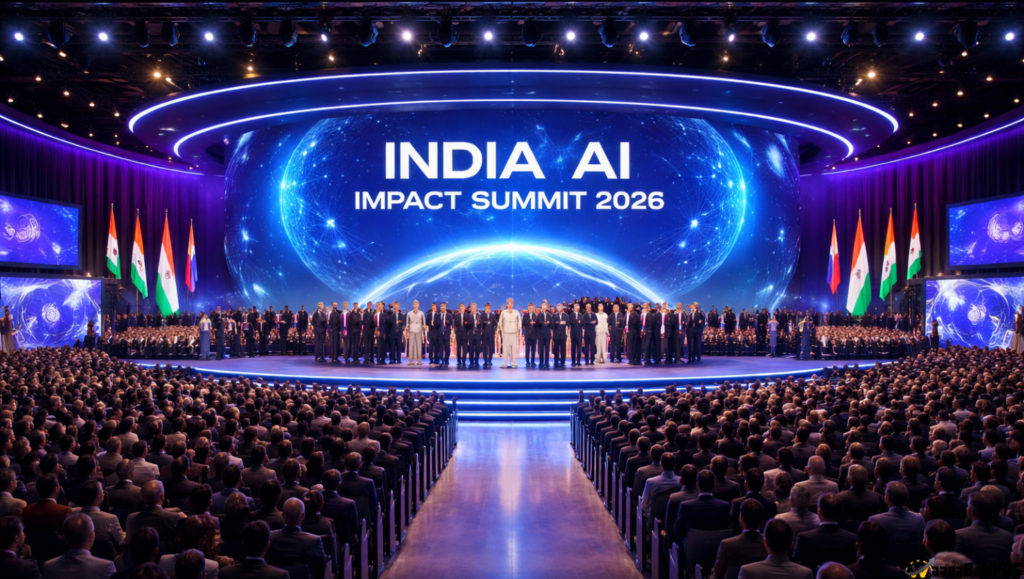
The India AI Impact Summit 2026, held from 16–20 February 2026 at Bharat Mandapam, New Delhi, marks a defining moment in global technology governance. Positioned as the first major AI summit hosted in the Global South, it signals a strategic shift in the global AI discourse — from theoretical safety debates to measurable developmental impact.
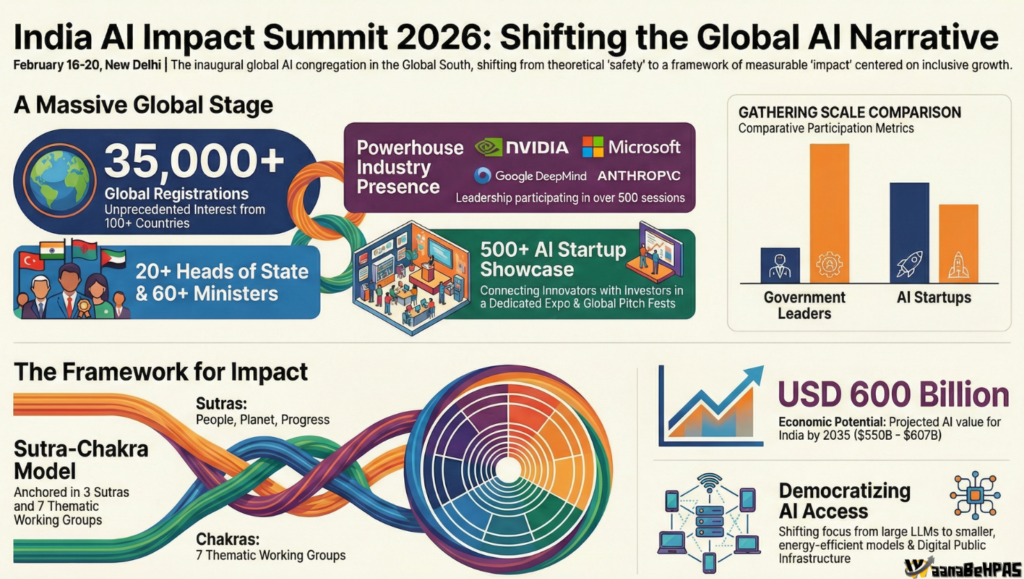
The Summit brings together 100+ countries, over 20 Heads of State/Government, 100+ ministers, and 500+ global AI leaders including CEOs from NVIDIA, Microsoft, Google DeepMind, OpenAI and others. This convergence of sovereign authority and corporate capital transforms the forum from dialogue to delivery.
For UPSC aspirants, the Summit is crucial for GS-II (International Relations & Governance) and GS-III (Economy, Science & Technology).
1️⃣ The Paradigm Shift: From “Safety” to “Impact”
Earlier global meetings — such as the UK’s 2023 AI Safety Summit and France’s 2025 AI Action Summit — focused on risk mitigation and normative alignment.
New Delhi 2026 introduces an “Impact Framework”:
- Moving from principle-setting to implementation
- Shifting from defensive safety discourse to offensive development strategy
- Centering emerging economies as rule-shapers, not rule-takers
This represents India’s attempt to democratize AI governance and reposition the Global South at the heart of technological norm-building.
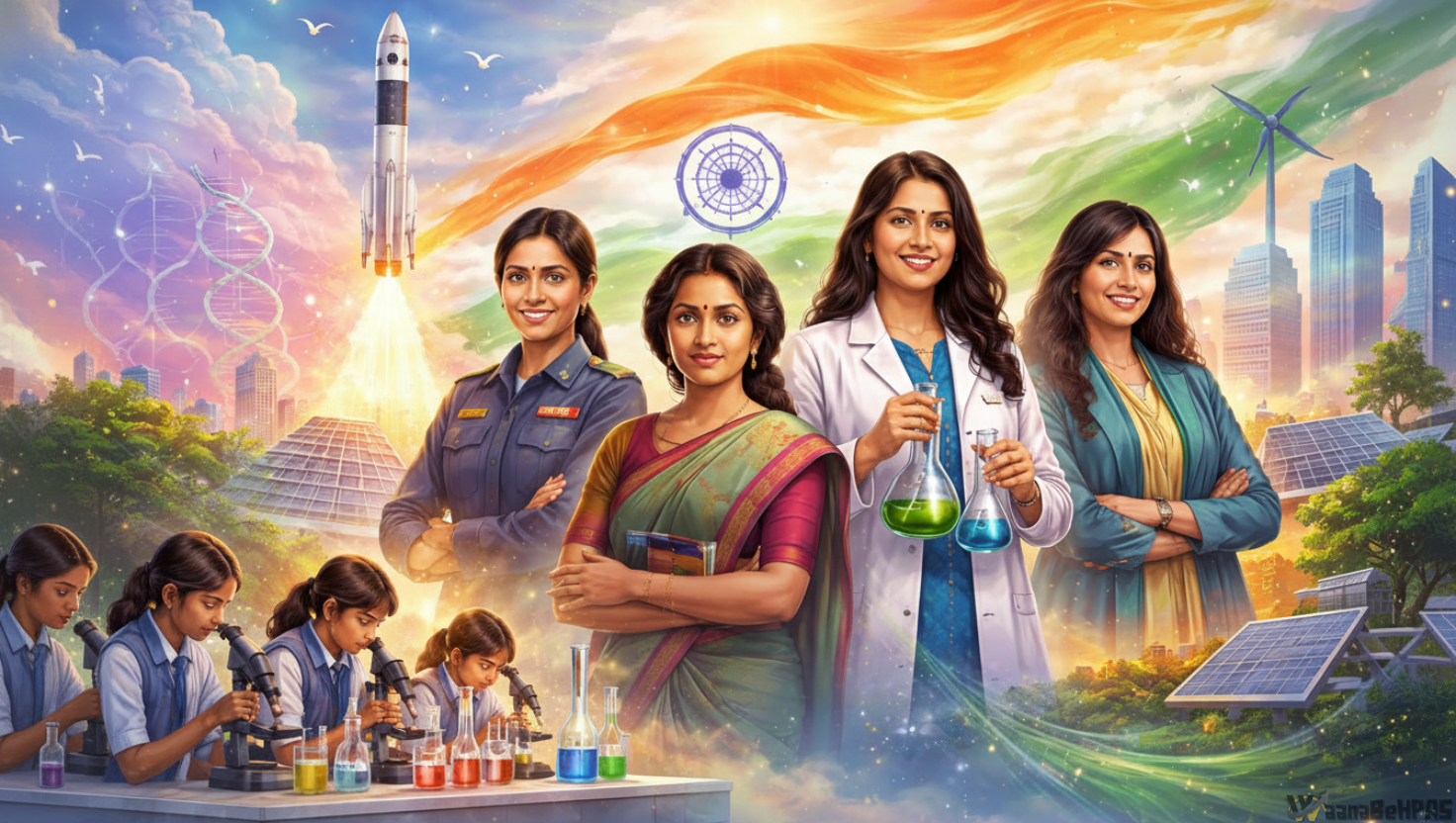
2️⃣ The Three Foundational Sutras (People–Planet–Progress)
The Summit’s vision is operationalized through three strategic pillars:
| Sutra | Core Objective | Real-World Outcome |
|---|---|---|
| People | Human-centric AI & digital inclusion | Bridging AI divide; multilingual access; workforce transition |
| Planet | Sustainable, energy-efficient AI | Climate modeling; reduced carbon footprint |
| Progress | Inclusive economic growth | Scaling AI across agriculture, health, energy, manufacturing |
This framework aligns AI with SDGs, inclusive growth, and Viksit Bharat 2047.
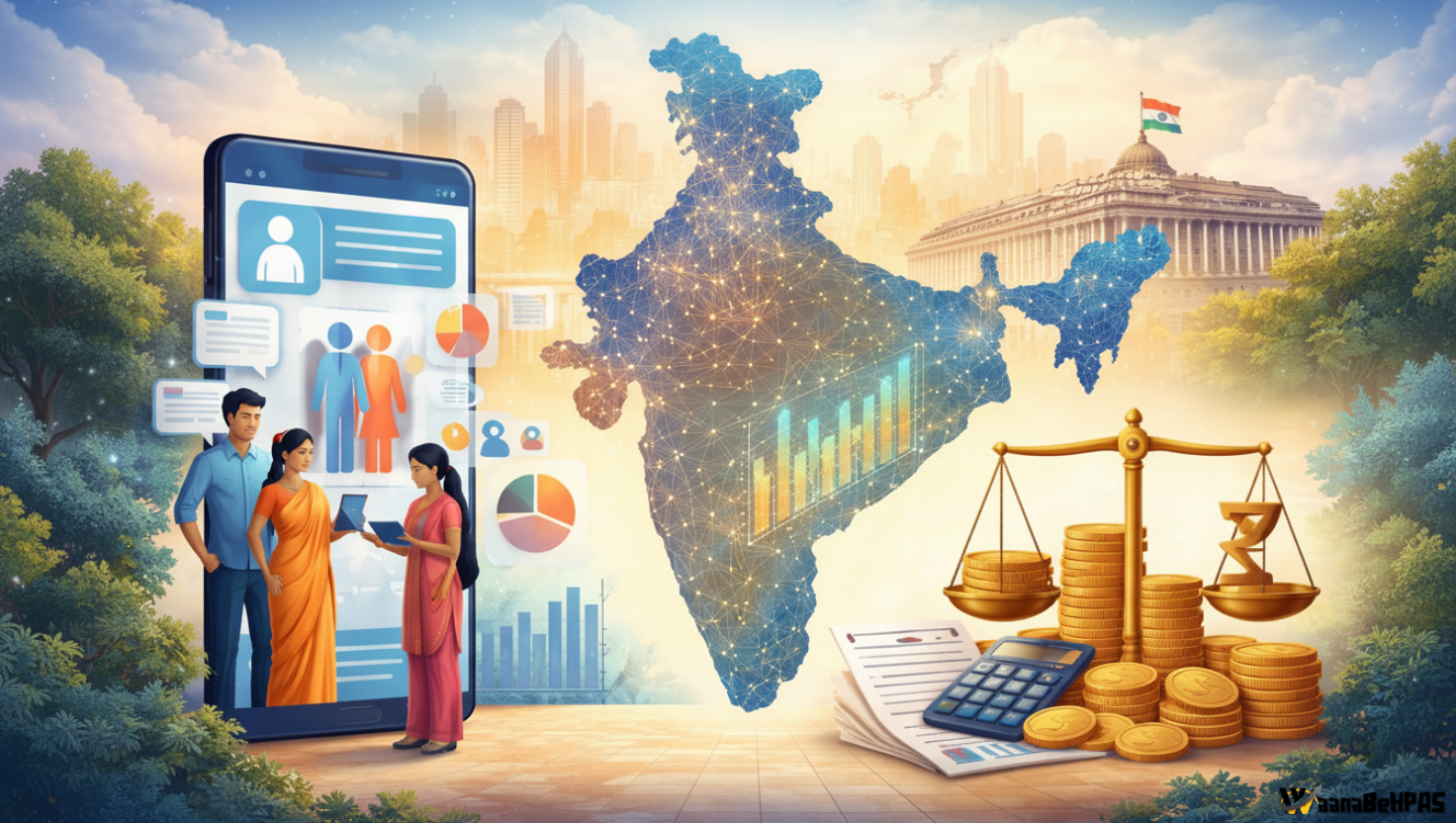
3️⃣ Economic Catalyst: The $550–600 Billion AI Opportunity
According to economic projections, AI could contribute USD 550–607 billion to India’s economy by 2035.
Sectoral Impact
- Agriculture: AI-driven yield prediction and precision farming (critical where 46% workforce contributes ~18% GDP).
- Healthcare: AI diagnostics to bridge rural–urban divide.
- Education: Personalized learning for demographic dividend.
- Energy: Smart grids & renewable optimization.
- Manufacturing: Intelligent automation & Industry 4.0.
The AI-Edge Framework (Value over Vanity Metrics)
The Summit shifts focus from “model size” to “measurable value” through five metrics:
- Operational Excellence
- Sustainability
- Good Governance
- Resilience
- Financial Discipline
This reframes AI as a productivity multiplier rather than speculative technology.
4️⃣ Strategic Autonomy: The “Frugal AI” Model
India is consciously avoiding the USD 100-billion energy-intensive LLM race.
Comparative Strategy
| Dimension | Western Big Tech Model | India’s Sovereign “Frugal AI” |
|---|---|---|
| Primary Input | GPUs & Energy | Brain power & indigenous R&D |
| Cost | $50–100B per model | Targeted, efficient models |
| Goal | Commercial scale | Sovereign utility |
| Sustainability | High carbon footprint | Energy-efficient |
Indigenous Innovations
- Development of Small Language Models (SLMs)
- Focus on 22 scheduled languages
- Indigenous AI chips (e.g., Shakti, Vega)
- Digitization of Indian knowledge systems
This ensures Technological Atmanirbharta and reduces dependency on foreign tech giants.
5️⃣ Infrastructure as a Public Good: IndiaAI Mission
India’s Digital Public Infrastructure (DPI) model treats AI as a public good, preventing monopolistic concentration.
Key Initiatives:
- ₹1000 crore allocation for IndiaAI Mission
- Deployment of 38,000 GPUs
- Subsidized compute access
- Tax incentives for data centers till 2047
- AI curriculum expansion in 500 universities
This creates a full-stack ecosystem:
Compute + Data + Talent + Policy
The Summit also showcased UPI One World, extended by NPCI for international visitors — demonstrating India’s exportable DPI model.
6️⃣ Governance & Regulation: Risk-Based, Innovation-First
India adopts a principle-based, risk-tiered model, unlike the EU’s prescriptive AI Act.
| Jurisdiction | Governance Model | Strategic Driver |
|---|---|---|
| India | Principle-based, DPI-led | Inclusion & sovereignty |
| USA | Executive-order driven | Competitiveness |
| China | State-led oversight | National security |
| EU | Act-based compliance | Rights protection |
February 2026 IT Rule Amendments:
- 3-hour takedown for harmful deepfakes
- Protection for good-faith synthetic content
- Hybrid copyright licensing for AI training
India attempts to create a “Trust Advantage” in global AI governance.
7️⃣ Global South Leadership & Diplomacy
The Summit hosted leaders including:
- Emmanuel Macron (France)
- Luiz Inácio Lula da Silva (Brazil)
- Leaders from UAE, Netherlands, Estonia, Sri Lanka
This enhances:
- India’s digital diplomacy
- South-South cooperation
- Norm-shaping capacity
India emerges as a bridge between developed AI powers and developing economies.
8️⃣ From Dialogue to Delivery: Legacy of the Summit
Global Impact Challenges
- AI for ALL
- AI by HER
- YUVAi
- UDAAN Pitch Fest
Seven Thematic Chakras
- Economic Growth & Social Good
- Democratization of AI
- Inclusion
- Safe & Trusted AI
- Human Capital
- Science
- Resilience & Innovation
200+ sector-specific AI models and global compendiums were announced, shifting the summit toward actionable outcomes.
9️⃣ UPSC Relevance
GS-II
- Global governance of emerging technologies
- India’s digital diplomacy
- International norm-setting
- Data sovereignty & regulatory frameworks
GS-III
- AI & economic growth
- Indigenous technology development
- Digital public infrastructure
- Innovation ecosystem & startups
Essay Themes
- “Technology and inclusive development”
- “Global South in the digital century”
- “AI: Opportunity or inequality multiplier?”
🔟 Critical Evaluation (For Mains Balance)
Opportunities
✔ Economic transformation
✔ Governance efficiency
✔ Global South leadership
✔ Strategic autonomy
Challenges
⚠ Digital divide persists
⚠ Energy costs of AI
⚠ Data privacy & surveillance concerns
⚠ Talent retention
✍️ Conclusion
The India AI Impact Summit 2026 marks India’s transition from a technology adopter to a technology norm entrepreneur. By embedding AI within the triad of People, Planet, and Progress, India has articulated a governance model rooted in inclusion, sustainability, and sovereignty.
If successfully implemented, this summit may be remembered not merely as a conference — but as the moment the Global South claimed co-authorship of the digital future.