Human Digestive System
Syllabus: General Science (UPSC Prelims )
Source: NCERT
The human digestive system converts complex food into simple, absorbable forms. Large biomolecules like carbohydrates, proteins, and fats cannot be used by the body directly, so digestion breaks them into glucose, amino acids, fatty acids, and glycerol.
1. Alimentary Canal (Digestive Tract)
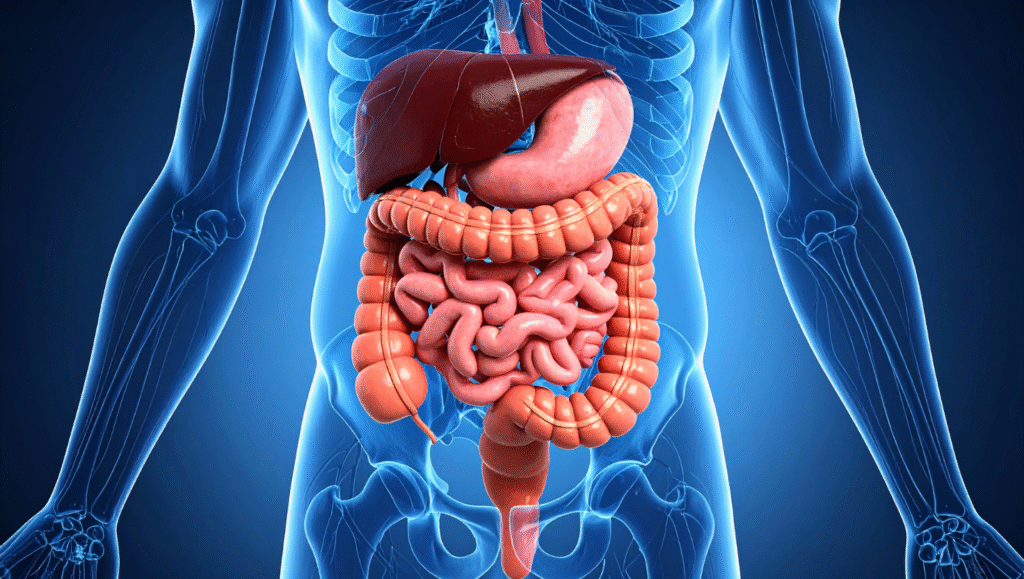
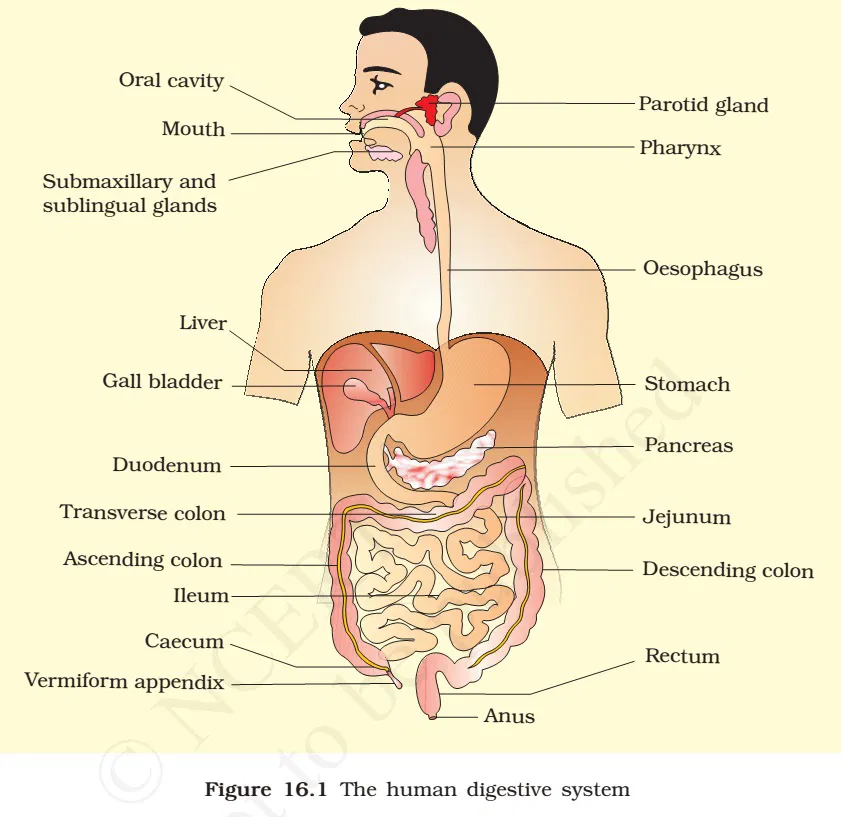
The alimentary canal is a long tube through which food passes. It includes:
Mouth → Pharynx → Oesophagus → Stomach → Small Intestine → Large Intestine → Rectum → Anus
Activities of the digestive tract are controlled by nerves and hormones for proper coordination.
2. Mouth and Buccal Cavity
Main functions
- Ingestion (taking in food)
- Chewing1 with teeth (32 permanent teeth)
- Mixing food with saliva
- Formation of bolus
Saliva
- Secreted by salivary glands (parotid, submaxillary, sublingual)
- Contains:
- Salivary amylase → breaks starch → maltose
- Lysozyme → antibacterial
- Optimal pH: 6.8
Tongue
- Helps mix food, swallowing, tasting (taste buds on papillae)
3. Oesophagus (Food Pipe)
- Connects mouth to stomach
- Swallowing is aided by mucus
- Food moves through peristalsis
- Epiglottis prevents entry of food into windpipe
- Food enters stomach through gastro-oesophageal sphincter
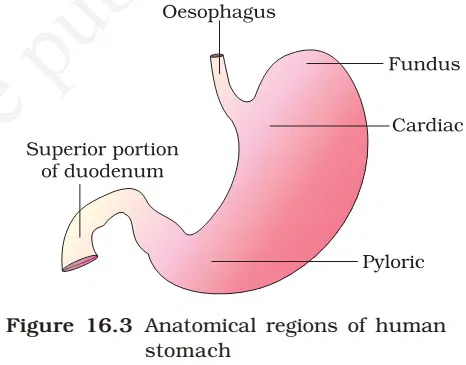
4. Stomach
Functions
- Stores food for 4–5 hours
- Mixes food with gastric juice to form chyme
Secretions
- HCl → kills bacteria + provides acidic pH
- Pepsinogen → Pepsin (digests proteins)
- Mucus → protects stomach lining
- In infants: Rennin digests milk
5. Small Intestine
Made of duodenum → jejunum → ileum
Key functions
- Major site of digestion and absorption of food.
- Receives:
- Bile from liver
- Pancreatic juice
- Inner surface has villi → increase absorption area
Enzyme activity in small intestine
Pancreatic enzymes
- Trypsinogen → Trypsin (activated by enterokinase)
- Breaks proteins, fats, carbohydrates, nucleic acids
Bile
- No enzymes
- Helps emulsify fats (breaks into small droplets)
Intestinal juice
- Contains disaccharidases, lipases, dipeptidases
- Alkaline medium (pH 7.8)
6. Absorption of Digested Food
Absorption occurs through intestinal mucosa into blood or lymph.
Modes of absorption
- Simple diffusion → glucose, amino acids, electrolytes
- Facilitated transport → glucose, amino acids
- Active transport → nutrients against concentration gradient
- Fats:
- Converted to micelles → chylomicrons
- Absorbed into lacteals (lymph vessels)
Sites of absorption
- Mouth → some drugs
- Stomach → water, alcohol
- Small intestine → maximum absorption
- Large intestine → water, minerals
7. Large Intestine
Includes caecum, colon, rectum
Functions
- Absorbs water, salts
- Forms faeces
- Stores faeces in rectum
- Removes waste through egestion
Contains appendix, a vestigial organ.
8. Digestive Glands
Salivary glands
- Produce saliva → carbohydrate digestion
Liver
- Largest gland
- Produces bile (stored in gall bladder)
- Bile helps digest fats
Pancreas
- Exocrine: pancreatic enzymes
- Endocrine: insulin, glucagon
9. Disorders of Digestive System
Common disorders
- Jaundice → liver affected; yellow eyes/skin
- Vomiting → reflex controlled by medulla
- Diarrhoea → watery stools, poor absorption
- Constipation → irregular bowel movement
- Indigestion → incomplete digestion due to overeating, low enzymes, anxiety
- Parasitic infections → tapeworm, roundworm, pinworm
10. Key Steps of Digestion
Ingestion → Digestion → Absorption → Assimilation → Egestion
- Question Reference
(HPAS PYQ 2025) ↩︎