💡 Mukhya Mantri Roshni Yojana (2015) – HPPSC Exam-Oriented Notes
📌 1. Basic Identification (Direct MCQ Area)
- Launch Year: 2015 📅
- Launched by: Government of Himachal Pradesh 🏛️ (CM was Mr. Virbhadra Singh)
- Sector: Energy / Social Welfare ⚡
- Nature: State-sponsored scheme
Exam relevance: Frequently asked in HPPSC exams (including matching-type questions)
🎯 2. Core Objective (Most Important Concept)
The primary objective of the scheme is:
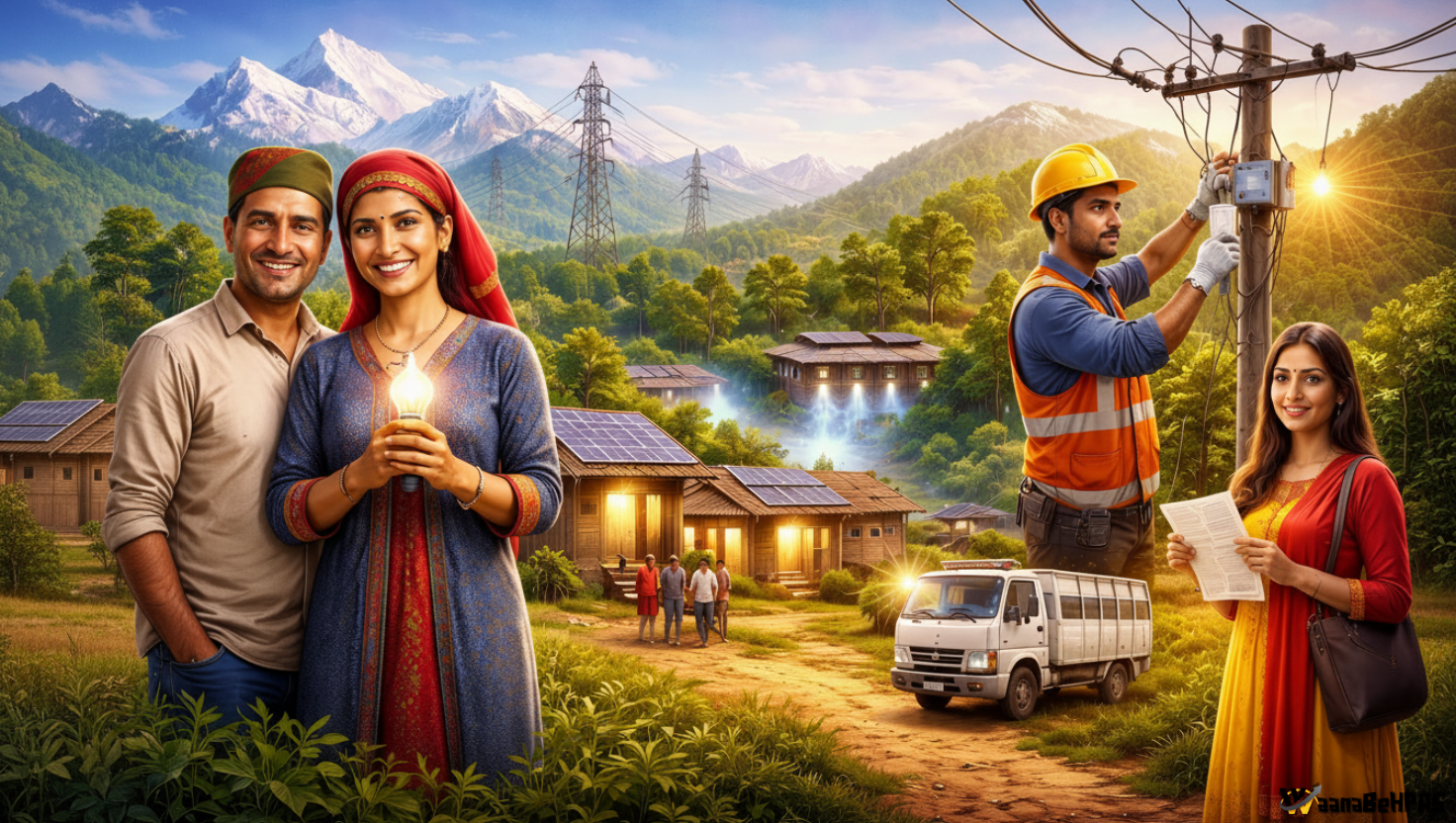
- To provide free or subsidized electricity connections to poor households
- To ensure universal access to electricity in rural and economically weaker sections
This scheme aims to:
- Improve quality of life 🏡
- Support basic household needs like lighting and cooking
- Promote social inclusion and development
How examiner frames it:
- “The main aim of Mukhya Mantri Roshni Yojana is:”
→ Correct answer: Providing electricity access to poor households
🌄 3. Background and Need of the Scheme
Despite progress in electrification:
- Some households in Himachal Pradesh were still without electricity access
- High initial connection cost was a barrier for poor families
Although central schemes like
Deen Dayal Upadhyaya Gram Jyoti Yojana (DDUGJY)
focused on rural electrification, gaps remained at the household level
Therefore, the state government introduced Roshni Yojana to:
- Provide last-mile connectivity
- Ensure no household remains without electricity
Exam insight:
Often asked as a gap-filling scheme similar to Gram Path Yojana
⚙️ 4. Key Features of the Scheme
- Free or subsidized electricity connections ⚡
- Target group:
- BPL (Below Poverty Line) households
- Economically weaker sections
- Focus on:
- Rural and remote areas 🏔️
- Covers:
- Initial connection cost
- Basic infrastructure for electrification
Implementation through:
- State electricity board / power department
⚖️ 5. Roshni Yojana vs Central Schemes (Important Comparison)
| Feature | Roshni Yojana | DDUGJY |
|---|---|---|
| Type | State scheme | Central scheme |
| Launch | 2015 | 2014 |
| Focus | Household electrification | Village electrification |
| Target | Poor households | Rural infrastructure |
| Scope | Last-mile connection | Feeder separation, rural supply |
Why this matters:
HPPSC often asks confusion-based MCQs between state and central schemes
📊 6. Present Relevance
- Supports universal electrification goals
- Helps in improving living standards in rural areas
- Complements central schemes like:
- DDUGJY
- Saubhagya Yojana
Important learning:
Even older schemes remain relevant if they address basic infrastructure gaps
🧠 7. How HPPSC Frames Questions
- Matching type 🔗
- Scheme → Year (2015)
- Direct MCQ 📝
- “Which scheme is related to electricity access in Himachal Pradesh?”
- Conceptual question 💡
- “Which scheme provides free electricity connections to poor households?”
- Comparison-based question ⚖️
- Roshni Yojana vs DDUGJY
🔥 8. High-Probability Questions
- Mukhya Mantri Roshni Yojana was launched in:
→ 2015 - The scheme is related to:
→ Electricity access - It targets:
→ BPL / poor households - It complements which type of schemes?
→ Rural electrification schemes
⚠️ 9. Common Mistakes (Exam Traps)
- Confusing it with central electrification schemes
- Thinking it is related to solar energy only
- Ignoring it because it seems “basic”
- Not remembering the year (2015 is important)
⏱️ 10. One-Minute Revision Summary
- Year: 2015 📅
- Sector: Electricity ⚡
- Type: State scheme 🏛️
- Target: Poor households
- Purpose: Free/subsidized electricity connection
🎯 Final Examiner Insight
This scheme is important because:
- It belongs to basic infrastructure (electricity)
- It is a state-level gap-filling scheme
- It creates confusion with central electrification schemes
HPPSC uses such schemes to:
- Test clarity between state vs central initiatives
- Check basic conceptual understanding