
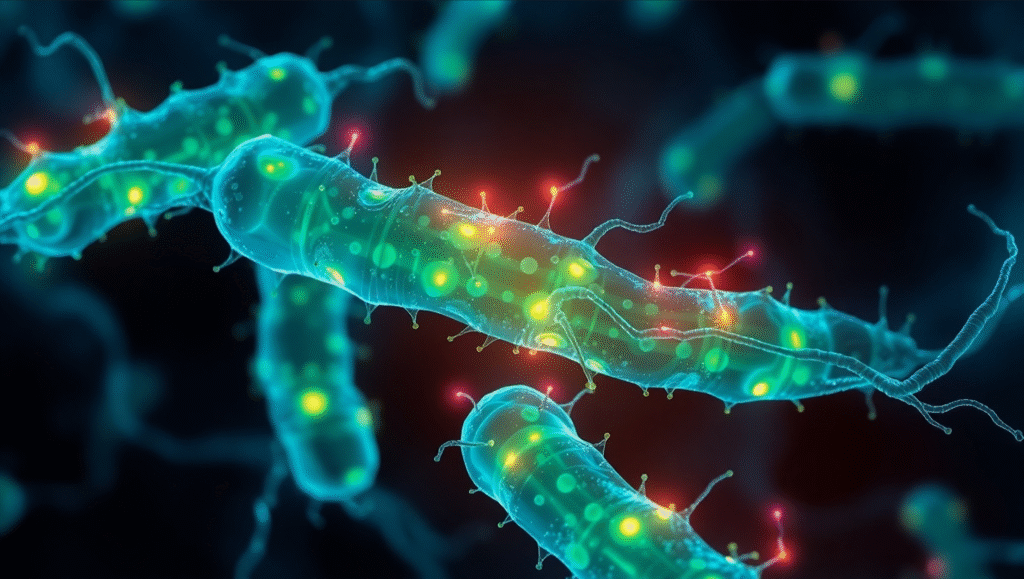
E. coli Turned into Mercury Sensor
Syllabus: Science & Technology (UPSC Prelims)
Source: The Hindu
Context: Researchers have genetically engineered E. coli bacteria into a mercury sensor that can detect toxic metals in water.
About Escherichia coli (E. coli)
- A rod-shaped bacterium belonging to the Enterobacteriaceae family.
- Found in the intestines of humans and animals.
- Most strains are harmless and aid digestion, but some can cause illness.
- Diseases caused:
- Some strains cause diarrhoea.
- Others can lead to urinary tract infections, respiratory illness, pneumonia, and more.
- Transmission: Through contaminated food, water, or contact with infected fecal matter.
- How it makes you sick:
- Certain strains produce Shiga toxin, which damages the small intestine → diarrhoea.
- These are known as Shiga toxin-producing E. coli (STEC).
- Symptoms: Fever, persistent or bloody diarrhoea, vomiting.
- Treatment: Usually self-limiting; hydration is essential during illness.
- Reference: Vajiram & Ravi – E. coli
What is this Innovation?
- A living biosensor made using genetically modified E. coli.
- Detects mercury and converts it into an electrical signal readable by simple devices.
- Developed by Imperial College London and Zhejiang University.
Why was it Created?
- To design cheap and self-powered sensors.
- To enable real-time detection of harmful metals like mercury in water.
How Does it Work?
- E. coli engineered to act as a detector.
- Mercury activates a protein (MerR) in the bacteria.
- This triggers production of phenazines, which touch electrodes and generate an electric current.
- More mercury = stronger current, easily read by electronic devices.
Where Can it be Used?
- Safe Drinking Water: Detects mercury contamination.
- Environmental Monitoring: Tracks pollution in rivers, lakes, and industrial areas.
- Public Health: Acts as an early warning system for exposed communities.
- Portable Devices: Works with low-cost, field-ready electronics.
- Synthetic Biology: Expands research in bioelectronics and smart diagnostics.