
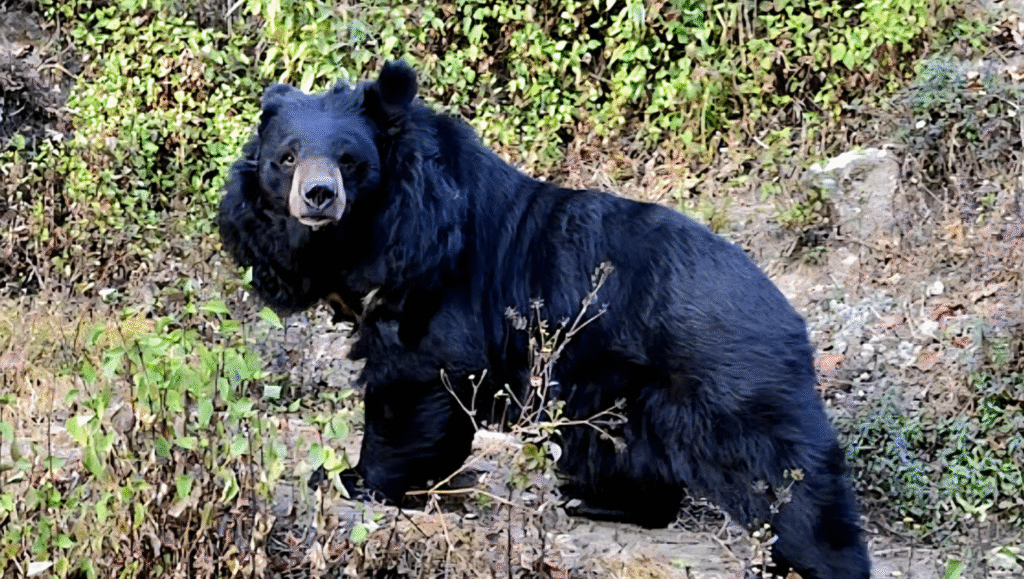
Himalayan Black Bear
Syllabus: Syllabus Relevance: Environment & Ecology (Species in News) (UPSC Prelims)
Source: NIE
Context:
Himalayan black bears in Uttarakhand are showing unusual aggression as delayed winters and erratic weather—linked to climate change—are disturbing their natural hibernation cycle. This disruption has led to a rise in human–bear conflict incidents.
About Himalayan Black Bear
What it is
The Himalayan black bear is a subspecies of the Asiatic black bear, easily recognised by a crescent- or V-shaped white patch on its chest. It is an omnivore and plays an important ecological role in seed dispersal and soil turnover.
Habitat
- Lives in broadleaf and coniferous forests between 1,200–3,300 m across the Himalayas (J&K to Arunachal Pradesh).
- Frequently moves toward villages and farms when natural food becomes scarce.
- The Great Himalayan National Park (GHNP) is one of its core habitats.
Protection Status
- IUCN Red List: Vulnerable
- Wildlife Protection Act, 1972: Schedule I
- CITES: Appendix I
Key Characteristics
- Black, glossy coat with a brown muzzle and rounded ears.
- Weight: Males 180–250 kg; females 35–170 kg.
- Excellent climber and swimmer; mostly nocturnal.
- Enters winter torpor/hibernation—now affected by rising temperatures.
Ecological Importance
- A keystone species that helps forests regenerate by dispersing seeds.
- Aids nutrient cycling by turning over soil.
- Considered an indicator of Himalayan ecosystem health.
Conservation Concerns
- Climate change-induced warm winters preventing proper hibernation.
- Loss of habitat and decline in fruit-bearing plants.
- Growing human encroachment in forest areas.
- Increased chances of crop-raiding and attacks due to food stress.