
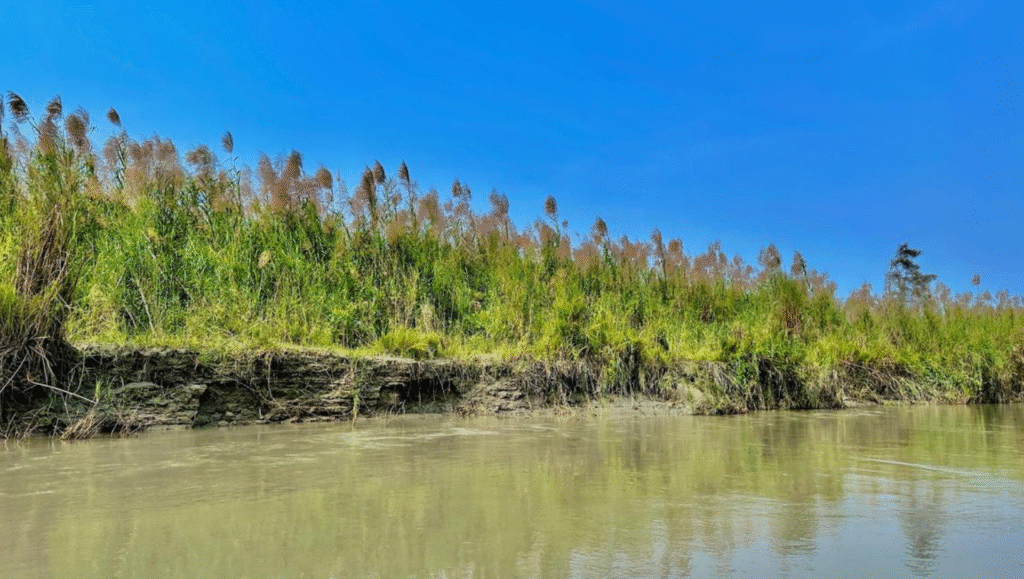
Dibru–Saikhowa National Park (DSNP)
Syllabus: Environment (UPSC Prelims)
Source: The Hindu
Context:
A new study highlights how both native and invasive plants are altering the fragile grasslands of Assam’s Dibru–Saikhowa National Park, threatening rare species and ecosystems.
About the Park
- Location: Eastern Assam, between the Brahmaputra and Dibru rivers.
- Status: Declared a Biosphere Reserve (1997) and National Park (1999).
- Area: 425 sq. km, riverine and floodplain ecosystem.
Key Features
- Unique Landscape: Wetlands, grasslands, and semi-evergreen forests forming an island-like ecosystem.
- Feral Horses: Only habitat in India with ~200 wild horses, descended from animals left behind during World War II.
- Flora: Grasslands mixed with semi-evergreen forests; under threat from native (Bombax ceiba, Lagerstroemia speciosa) and invasive species (Chromolaena, Parthenium, Mikania).
- Fauna:
- Critically endangered Bengal Florican.
- Hog deer and swamp grass babbler (endemic).
- Rich bird diversity due to floodplain wetlands.
- Hydrology: Regular flooding by the Brahmaputra sustains but also reshapes habitats.
Conservation Challenges
- Habitat Loss: Grasslands shrinking due to encroachment by shrubs and forest growth.
- Invasive Plants: Disrupt natural grassland ecosystems.
- Biodiversity Threats: Grassland birds and ungulates face population decline.
- Human Pressure: Villages inside the park cause conflicts and resource exploitation.