
Ectopic Pregnancies
Syllabus: Health & Social Issues – Public Health (UPSC Prelims)
Source: TH
Context:
A rare case of intrahepatic ectopic pregnancy was reported in Bulandshahr, Uttar Pradesh, where a foetus developed inside the liver.
What is an Ectopic Pregnancy?
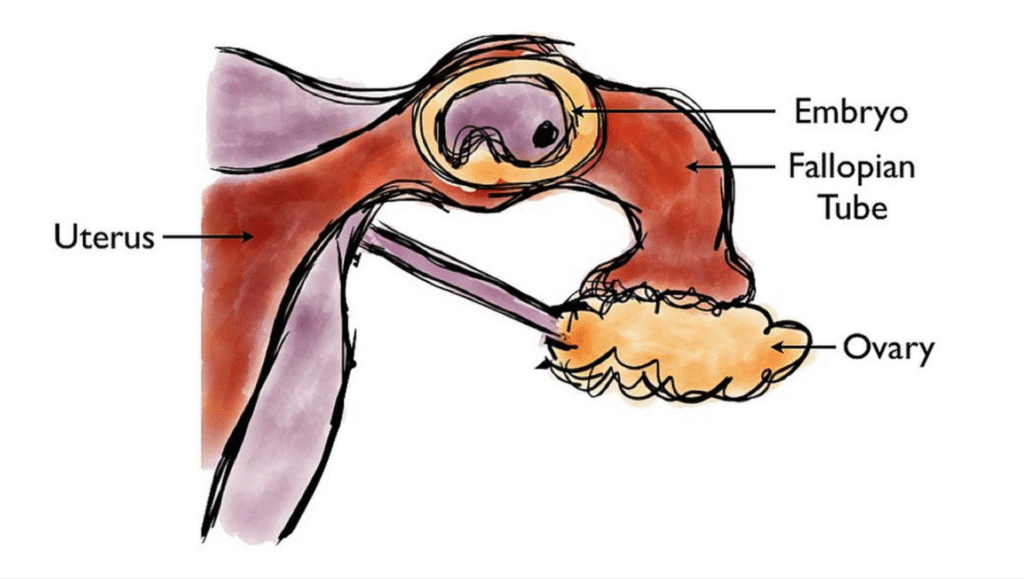
- A condition where a fertilised egg implants outside the uterus, most commonly in the fallopian tube.
- The uterus is the only organ capable of sustaining a pregnancy — hence ectopic pregnancies cannot continue normally and require urgent medical care.
Causes & Sites of Implantation
- Normal Path: Egg travels from ovary → fallopian tube → uterus.
- Disruption: Inflammation, scarring, surgery, or structural defects can block the path, causing implantation elsewhere:
- Fallopian tube (tubal pregnancy) – most common
- Ovary
- Abdominal cavity
- Cervix
Symptoms
- Early signs: missed periods, breast tenderness (similar to normal pregnancy).
- Danger signs: sharp abdominal/pelvic pain, vaginal bleeding, dizziness/fainting, shoulder pain, low blood pressure.
- A ruptured fallopian tube is a medical emergency.
Prevalence
- India: 0.91–2.3% incidence in hospitals (2023 study).
- Global Trend: Overall decline (1990–2019), but still high in low-SDI countries (2025 study).
Diagnosis
- Blood and urine tests.
- Transvaginal ultrasound.
- Most cases detected in early pregnancy stages.
Treatment Options
Medical Management:
- Methotrexate stops cell growth and dissolves embryonic tissue.
- Only for unruptured, early-stage ectopic pregnancies.
Surgical Intervention:
- Laparoscopic surgery to remove the embryo or affected fallopian tube.
- Emergency surgery if rupture occurs.